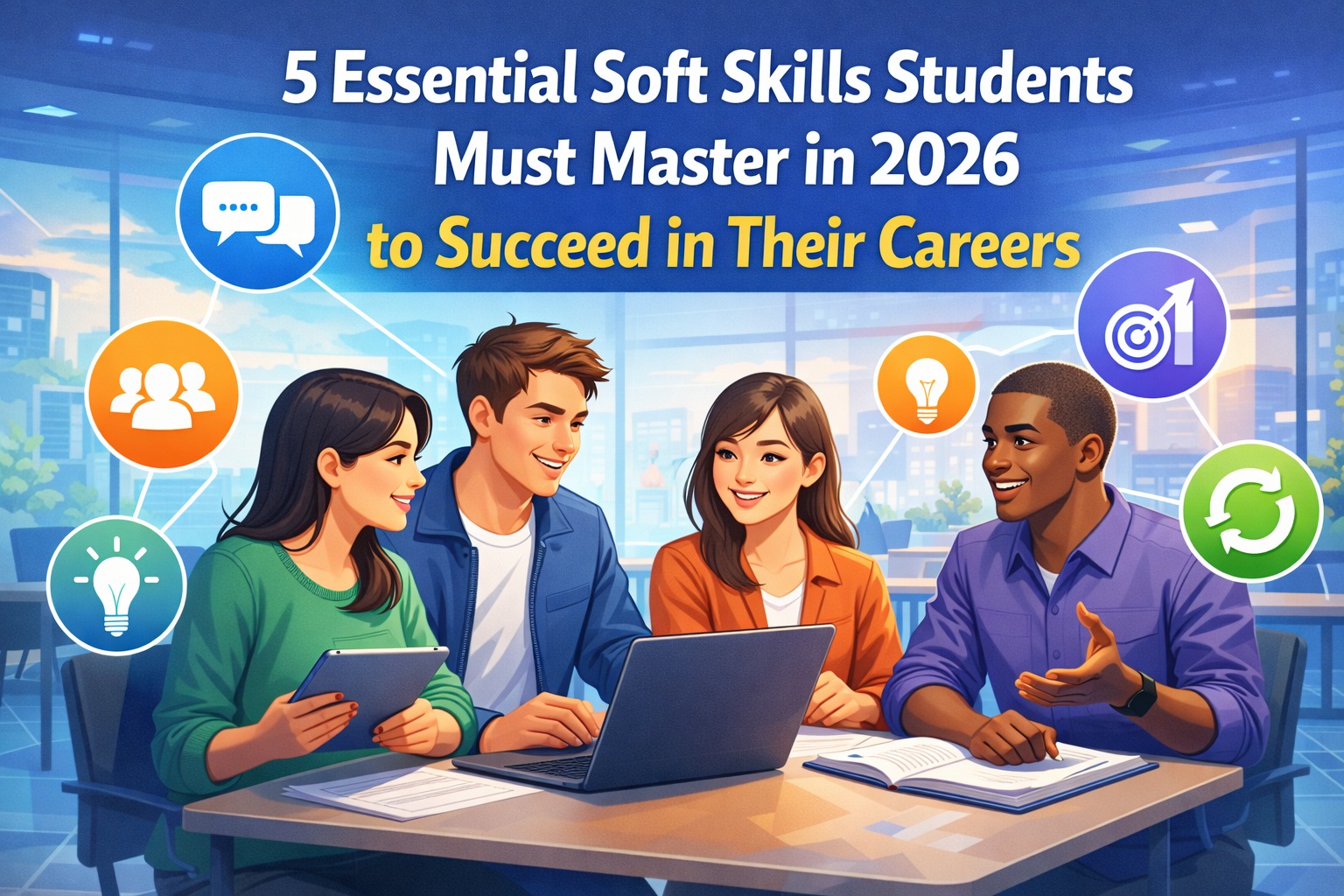
Rapid changes in the job market require students to excel not only academically but also in relevant soft skills. In 2026, companies no longer focus solely on GPA, but also value adaptability, communication skills, and collaboration. Therefore, students need to prepare early to remain competitive and succeed in their careers.This article discusses five essential soft skills that students in 2026 must master to face the challenges of the modern workforce.
EFFECTIVE COMMUNICATION
Effective communication is a crucial soft skill needed in almost every field. Students must be able to express ideas clearly, both verbally and in writing, while also understanding others’ perspectives.
In the digital era, communication is conducted not only face-to-face but also through emails, online presentations, and professional platforms. Students with strong communication skills find it easier to build relationships, work in teams, and earn trust from supervisors.
CRITICAL THINKING AND PROBLEM-SOLVING SKILLS
The workplace requires individuals who can analyze problems and find solutions, not just follow instructions. Critical thinking helps students view issues from multiple perspectives before making decisions.
Students who are accustomed to critical thinking are more adaptable to change, especially in dynamic and challenging work environments. This skill can be developed through discussions, case studies, and organizational experiences.
ADAPTABILITY AND FLEXIBILITY
Technological advancements and evolving work systems make change inevitable. Students in 2026 must have strong adaptability to avoid being left behind.
Flexibility in handling role changes, work methods, and organizational culture is a valuable asset in the eyes of employers. Adaptable individuals tend to handle pressure better and learn new skills more quickly.
TEAMWORK AND COLLABORATION
Most modern jobs require collaboration. The ability to work in teams shows that an individual can respect differences, share responsibilities, and achieve common goals.
Students who actively participate in organizations, committees, or group projects usually have stronger collaboration skills. This soft skill is essential for building a healthy and productive work environment.
TIME MANAGEMENT AND SELF-DISCIPLINE
Good time management reflects professionalism. Students who manage their time effectively are more productive and experience less stress.
Self-discipline helps students complete tasks on time, maintain commitments, and consistently achieve targets. In the workplace, this ability is often an indicator of employee reliability.
CLOSING
Mastering soft skills during college is a long-term investment. The five skills discussed—communication, critical thinking, adaptability, collaboration, and time management—are essential for facing the workforce in 2026.
By balancing academic ability and soft skills, students will not only be ready to graduate but also prepared for long-term career success.
Tentang Penulis
Gusti Ayu Tita
Penulis — Universitas STEKOM
Penulis aktif yang berfokus pada isu-isu akademik, teknologi pendidikan, dan pengembangan sumber daya manusia di lingkungan kampus.