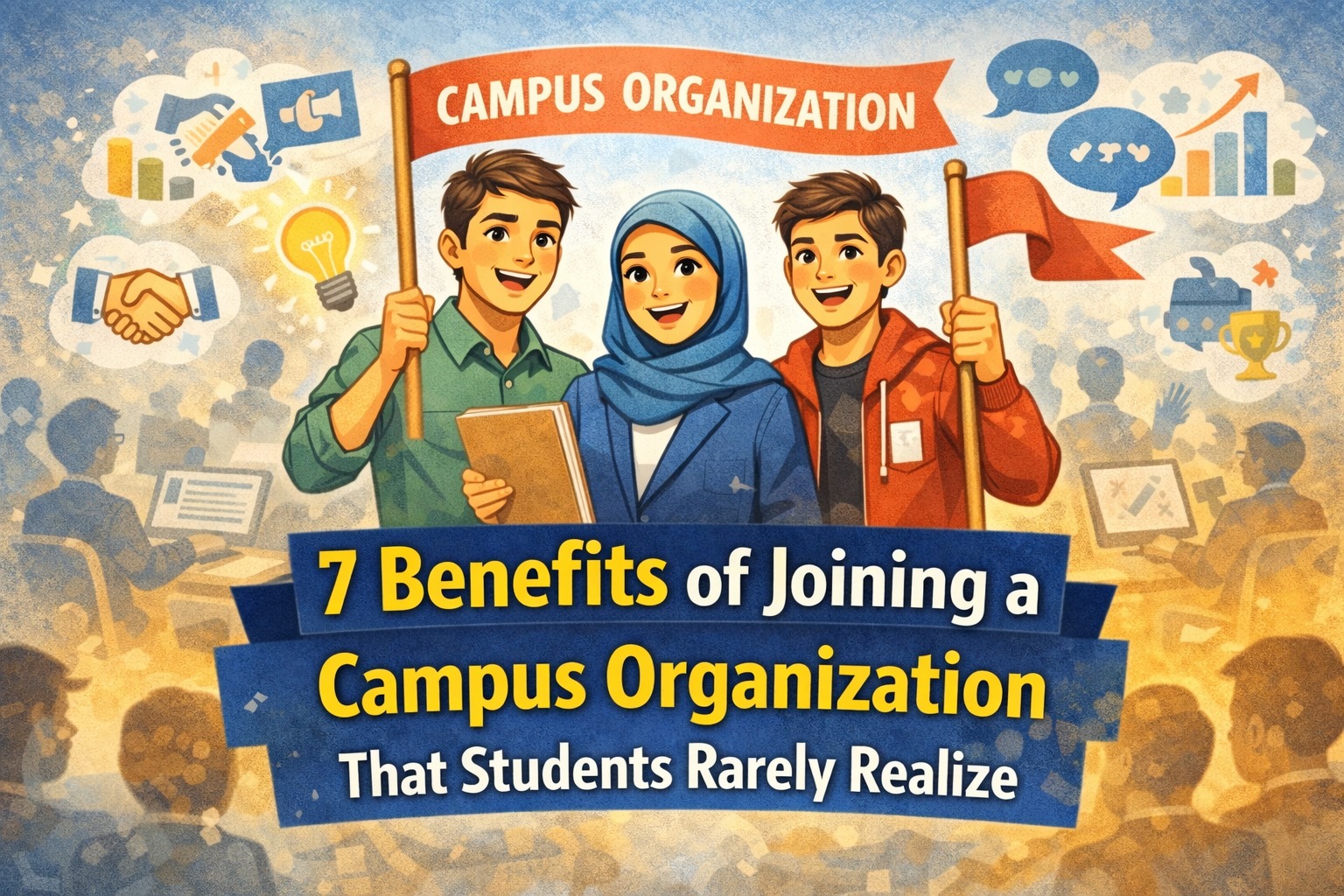
The Hidden Benefits of Joining Campus Organizations
Joining campus organizations is often seen as an activity that only adds to students’ busyness and takes away time from academic responsibilities. Many students hesitate to get involved because they worry that their academic performance will decline or their schedules will become disorganized. However, behind the busy routines, there are many benefits of joining campus organizations that students often overlook, especially in terms of personal development and future career preparation. Campus organizations are not merely social gathering spaces, but learning environments that complement academic knowledge gained in the classroom. Below are seven benefits of campus organizations that are frequently underestimated by students.
1. Naturally Improving Communication Skills
One of the main benefits of joining campus organizations is the improvement of communication skills. Active members are accustomed to discussions, expressing opinions, and negotiating with various parties. These skills develop naturally through meetings, activities, and teamwork.
Strong communication skills are highly valued in the professional world. Many companies consider communication ability more important than academic performance alone. Campus organizations provide a safe space to practice and refine these skills from an early stage.
2. Developing Leadership Skills Unconsciously
Not every student who joins an organization immediately becomes a leader or holds a core position. However, through active involvement, leadership qualities gradually develop. Students learn to take responsibility, manage tasks, and solve problems collaboratively.
This experience of leading and being led is extremely valuable in professional life. Leadership is not always about position, but about attitude and decision-making.
3. Expanding Social Connections and Networks
Another benefit of campus organizations is the opportunity to expand social networks. Students meet peers from different departments, academic years, and even other universities. These connections are useful not only during college but also after graduation.
Many job opportunities, projects, and collaborations come from personal networks. Campus organizations serve as an early gateway to building strong professional relationships.
4. Training Time Management and Discipline
Being active in campus organizations requires students to manage their time effectively between classes, assignments, and organizational activities. At first, this may feel challenging, but over time students become more skilled at setting priorities and creating efficient schedules.
Time management skills are crucial in professional life. Students who develop these skills during college tend to be more disciplined and productive in the future.
5. Increasing Self-Confidence
Many students who were initially quiet become more confident after actively participating in campus organizations. Taking part in activities, speaking in public, and being responsible for programs gradually builds self-confidence.
This confidence becomes an important asset when facing job interviews, presentations, or new career challenges. Campus organizations help students discover their potential, which they may not have realized before.
6. Adding Value to CVs and Portfolios
Experience in campus organizations often adds significant value to a CV. Employers do not only look at GPA, but also at non-academic experiences that demonstrate teamwork, leadership, and responsibility.
Students who are active in organizations usually have real experiences and stories to share during recruitment processes, giving them an advantage over graduates who focus solely on academics.
7. Shaping Character and Work Ethics
A lesser-known benefit of joining campus organizations is the development of character and work ethics. Students learn to handle conflicts, accept criticism, and work under pressure. These experiences shape stronger and more mature individuals.
Qualities such as responsibility, commitment, and teamwork are highly sought after in the workplace. Campus organizations serve as a character-building environment that is not taught theoretically in classrooms.
Conclusion
Joining campus organizations is not an obstacle to academic success, but a valuable complement to students’ learning processes. The seven benefits outlined above show that non-academic activities play a significant role in shaping well-rounded graduates.
As long as students manage their time effectively, campus organizations become a worthwhile investment for the future—not only for career development, but also for overall personal growth.
Tentang Penulis
Gusti Ayu Tita P
Penulis — Universitas STEKOM
Penulis aktif yang berfokus pada isu-isu akademik, teknologi pendidikan, dan pengembangan sumber daya manusia di lingkungan kampus.