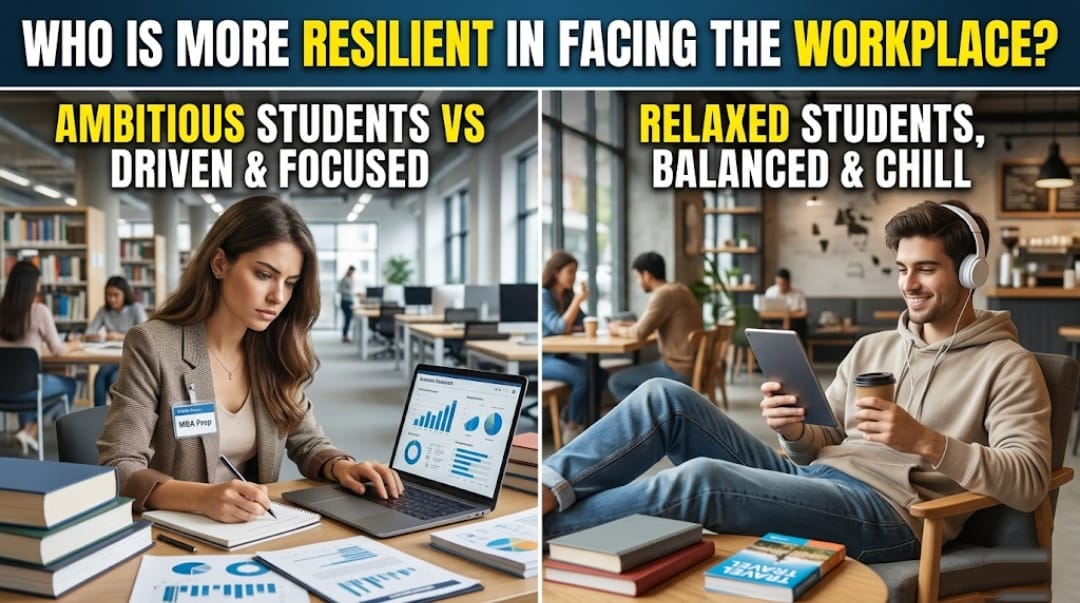
The transition from campus life to the professional world is often described as a turning point that tests character, competence, and emotional strength. Among students, two dominant approaches frequently emerge: ambitious students who chase achievements relentlessly and relaxed students who prioritize balance and steady growth. The question is, who is more resilient in facing the workplace?
In today’s competitive job market, resilience has become just as important as technical skills. This article explores how both personality types perform when confronted with real-world challenges.
UNDERSTANDING AMBITIOUS STUDENTS
Ambitious students are typically goal-driven and highly productive. They maintain strong academic records, join multiple organizations, compete in events, and seek internships early. Their schedules are structured, and their career plans are often clearly mapped out.
Global companies such as Google and Unilever tend to value candidates with proven initiative, leadership experience, and measurable achievements. In recruitment processes, ambitious students often stand out due to their extensive portfolios.
Strengths of ambitious students:
- Strong time management skills
- High tolerance for deadlines
- Clear career direction
- Competitive mindset
However, intense ambition can also bring pressure. When expectations are not met, frustration and burnout may arise. Early success does not automatically guarantee long-term resilience.
UNDERSTANDING RELAXED STUDENTS
Relaxed students approach college life with a different rhythm. They focus on understanding core concepts, maintaining mental well-being, and engaging in activities selectively. Rather than chasing every opportunity, they choose experiences that align with personal interests.
Modern organizations like Microsoft increasingly emphasize emotional intelligence, collaboration, and adaptability. These qualities are often naturally developed by students who maintain balance.
Strengths of relaxed students:
- Emotional stability
- Lower risk of burnout
- Consistent performance over time
- Flexible mindset
The challenge lies in visibility. Without sufficient practical exposure, relaxed students may appear less competitive during the initial hiring stages.
WHAT DOES RESILIENCE REALLY MEAN IN THE WORKPLACE?
Workplace resilience is the ability to adapt, recover from setbacks, and remain productive under pressure. It is not solely about working faster or achieving more certificates.
Hyperbolically speaking - the workplace can feel like an endless marathon where only those who manage energy wisely survive. Speed matters, but endurance matters more.
Ambitious students may excel in high-pressure situations and competitive environments. Relaxed students may demonstrate stronger long-term emotional endurance. Resilience, therefore, is shaped by how individuals manage stress, accept feedback, and continuously improve.
FINDING THE BALANCED APPROACH
Rather than labeling one group as superior, a balanced approach often proves most effective. Combining ambition with emotional regulation can create sustainable career growth.
Practical strategies include:
- Setting realistic and measurable goals
- Building relevant skills and experiences
- Prioritizing mental and physical health
- Developing communication and teamwork skills
- Embracing lifelong learning
This combination prepares students not only to enter the workplace but also to thrive within it.
CONCLUSION
Ambitious students are not automatically more resilient, and relaxed students are not inherently less prepared. Resilience in the workplace depends on adaptability, emotional strength, and continuous self-development.
In the end, the most resilient professionals are those who can pursue goals with determination while maintaining balance. Success is not defined by who works the hardest during college, but by who can sustain growth when real challenges appear.
Tentang Penulis
Gusti Ayu Tita
Penulis — Universitas STEKOM
Penulis aktif yang berfokus pada isu-isu akademik, teknologi pendidikan, dan pengembangan sumber daya manusia di lingkungan kampus.