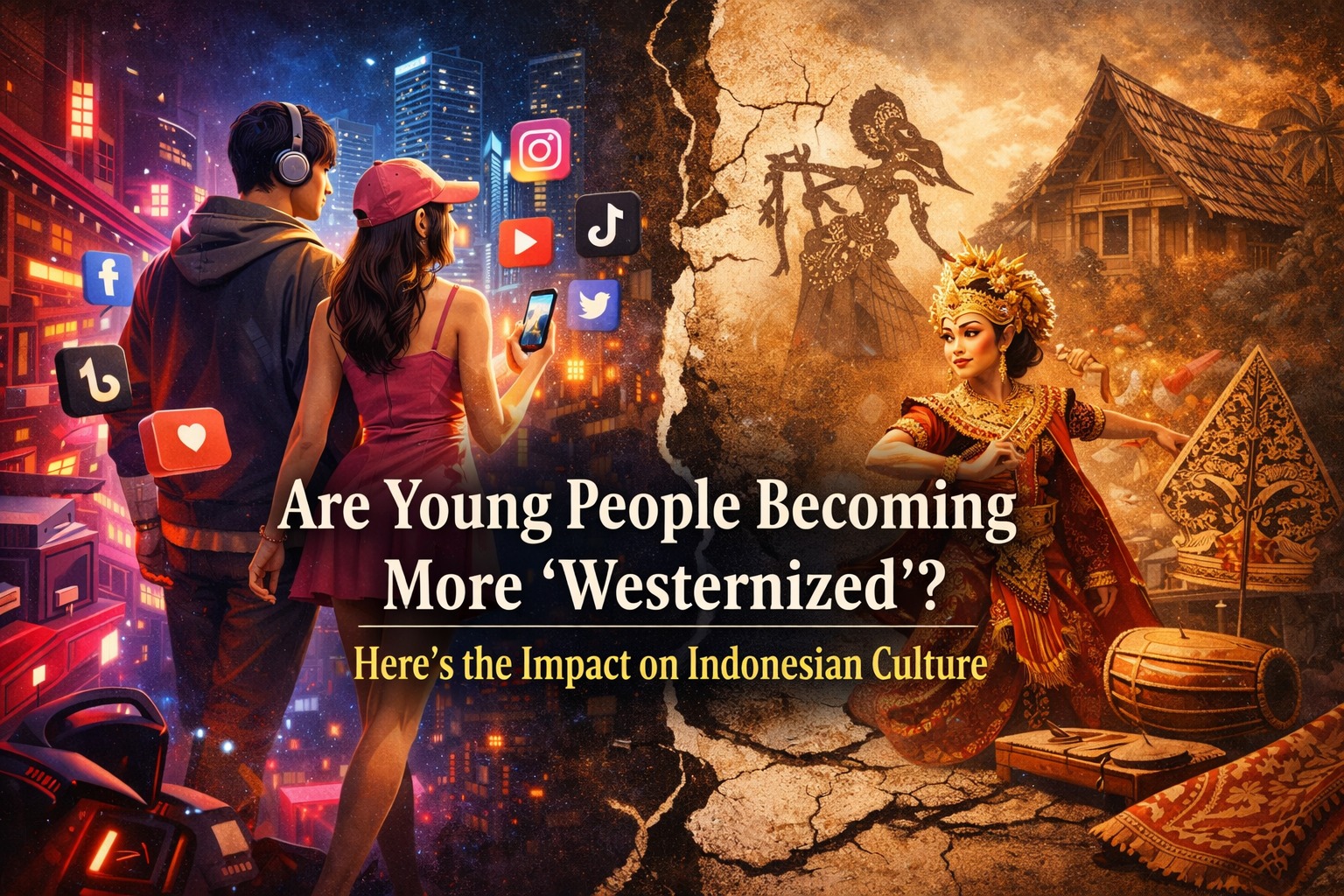
In the fast-paced internet era, foreign cultures—especially Western culture—easily enter the daily lives of Indonesian youth. From fashion styles, ways of speaking, entertainment, to mindsets, many aspects are now influenced by global trends. This phenomenon is often referred to as “Westernization.”
But is this a natural part of modern life, or does it pose a threat to the preservation of Indonesian culture? This article discusses its causes, impacts, and how to respond wisely.
Why Are Young People Easily Influenced by Western Culture?
Several factors contribute to the rapid absorption of foreign trends among youth, particularly Western culture:
- Wide access to digital media
Platforms such as TikTok, YouTube, and Instagram are filled with global popular culture content.
- Perception of being modern and trendy
Western culture is often associated with freedom, creativity, and a modern lifestyle.
- Lack of modern-packaged local content
Local culture is often presented in traditional ways, making it less visually and narratively competitive.
- Influence of international public figures
Global musicians, actors, and influencers have a strong impact on shaping young people’s preferences.
How Does “Westernized” Behavior Appear in Daily Life?
This phenomenon can be seen in several noticeable changes:
- The use of mixed languages or foreign slang in daily conversations
- Fashion choices that follow international trends
- Preference for fast food or foreign cuisine over traditional food
- Consumption of entertainment dominated by foreign films, music, and games
Not all of these changes are negative; some represent positive adaptation. However, problems arise when local culture begins to lose its place.
The Impact of “Westernization” on Indonesian Culture
This phenomenon brings several impacts that deserve attention:
- Weakening of cultural identity
When local values are no longer considered important, young people lose connection with their cultural roots.
- Declining traditions
Traditional ceremonies, local cuisine, and regional arts may be increasingly neglected.
- Changes in mindset
Local values such as mutual cooperation, politeness, and simplicity may be replaced by more individualistic values.
- Imbalanced cultural appreciation
Despite Indonesia’s rich traditions, many young people are more familiar with foreign cultures than their own.
Is Adopting Western Culture Always Negative?
Certainly not. Many aspects of Western culture contribute positively, such as:
- Critical thinking
- Innovation in technology and education
- Independent learning habits
- More open self-expression
The issue lies not in the influence itself, but in the lack of balance between foreign and local cultures.
Steps to Ensure Indonesian Culture Remains Loved by the Younger Generation
To prevent local culture from being overshadowed, several concrete steps are needed:
- Presenting local culture in modern ways
For example, contemporary fashion inspired by traditional elements or modern music infused with regional styles.
- Creating engaging digital content
Young creators can promote local culture using modern storytelling and visuals.
- Organizing youth-oriented cultural festivals
Music, art, and local cuisine can be developed through more interactive approaches.
- Strengthening cultural education in schools
While ensuring it remains relevant, creative, and engaging.
- Supporting local MSMEs and creative products
Every purchase of local products contributes to cultural preservation.
Conclusion: Culture Should Collaborate, Not Compete
Young people may adopt global culture, but they must remain aware of their cultural roots.
The key is not to prohibit foreign influence, but to create balance.
When local culture is presented in modern, creative, and relatable ways, Indonesian identity will not fade—rather, it will grow stronger.
Tentang Penulis
Gusti Ayu Tita
Penulis — Universitas STEKOM
Penulis aktif yang berfokus pada isu-isu akademik, teknologi pendidikan, dan pengembangan sumber daya manusia di lingkungan kampus.