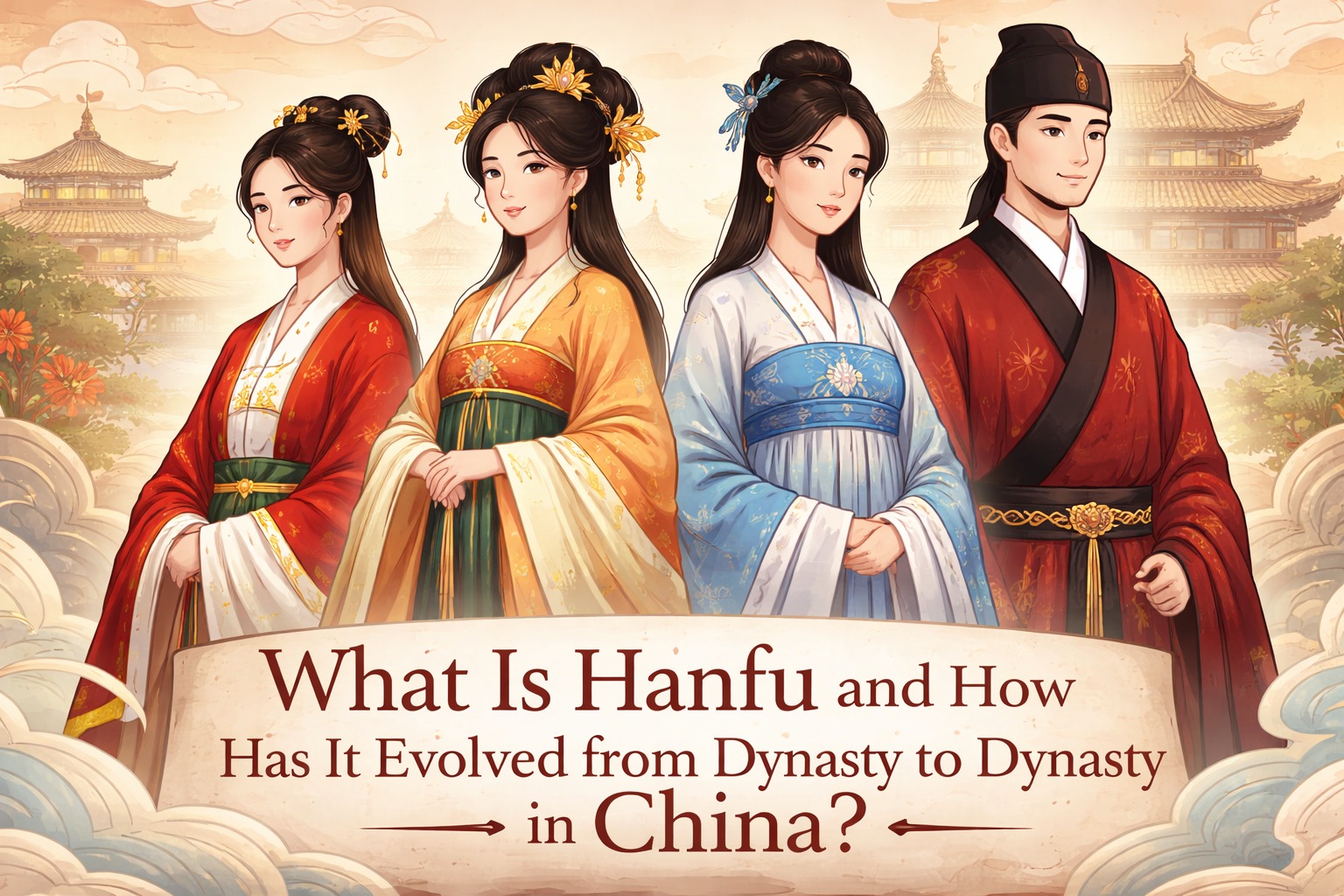
Getting to Know Hanfu, the Traditional Clothing of the Han People
In recent years, Hanfu has increasingly appeared at cultural festivals, on social media, and in Chinese historical dramas. But what exactly is Hanfu? Is it merely traditional clothing, or does it hold deeper meaning within Chinese civilization?
This article series invites you to explore Hanfu comprehensively—from its origins to its transformation across different dynasties.
What Is Hanfu?
Hanfu (汉服) is the traditional clothing of the Han ethnic group, the largest ethnic group in China. The term “Hanfu” literally means “Han people’s clothing.” This attire has been worn for thousands of years, even before the unification of China under the Qin Dynasty.
The main characteristics of Hanfu include:
- A right-crossed collar (*jiaoling youren*)
- Wide and flowing sleeves
- No buttons, using a sash or belt instead
- Elegant, flowing cuts
More than just clothing, Hanfu reflects the philosophies of Confucianism, Taoism, and the social order of its time.
Cultural and Philosophical Meanings of Hanfu
Hanfu was not designed merely for visual beauty. Every cut, color, and method of wearing carries meaning:
- Colors symbolize social status and seasons
- Layers of clothing represent modesty and hierarchy
- Loose shapes reflect harmony with nature
In essence, Hanfu is a cultural identity deeply embedded in ancient Chinese life.
Hanfu in the Early Period – Xia, Shang, and Zhou Dynasties
The Origins of Hanfu
Early forms of Hanfu emerged during the Xia Dynasty (around 2100 BCE) and developed further during the Shang and Zhou Dynasties. During this period, the basic structure of Hanfu was established and became the standard attire.
Hanfu in the Zhou Dynasty
The Zhou Dynasty played a crucial role in standardizing Hanfu. Clothing during this era was:
- Simpler and more symmetrical
- Strongly influenced by ritual systems (*li*)
- Used to distinguish between nobility and commoners
Hanfu in the Zhou era was not only about aesthetics but also a tool for regulating social order.
The Peak of Elegance – Hanfu from the Han to Tang Dynasties
Han Dynasty: The Official Identity of the Han People
During the Han Dynasty (206 BCE–220 CE), Hanfu gained widespread popularity and became a national symbol. This period gave rise to the term “Han,” which is still used today.
Characteristics of Han Dynasty Hanfu:
- Graceful and simple silhouettes
- Soft colors
- Emphasis on comfort and function
Tang Dynasty: The Golden Age of Hanfu
The Tang Dynasty (618–907) is considered the most glamorous era in Hanfu history. Clothing became:
- Bolder in color
- More open and expressive
- Influenced by Central Asian cultures
Women’s Hanfu from the Tang Dynasty is especially known for high-waisted skirts and wide sleeves, reflecting a cosmopolitan and open society.
Transformation, Decline, and Revival of Hanfu
Song to Ming Dynasties
During the Song Dynasty, Hanfu became simpler and more conservative. In the Ming Dynasty, Hanfu regained its classic elegance with structured and layered designs.
Decline during the Qing Dynasty
When the Manchu-led Qing Dynasty came to power, Hanfu was gradually replaced by Manchu clothing such as *qipao* and *changshan*. The wearing of Hanfu was even restricted.
The Revival of Hanfu in the Modern Era
Today, Hanfu has experienced a revival as part of cultural preservation movements. Young people in China wear Hanfu for:
- Traditional festivals
- Weddings
- Photography and digital content
Hanfu is no longer just clothing from the past, but a symbol of cultural pride in the modern era.
The journey of Hanfu across dynasties reflects the dynamics of history, values, and identity of the Chinese nation. From ritual attire to a symbol of cultural revival, Hanfu remains alive and relevant today.
Tentang Penulis
Gusti Ayu Tita
Penulis — Universitas STEKOM
Penulis aktif yang berfokus pada isu-isu akademik, teknologi pendidikan, dan pengembangan sumber daya manusia di lingkungan kampus.