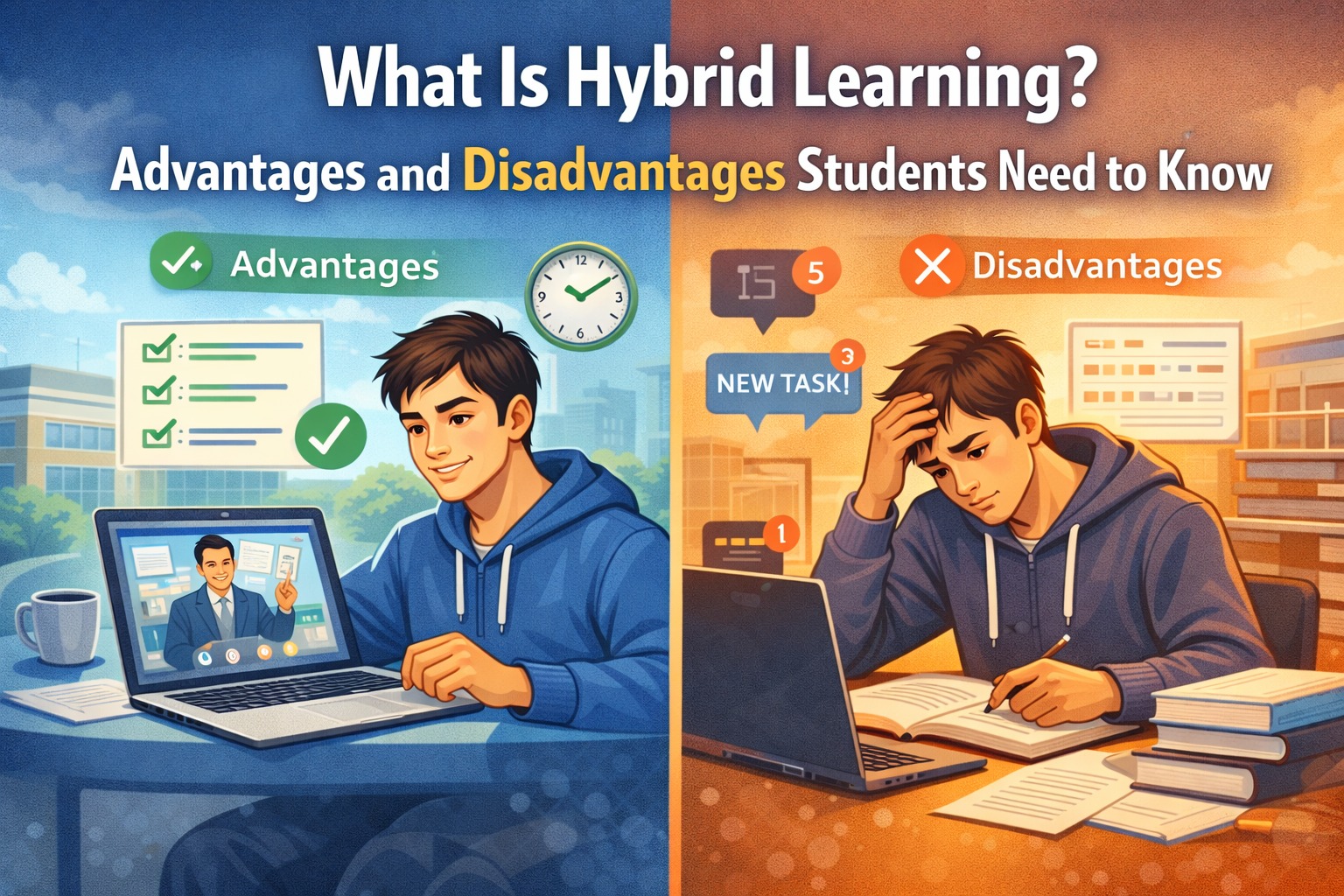
Technological advancements and changes in education systems following the pandemic have led to the emergence of various new learning methods. One widely implemented approach in higher education today is hybrid learning. This system is considered a middle ground between face-to-face and fully online learning. However, before participating, students need a thorough understanding of what hybrid learning is, along with its advantages and disadvantages.
DEFINITION OF HYBRID LEARNING
Hybrid learning is a learning method that combines face-to-face classroom instruction with online learning. In this system, some sessions are conducted in person, while others are delivered online through digital platforms.
The hybrid model is designed to provide flexibility without eliminating direct interaction between lecturers and students. It differs from fully online learning because students still have scheduled physical attendance on campus.
HOW HYBRID LEARNING IS IMPLEMENTED
The implementation of hybrid learning varies across institutions. Some universities divide schedules, such as one week of face-to-face classes followed by a week of online learning. Others split students into groups, where some attend in person while others join online on a rotating basis.
Course materials are usually provided in digital formats such as videos, modules, or recorded sessions, allowing students to revisit them anytime.
ADVANTAGES OF HYBRID LEARNING
Hybrid learning offers several advantages, including flexibility in time and location. Students do not need to travel to campus every day, which helps save time and transportation costs.
This system also encourages greater learning independence, as students must manage their own schedules and learning pace. The continued presence of face-to-face interaction is another advantage, allowing students to engage directly with lecturers and classmates.
For students who work or have other commitments, hybrid learning is an ideal option due to its adaptability to individual needs.
DISADVANTAGES OF HYBRID LEARNING
Despite its benefits, hybrid learning also has drawbacks. One major challenge is the high demand for self-discipline. Students who struggle with time management risk falling behind, especially during online sessions.
Technical issues such as unstable internet connections, limited devices, and reduced interaction during online sessions can hinder learning. Additionally, differences in learning experiences between students attending in person and those participating online may affect comprehension.
THE IMPACT OF HYBRID LEARNING ON STUDENTS
Hybrid learning requires students to be more active, independent, and responsible for their own learning process. It helps develop time management skills, technological adaptability, and digital communication abilities that are essential in the workplace.
However, without sufficient mental readiness and adequate facilities, hybrid learning can lead to fatigue and confusion in keeping up with academic demands.
TIPS FOR EFFECTIVE PARTICIPATION IN HYBRID LEARNING
To ensure effective hybrid learning, students should create clear study schedules for both offline and online sessions. Ensuring reliable devices and internet connectivity is crucial to avoid disruptions.
Students are also encouraged to remain active in asking questions and participating in discussions, both in class and online. Consistency and discipline are the main keys to maximizing the benefits of hybrid learning.
CONCLUSION
Hybrid learning is a learning model that combines the flexibility of online education with the advantages of face-to-face interaction. While it offers many benefits, it also presents challenges that must be anticipated. With proper understanding and adequate preparation, hybrid learning can become an effective and relevant educational approach for students in the modern era.
Tentang Penulis
Gusti Ayu Tita
Penulis — Universitas STEKOM
Penulis aktif yang berfokus pada isu-isu akademik, teknologi pendidikan, dan pengembangan sumber daya manusia di lingkungan kampus.