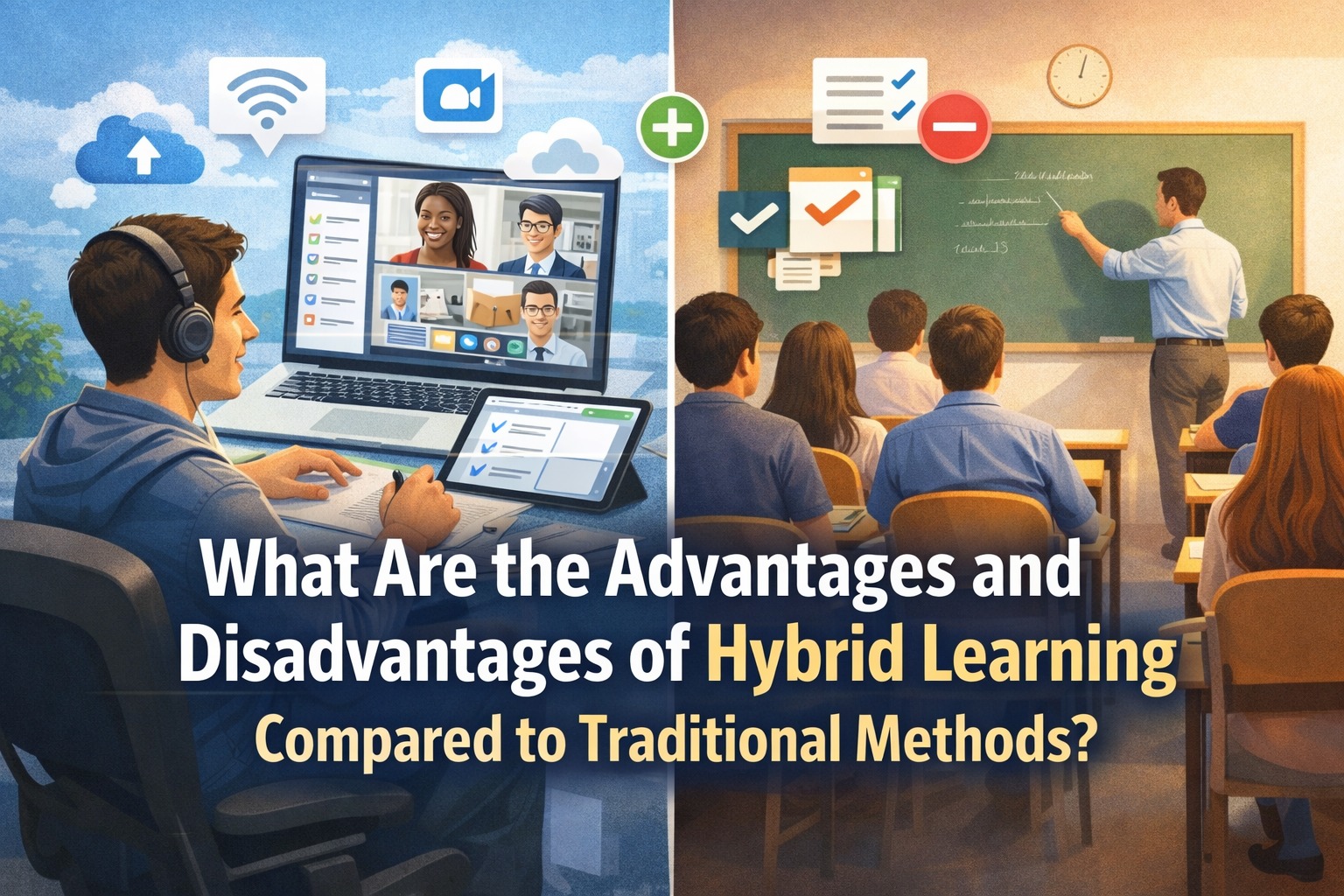
In an increasingly advanced digital era, the world of education is also undergoing transformation, one of which is the implementation of Hybrid Learning. Hybrid learning combines face-to-face instruction with online learning, providing greater flexibility for both students and educators. On the other hand, traditional methods, which are still widely used, rely entirely on in-class learning with direct, face-to-face interaction between students and teachers.
So, what are the advantages and disadvantages of hybrid learning compared to traditional methods? This article discusses both approaches to provide a clearer understanding.
1. ADVANTAGES OF HYBRID LEARNING COMPARED TO TRADITIONAL METHODS
Hybrid learning offers several advantages that traditional methods do not have. Some of the main benefits include:
a. Flexibility of Time and Location
One of the greatest advantages of hybrid learning is the flexibility it provides. Students can choose to attend classes online or in person according to their needs and convenience. They are no longer bound to fixed schedules or locations. For example, students who have other commitments or live far from school can attend classes online without having to commute.
With online learning, students can also access materials anytime and anywhere, allowing them to learn at a more relaxed pace and according to their own learning rhythm.
b. Increased Access to Learning Resources
Hybrid learning gives students broader access to learning resources. In addition to materials delivered by teachers in class, students can access various additional resources online, such as video tutorials, articles, e-books, and discussion forums. This allows students to deepen their understanding of the subject matter or seek supplementary resources according to their needs.
c. Development of Digital Skills
Students involved in hybrid learning become more familiar with the use of digital technology. The ability to operate online learning platforms, productivity applications, and various online collaboration tools is essential in today’s world. Therefore, students participating in hybrid learning can develop digital literacy skills that will be valuable for their future.
d. More Independent Learning
Hybrid learning encourages students to be more independent in managing their time and learning strategies. Students with strong self-regulation skills can take better advantage of this flexibility to learn efficiently. They can decide when and how to complete assignments, review materials they do not fully understand, and seek help when needed.
2. DISADVANTAGES OF HYBRID LEARNING COMPARED TO TRADITIONAL METHODS
Despite its many advantages, hybrid learning also has several drawbacks when compared to traditional methods. Some of the main challenges include:
a. Difficulty in Accessing Technology
One of the biggest challenges in implementing hybrid learning is unequal access to technology. Not all students have adequate devices or stable internet connections to participate in online learning optimally. In areas with limited technological infrastructure, students may struggle to keep up with online classes, leading to educational disparities between regions.
In addition, not all students possess sufficient technological skills, which can hinder their learning process on digital platforms.
b. Limited Social Interaction
In traditional methods, direct interaction between students and teachers, as well as among students, is a crucial part of the learning process. In hybrid learning, social interaction can be limited, especially for students who prefer face-to-face learning for social or emotional support. Collaboration between students and teachers can also be disrupted if communication relies solely on digital media.
Moreover, the lack of social interaction commonly found in traditional classrooms may affect students’ emotional well-being and the development of their social skills.
c. Challenges for Teachers in Classroom Management
For educators, managing hybrid learning can be more challenging than managing traditional classrooms. Teachers must handle two modes of instruction simultaneously: face-to-face and online learning. This requires them to prepare materials differently, monitor both learning modes, and provide effective feedback to students.
Not all teachers are familiar with technology and online learning platforms, so they need time and training to master these digital tools effectively.
d. Discipline and Time Management Issues
Online learning in hybrid systems tends to provide greater flexibility in terms of time. However, for some students, this flexibility can become a problem if they lack good time management skills. Without direct supervision, some students may procrastinate or feel less motivated to actively participate in learning, which can negatively impact their academic performance.
In contrast, traditional methods that require students to attend classes in person help create a more structured routine, which may be more suitable for students who need closer supervision.
CONCLUSION
Hybrid learning offers many attractive advantages, such as time flexibility, increased access to learning materials, and the development of digital skills. However, this model also has notable drawbacks, particularly related to technology access, limited social interaction, and challenges for educators in managing dual learning modes.
Traditional methods, although less flexible, have strong advantages in terms of direct interaction, supervision, and a clearer learning structure for students. Both hybrid learning and traditional methods play important roles in education. The key to the future of education may lie in a wise combination of these two models, taking into account students’ needs, available resources, and educational goals.
**Keywords:**
Tentang Penulis
Gusti Ayu Tita
Penulis — Universitas STEKOM
Penulis aktif yang berfokus pada isu-isu akademik, teknologi pendidikan, dan pengembangan sumber daya manusia di lingkungan kampus.