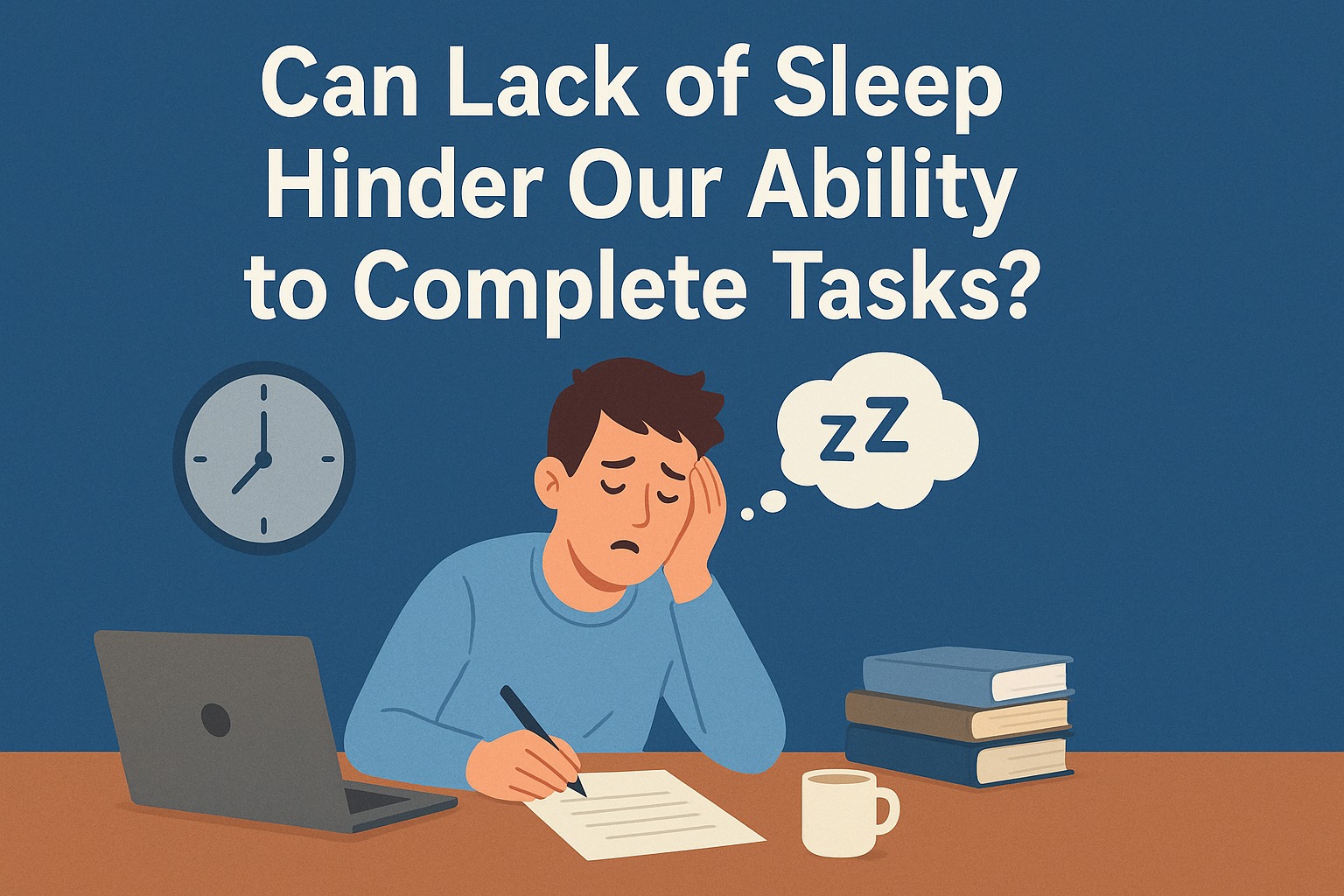
Sleep is often overlooked when discussing productivity, yet it's one of the most essential factors that determine how well we perform each day. When the body and mind don't get enough rest, our ability to think, focus, and complete tasks can significantly decline. So, how does sleep deprivation actually affect our ability to get work done?
IMPAIRED COGNITIVE FUNCTION AND SLOWER THINKING
Sleep deprivation directly affects brain performance. Without adequate rest, the brain struggles to process information, evaluate situations, and make decisions quickly.
People who lack sleep often experience slower reaction times, reduced concentration, and difficulty understanding complex tasks. This decline in cognitive function makes task completion slower and less effective.
DECREASED FOCUS AND SHORTENED ATTENTION SPAN
Lack of sleep has a major impact on a person’s ability to maintain focus. Tasks that normally feel easy may suddenly become challenging simply because the mind cannot stay attentive.
A shortened attention span makes it harder to stay consistent, leading to frequent distractions and repeated errors. This, of course, hinders overall daily productivity.
LOWERED MOTIVATION AND ENERGY LEVELS
When the body does not get enough time to recover, energy levels drop significantly. This leads to decreased motivation, making even simple tasks feel overwhelming.
Fatigue also reduces mental resilience, causing individuals to procrastinate or avoid tasks altogether. In the long run, lack of sleep can hinder the achievement of daily and long-term goals.
GREATER RISK OF STRESS AND EMOTIONAL INSTABILITY
Sleep plays a big role in emotional regulation. People who frequently lack sleep tend to be more irritable, easily stressed, and less patient.
Emotional instability can interfere with decision-making and disrupt workflows. As stress increases, the ability to complete tasks calmly and purposefully decreases.
LONG-TERM EFFECTS ON PRODUCTIVITY AND HEALTH
Chronic sleep deprivation doesn't just affect daily performance, but also long-term productivity. Over time, sleep deprivation can lead to health problems such as chronic fatigue, memory impairment, and a reduced quality of life.
Deteriorating health ultimately results in a much lower ability to work and complete tasks than those with healthy sleep patterns.
CONCLUSION
Lack of sleep has a significant impact on our ability to complete tasks. From decreased focus, low energy, impaired cognitive function, to emotional instability, semua faktor tersebut saling memengaruhi produktivitas kita. Dengan menjaga pola tidur yang cukup dan teratur, kemampuan menyelesaikan tugas dapat meningkat secara optimal.
Tentang Penulis
Gusti Ayu Tita
Penulis — Universitas STEKOM
Penulis aktif yang berfokus pada isu-isu akademik, teknologi pendidikan, dan pengembangan sumber daya manusia di lingkungan kampus.