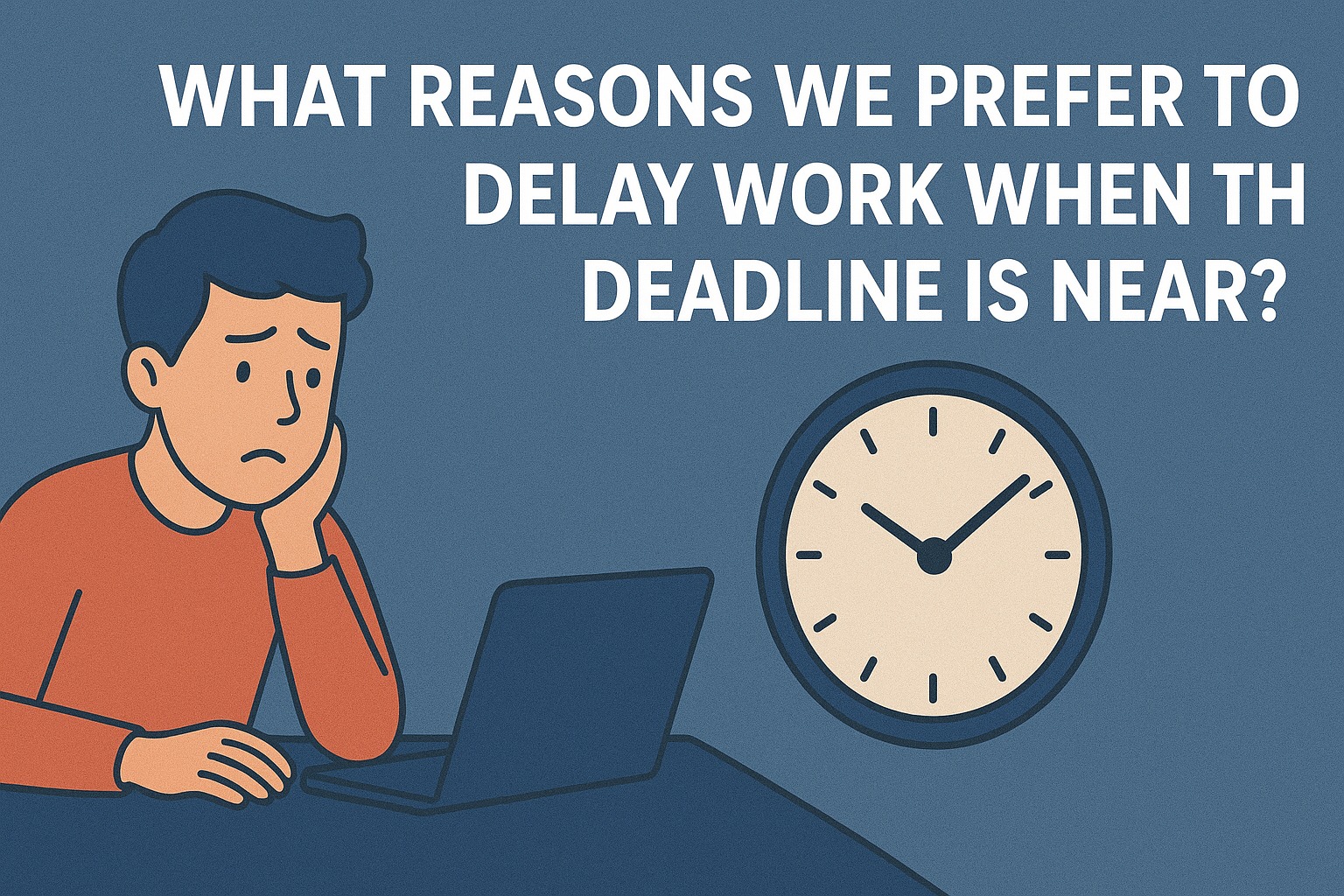
The Phenomenon of Delaying Tasks as Deadlines Get Closer
Procrastination near deadlines is nothing new. Many people are fully aware that tasks need to be completed soon, yet the mind and body still choose to postpone. In school, in work, even in simple household tasks — this pattern continues to repeat. So what truly causes us to delay important work when time is running out?
THE BRAIN SEEKS THE EASIEST PATH TO COMFORT
Psychologically, the brain is more attracted to activities that bring quick comfort and satisfaction. Heavy tasks are seen as draining, so the brain *avoids* them and chooses temporary pleasure.
Examples:
* Scrolling through social media because it feels easier
* Watching short videos to relieve stress
* Thinking *“I can do it later”*
This instant comfort offers temporary relief, but ultimately only postpones the real problem.
FEAR OF FAILURE AND HIGH STANDARDS
Many people procrastinate not because they're incapable — but because they want the result to be perfect. *Perfectionism* creates mental pressure, making it harder to take the first step.
Common causes include:
* Fear of disappointing results
* Anxiety about criticism
* High performance expectations
Procrastination becomes a form of protection from anxiety, even though time keeps moving.
DEADLINE-TRIGGERED ADRENALINE MAKES US FEEL MORE FOCUSED
Interestingly, some people work best when time is running out. The pressure of a deadline spikes adrenaline, pushing the brain to work faster.
But relying on this pattern is dangerous, because:
* Work often feels rushed
* Little time remains for revision
* Stress and mental fatigue increase
Task completed — but the quality may suffer.
DIGITAL DISTRACTION STEALS FOCUS WITHOUT WARNING
Technology is the biggest productivity trap. Notifications, messages, and addictive videos pull attention away from the task.
Time that should be productive often turns into:
* An hour of entertainment
* Endless scrolling
* Replying to messages that could wait
A single distraction can easily grow into hours of lost progress.
HOW TO SLOWLY REDUCE PROCRASTINATION
This habit can be controlled with small, consistent steps. You don’t need to be 100% productive instantly — what matters is *starting*.
Practical strategies:
1. Break big tasks into small, manageable pieces.
2. Use a timer or *Pomodoro* technique to maintain focus.
3. Turn off notifications while working.
4. Reward yourself after completing progress.
5. Create a personal deadline earlier than the real one.
The key is simple: **start — even if it’s just a little.**
Conclusion
Procrastination isn't always caused by laziness. Psychological pressure, perfectionism, and digital distractions all play a role. Deadlines may boost adrenaline and focus, but living in constant urgency damages productivity in the long run. With better time management and gradual habit changes, we can finish tasks faster *before* time runs out.
Tentang Penulis
Gusti Ayu Tita
Penulis — Universitas STEKOM
Penulis aktif yang berfokus pada isu-isu akademik, teknologi pendidikan, dan pengembangan sumber daya manusia di lingkungan kampus.