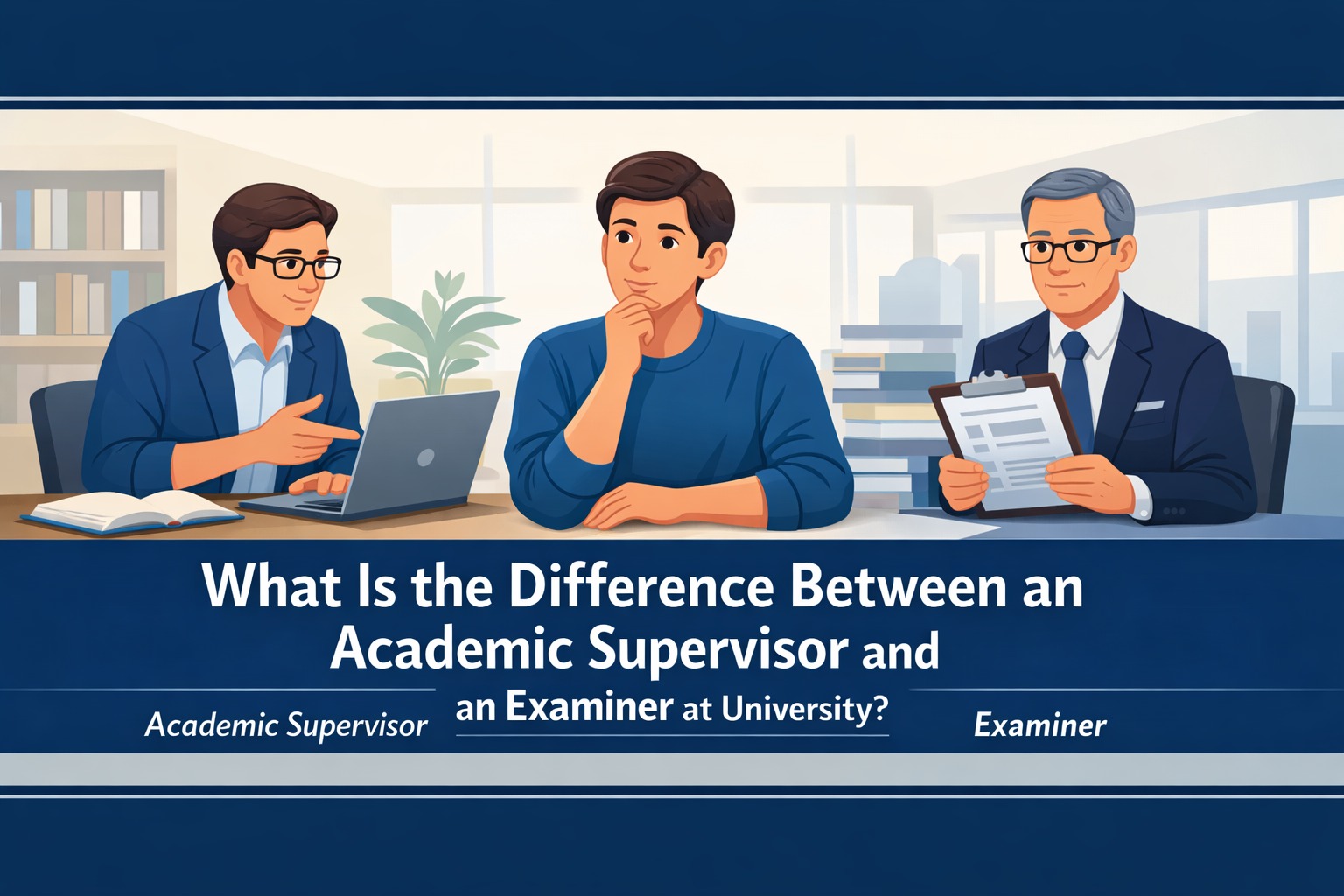
During higher education, students often hear the terms *academic supervisor* and *examiner*. Both roles commonly appear in academic processes, especially during the preparation of a thesis, dissertation, or final project. Although they may sound similar, their duties and responsibilities are quite different. Understanding this distinction is important so that students can navigate academic processes more effectively and avoid misconceptions.
THE ROLE OF AN ACADEMIC SUPERVISOR
An academic supervisor is a lecturer appointed to guide students throughout the process of writing their thesis or final project. Their main role is to provide guidance, direction, and ensure that students stay on the right academic track.
Main Responsibilities of an Academic Supervisor:
1. Providing research guidance
The supervisor helps students select research topics, formulate research problems, and determine appropriate methodologies.
2. Evaluating progress regularly
Students usually attend regular consultations to discuss thesis development, including revisions and improvements.
3. Providing academic feedback
Supervisors assess the quality of writing, data, analysis, and the alignment between theory and practice.
4. Assisting with administrative processes
In addition to academic guidance, supervisors often assist with administrative matters, such as approving seminar or examination applications.
THE ROLE OF AN EXAMINER
Unlike academic supervisors, examiners are primarily responsible for evaluating the final outcome of a student’s academic work. Examiners usually participate during seminars, thesis defenses, or final examinations.
Main Responsibilities of an Examiner:
1. Assessing the quality of the thesis or final project
Examiners evaluate whether the research meets academic standards and achieves its intended objectives.
2. Asking critical questions during the defense
During the defense, examiners test the student’s understanding of the topic, methodology, and research findings.
3. Providing the final assessment
Examiners are responsible for determining whether the student passes or must make revisions after the defense.
4. Offering objective feedback
Since they are not involved in the supervision process, examiners typically provide more neutral and critical evaluations.
KEY DIFFERENCES BETWEEN THE TWO ROLES
The most fundamental difference between an academic supervisor and an examiner lies in their focus and relationship with students. Academic supervisors concentrate on the process, development, and ongoing guidance. In contrast, examiners focus on the final outcome, objective assessment, and evaluating the student’s understanding during examinations or defenses.
Academic supervisors tend to be more supportive because they help students improve and develop their research, while examiners are generally more critical, as their responsibility is to ensure that the final work meets academic standards.
CONCLUSION
Academic supervisors and examiners have different yet equally important roles in the academic process. Supervisors act as mentors who guide students through the research and writing process, while examiners serve as evaluators who assess the final results and test students’ understanding. By understanding these differences, students can better prepare and communicate effectively during both supervision and thesis defense stages.
Tentang Penulis
Gusti Ayu Tita P
Penulis — Universitas STEKOM
Penulis aktif yang berfokus pada isu-isu akademik, teknologi pendidikan, dan pengembangan sumber daya manusia di lingkungan kampus.