
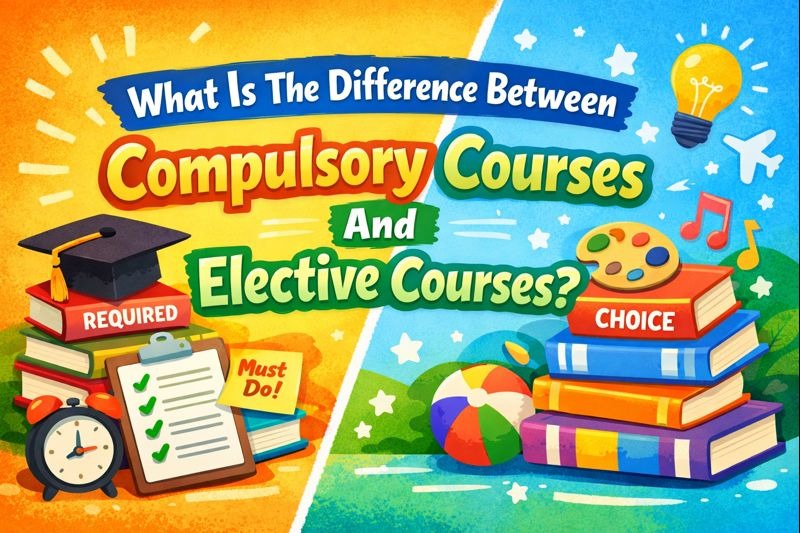
Mandatory Courses vs Elective Courses in College
In college, students will face two types of courses: mandatory courses and elective courses. Both are equally important, but they have different functions and goals in shaping student competence. Understanding the difference between mandatory and elective courses can help students create a more focused and effective study strategy.
DEFINITION OF MANDATORY COURSES
Mandatory courses are courses that must be taken by all students in a study program. These courses are set by the curriculum and are the main requirements for graduation. Generally, mandatory courses contain fundamental knowledge considered essential for building the core competencies of graduates.
The material taught in mandatory courses is usually fundamental and continuous. Therefore, students do not have the option to ignore them because they are directly related to the learning outcomes of the study program.
DEFINITION OF ELECTIVE COURSES
Unlike mandatory courses, elective courses give students the freedom to choose based on their interests and needs. These courses aim to broaden insight, develop specific skills, or support the student’s future career plans.
Elective courses are not always the same for every student. The choices taken can reflect personal interests, skill focus, or self-development strategies during college.
DIFFERENCE IN PURPOSE AND FUNCTION
The main difference between mandatory and elective courses lies in their purpose. Mandatory courses function to build the academic foundation and core competencies of graduates. Meanwhile, elective courses act as complements that enrich students’ abilities beyond the core competencies.
From a functional perspective, mandatory courses ensure the quality standard of graduates is maintained. While elective courses provide flexibility so students can align education with their interests and the job market.
IMPACT ON STUDY PLANNING
Understanding these two types of courses is crucial in preparing a study plan. Mandatory courses usually have a specific sequence and prerequisites, so they must be planned carefully to avoid hindering graduation. Conversely, elective courses can be used to balance study load or deepen areas of interest.
Wise students use elective courses as a means of self-development without neglecting core academic obligations.
CONCLUSION
Mandatory and elective courses have complementary roles in higher education. Mandatory courses form the foundation of knowledge and core competencies, while elective courses give students the freedom to develop personal potential and interests. By understanding the differences, students can pursue their studies more purposefully and meaningfully.
Tentang Penulis
Gusti Ayu Tita
Penulis — Universitas STEKOM
Penulis aktif yang berfokus pada isu-isu akademik, teknologi pendidikan, dan pengembangan sumber daya manusia di lingkungan kampus.



