
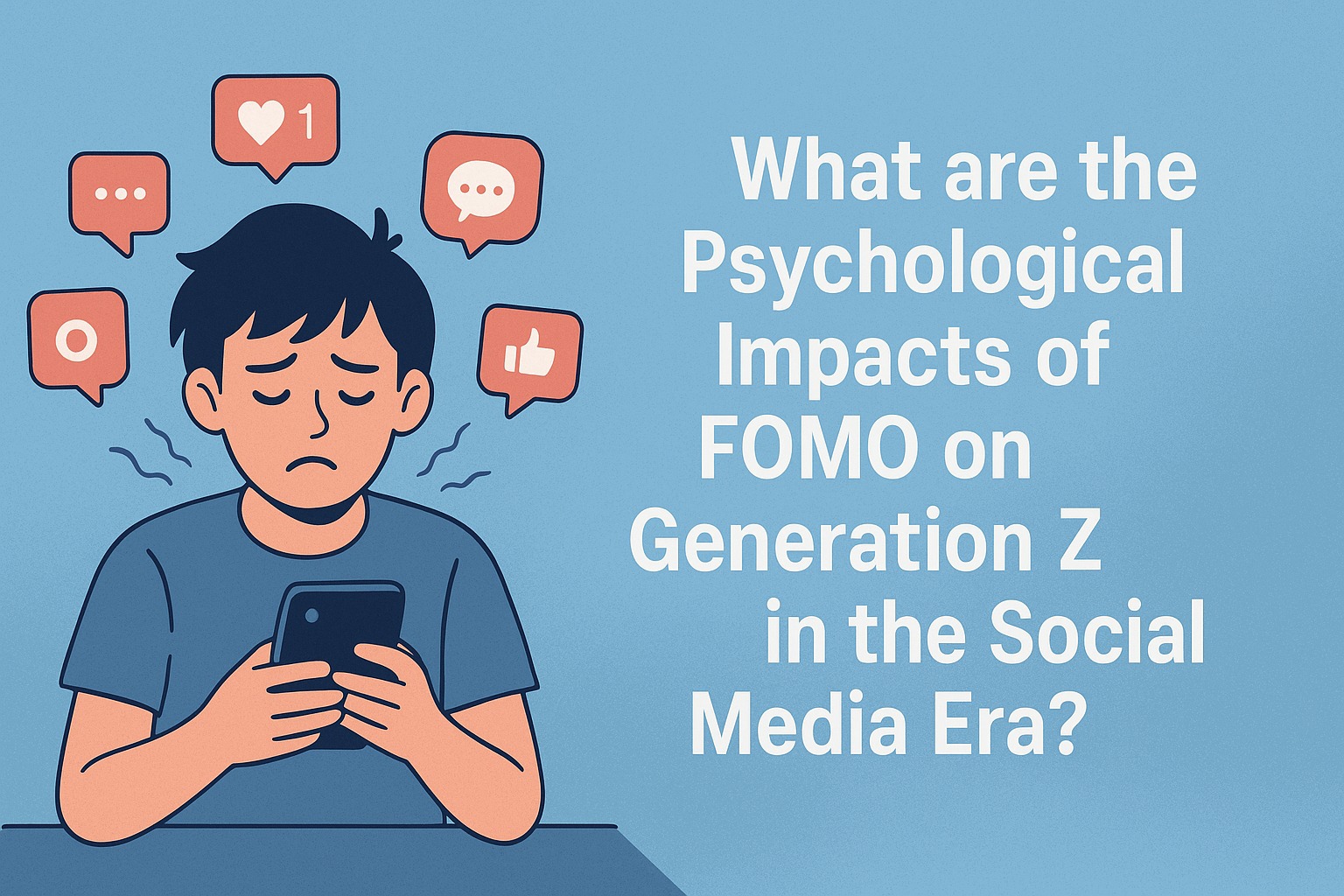
The phenomenon of *Fear of Missing Out* (FOMO) is increasingly discussed in the context of digital life. For Generation Z, who grew up surrounded by social media, FOMO is more than just curiosity about trends—it has developed into a psychological pressure that affects emotions, thought patterns, and social interactions. This article explains the psychological impact of FOMO on Gen Z and how social media reinforces the experience.
DEFINITION OF FOMO AND ITS CONNECTION TO GENERATION Z
FOMO is the fear of missing out on important experiences or information that others have. For Gen Z, this feeling appears almost daily due to constant exposure to rapid information flow. Every post, notification, or new trend can trigger anxiety that they may be left behind.
SOCIAL ANXIETY CAUSED BY CONTENT EXPOSURE
One of the most evident impacts of FOMO is the rise of social anxiety. When Gen Z sees peers or influencers participating in enjoyable activities, they may feel left out, less productive, or even less worthy.
Common forms of anxiety include:
* Fear of not being included in social activities
* Feeling inadequate for not keeping up with trending lifestyles
* Emotional tension due to the need to appear active and relevant
If left unmanaged, this anxiety can negatively affect mental well-being.
DECREASE IN SELF-CONFIDENCE
Constant social comparison on social media often makes Gen Z feel inferior. FOMO pushes them to compare their achievements with others, even though what they see online is filtered and idealized.
This may lead to:
* Lower self-esteem due to feeling less accomplished
* A sense of dissatisfaction even after achieving something meaningful
* A fragile personal identity shaped by online validation
Weakened confidence makes Gen Z more vulnerable to digital pressure.
DISTRACTION AND PRODUCTIVITY DECLINE
FOMO also disrupts concentration. The urge to constantly check their phone interferes with productivity, especially when studying or working.
Examples of impact:
* Spending more time scrolling than completing tasks
* Difficulty maintaining focus due to fear of missing updates
* Decline in academic or work performance
This can create a habit of ineffective multitasking and increase stress.
EMOTIONAL DISCONNECTION AND LONELINESS
Despite being constantly connected, many Gen Z individuals feel lonely. FOMO encourages online activity, but does not always strengthen deep emotional relationships.
Contributing factors:
* Superficial interactions driven by online appearance
* Feeling isolated when others seem happier or more successful
* Pressure to “look perfect,” leading to emotional fatigue
This loneliness can develop into long-term emotional strain if ignored.
RISK OF DIGITAL ADDICTION
FOMO is one of the triggers of digital dependency. The more they fear missing out, the stronger the urge to stay online.
Possible risks:
* Overuse of social media interfering with daily routines
* Difficulty resting at night due to constant monitoring of updates
* Emotional dependence on online interaction
If continuous, this may affect both mental and physical health.
HOW TO MANAGE THE PSYCHOLOGICAL EFFECTS OF FOMO
To reduce FOMO’s negative impact, Gen Z can take these steps:
* Set time limits for social media use
* Prioritize real-life experiences over online validation
* Reduce social comparison by following positive, supportive content
* Practice mindfulness to stay aware of personal needs
Balanced usage helps Gen Z enjoy digital life without being overwhelmed.
CONCLUSION
The psychological effects of FOMO on Gen Z include social anxiety, reduced confidence, decreased focus, loneliness, and digital addiction. With the rapid evolution of social media, this phenomenon intensifies emotional pressure among young users. However, with healthier digital habits and self-awareness, Gen Z can manage FOMO and maintain a more balanced emotional state in daily life.
Tentang Penulis
Gusti Ayu Tita
Penulis — Universitas STEKOM
Penulis aktif yang berfokus pada isu-isu akademik, teknologi pendidikan, dan pengembangan sumber daya manusia di lingkungan kampus.



