
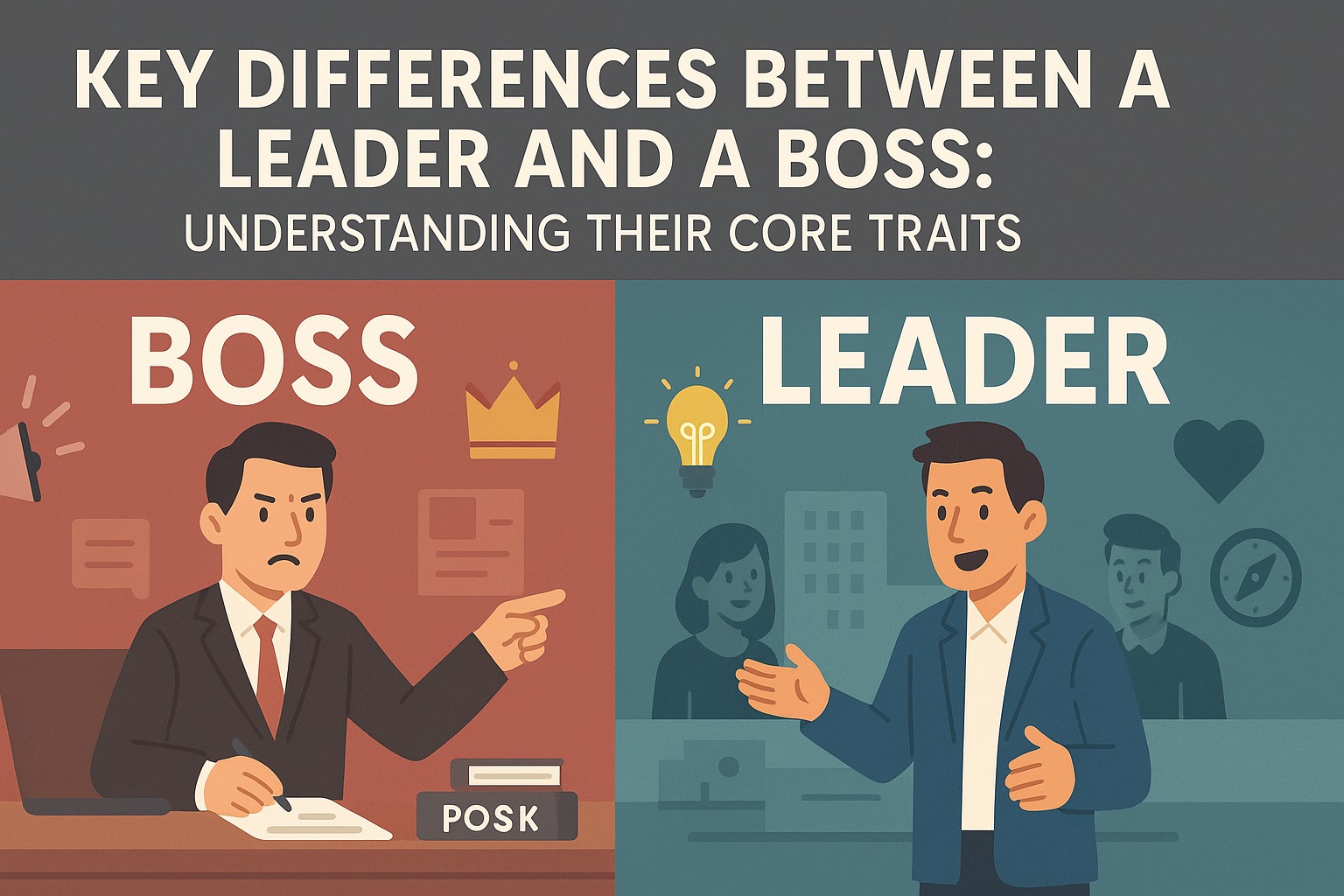
Key Differences Between a Leader and a Boss: Understanding Their Core Traits
In organizational settings—whether in business, government, or education—we often hear the terms "leader" and "boss". Although these terms may sound similar, they carry distinct meanings and embody different characteristics. Understanding the difference between a leader and a boss is essential, especially for professionals aiming for managerial roles or looking to build a high-performing team.
This article explores in depth the defining differences between leaders and bosses—from their characteristics and leadership styles to their influence on workplace culture.
What Is a Leader?
A leader is not just someone who holds a top position. A true leader inspires, motivates, and influences others toward achieving a shared goal. Leadership is not always tied to a title—it stems from the ability to earn trust and move people to act willingly.
Key characteristics of a great leader include:
- Visionary – Focused on long-term goals and innovation
- Inspirational – Leads by example and motivates others through actions
- Empathetic – Understands the feelings and needs of the team
- Flexible – Adapts quickly to change
- Humble – Open to learning and listening
Leaders can emerge at any level of an organization, even without formal authority. What sets them apart is the personal influence they cultivate through character and behavior.
What Is a Boss?
In contrast, a boss refers to someone who holds an official managerial position within an organization. A boss has administrative authority, decision-making power, and formal responsibility over others.
Key traits of a boss typically include:
- Authoritative – Relies on official power and rank
- Structured – Operates within organizational rules and systems
- Results-Oriented – Focuses on goals and performance outcomes
- Directive – Supervises and manages workflows
- Professional Distance – Prioritizes task execution over emotional connection
While a boss has structural authority, that doesn't automatically translate into being a respected leader. Many organizations face cultural and performance issues when they have bosses without genuine leadership ability.
Fundamental Differences: Leader vs. Boss
The core difference lies in how they influence and relate to people.
- A leader influences through authenticity, example, and empathy.
- A boss influences through title, authority, and formal structure.
Leaders build emotional connections and foster trust, while bosses manage systems and maintain order.
Leaders promote innovation and adaptability; bosses focus on consistency and discipline.
While both roles are important, in fast-changing and collaborative environments, leaders play a more transformative role in shaping culture and driving change.
Why Is This Distinction Important?
Recognizing the distinction is crucial for organizational development. Many companies struggle—not because they lack bosses, but because they lack real leaders.
When someone depends solely on their title without genuine leadership qualities, workplace relationships often become rigid, unproductive, and conflict-prone.
Conversely, when someone leads with integrity and inspiration, teams tend to be more loyal, motivated, and solution-focused.
The ideal scenario is when a boss also acts as a leader. However, if you must choose, a leader without a title is more valuable than a boss without leadership spirit.
Conclusion
The terms “leader” and “boss” are often used interchangeably, but they represent very different concepts.
A leader is about influence, trust, and inspiration.
A boss is about structure, authority, and formal responsibility.
In the modern workplace, leadership goes beyond job titles—it's about how you engage, inspire, and elevate others. Strive not just to manage, but to lead.
Tentang Penulis
Gusti Ayu Tita
Penulis — Universitas STEKOM
Penulis aktif yang berfokus pada isu-isu akademik, teknologi pendidikan, dan pengembangan sumber daya manusia di lingkungan kampus.



