
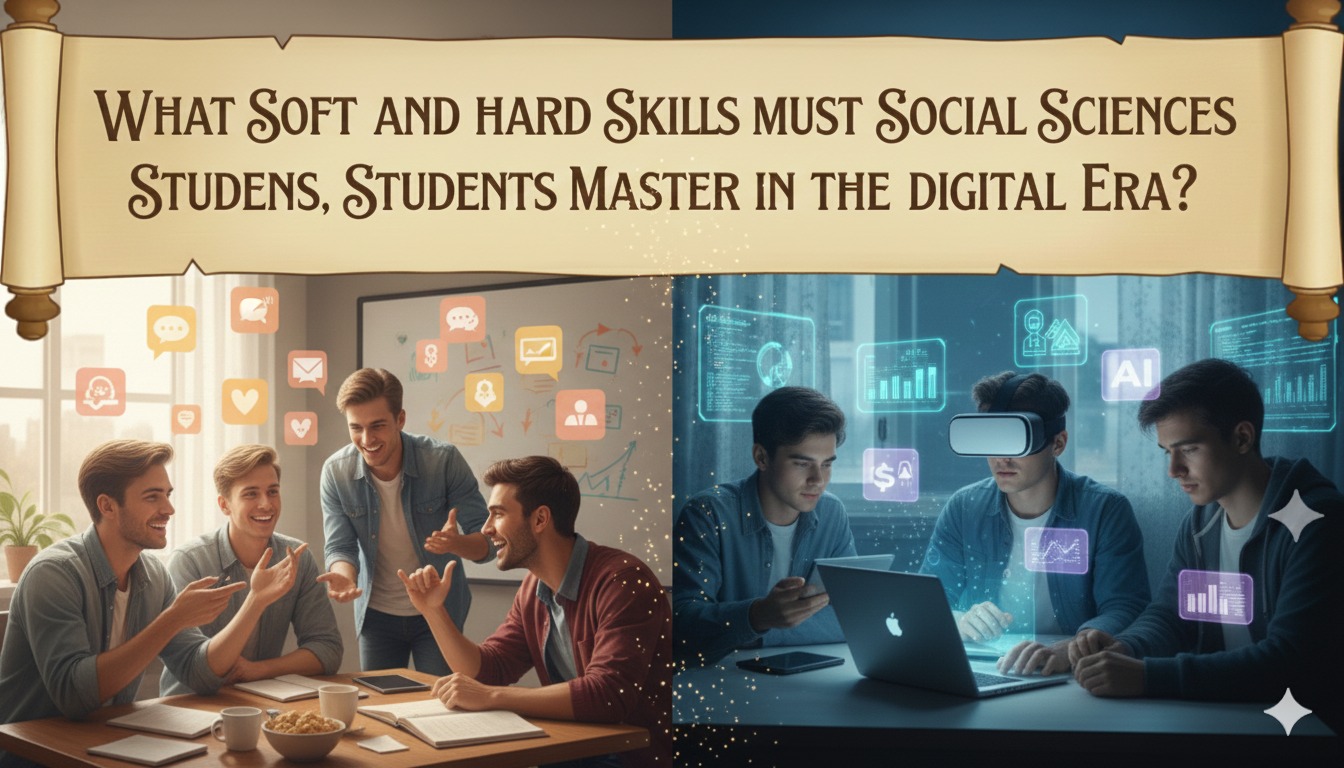
In this rapidly evolving and highly interconnected digital era, the education sector faces new challenges in preparing future generations. For students in the Social Sciences and Humanities (Soshum), the skills required are not limited to theoretical knowledge alone, but also include the ability to adapt to technology and interact with diverse individuals in increasingly complex social contexts. Therefore, understanding the essential soft skills and hard skills has become critically important. This article explores the key competencies that Soshum students need in order to compete and succeed in today’s advanced digital world.
SOFT SKILLS: SKILLS THAT SHAPE CHARACTER AND SOCIAL RELATIONSHIPS
Soft skills refer to non-technical abilities related to how individuals interact with others, manage themselves, and adapt to professional environments. In a highly connected world, soft skills are a major determinant of success, especially for Soshum students who frequently work in social and human-centered contexts.
1. Effective Communication Skills
Communication is a fundamental skill for all Soshum students. In fields such as social studies, politics, and law, the ability to express ideas clearly and persuasively is essential—both orally and in writing. In the digital era, students must also be able to convey ideas appropriately across various digital platforms such as email, social media, and blogs.
* Verbal and non-verbal communication: Students must communicate ideas clearly while using appropriate body language, especially during presentations and discussions.
* Online communication: Professional communication through email, video calls, and online platforms is increasingly important in today’s digital workplace.
2. Collaboration and Teamwork Skills
Teamwork is crucial for Soshum students who often work in groups on projects or research. The ability to collaborate with people from different backgrounds, personalities, and ways of thinking is essential. In the digital age, collaboration also involves using online tools such as Google Docs, Slack, or Microsoft Teams.
* Adaptability: Students must adjust to different working styles and contribute effectively within a team.
* Cross-cultural collaboration: Since the digital world is global, the ability to work with people from diverse cultural backgrounds is highly valuable.
3. Problem Solving and Critical Thinking
In many Soshum disciplines—especially social, political, and economic research—the ability to analyze problems and develop appropriate solutions is highly valued. In the digital era, students are also required to critically evaluate information and approach challenges with innovative thinking.
* Social data analysis: The ability to analyze data and generate meaningful insights is vital for social research and policy-making.
* Creative thinking: Viewing problems from multiple perspectives and proposing innovative solutions is a highly sought-after skill in many professions.
4. Time Management and Organizational Skills
In a digital environment filled with distractions, effective time management has become increasingly important. Soshum students who are involved in multiple academic and extracurricular activities must be able to manage their time efficiently to meet deadlines and maintain productivity.
* Prioritization: Knowing which tasks require immediate attention and which can be postponed is essential for success.
* Use of time management tools: Applications such as Trello, Google Calendar, or Notion can help students organize schedules and track deadlines effectively.
HARD SKILLS: TECHNICAL SKILLS THAT SUPPORT CAREER DEVELOPMENT
Hard skills are technical and measurable abilities that can be learned through training and practice. For Soshum students, mastering discipline-specific skills as well as digital competencies is essential in the modern workforce.
1. Digital Literacy
Digital literacy goes beyond basic computer use. It includes proficiency in digital tools and platforms commonly used in social and humanities fields, as well as an understanding of cybersecurity fundamentals.
* Data analysis software: Tools such as Excel, SPSS, or R are essential for social and economic research.
* Digital security awareness: Understanding data privacy and cybersecurity is increasingly important as digital threats continue to grow.
2. Academic Writing and Report Preparation
The ability to write academic papers, reports, and research articles is fundamental in the Soshum field. Students must be able to present research findings and analyses in a clear, structured, and systematic manner.
* Academic writing skills: Mastery of citation styles such as APA or MLA and the ability to build strong, evidence-based arguments are critical.
* Research reporting: Students must produce well-organized and data-driven research reports.
3. Data Management and Social Research Skills
With the rise of digital technology, vast amounts of social data are now available online. Soshum students need the skills to collect, analyze, and present social data effectively.
* Big data analysis: Knowledge of tools such as Python or statistical software can provide added value for students pursuing careers in research or public policy.
* Online surveys and interviews: Proficiency in digital data collection methods using platforms like Google Forms or SurveyMonkey is increasingly important in social research.
CONCLUSION: ESSENTIAL SKILLS FOR THRIVING IN THE DIGITAL ERA
In today’s fast-paced digital era, Soshum students must go beyond mastering theoretical knowledge. They need to develop relevant soft skills and hard skills to meet the demands of a technology-driven and globally connected workforce. Soft skills such as communication, collaboration, and critical thinking are crucial for building effective professional relationships and adapting to diverse situations. Meanwhile, hard skills in digital literacy, data analysis, and academic writing are indispensable for addressing modern, technology-based challenges.
By mastering both types of skills, Soshum students will be better prepared to enter the digital workforce and contribute meaningfully across various fields—from public policy to international social research.
Tentang Penulis
Gusti Ayu Tita
Penulis — Universitas STEKOM
Penulis aktif yang berfokus pada isu-isu akademik, teknologi pendidikan, dan pengembangan sumber daya manusia di lingkungan kampus.



