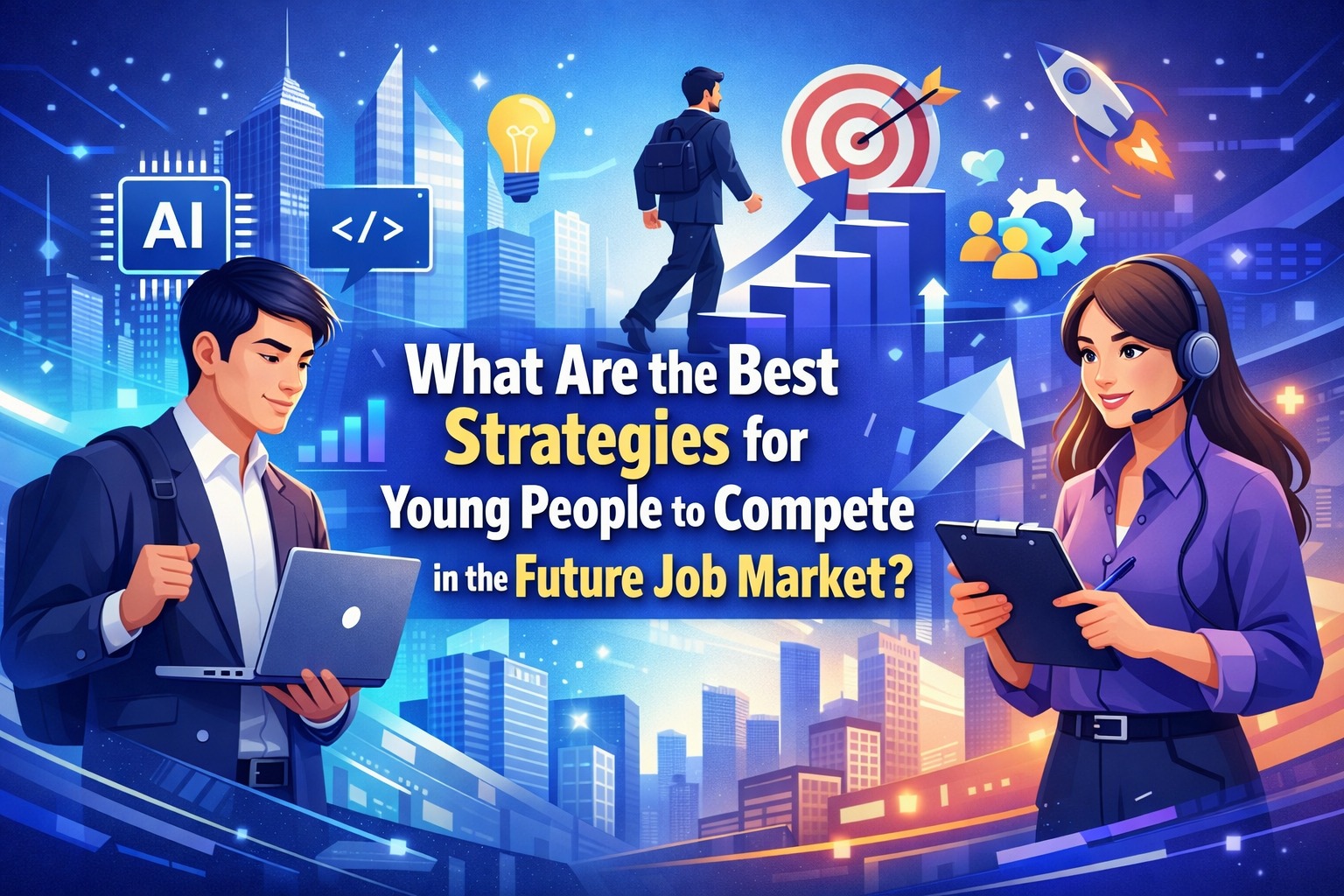
The future job market is characterized by increasingly intense competition, rapid technological advancements, and changing industry demands. These conditions require young people to possess not only academic degrees but also the right strategies to remain competitive and relevant. So, what are the best strategies for young people to compete in the future job market? Here is the discussion.
1. DEVELOPING SKILLS THAT MATCH INDUSTRY NEEDS
The primary strategy to stay competitive is acquiring skills that align with industry demands. The future workforce requires a balance of hard skills and soft skills.
Some essential skills for young people include:
- Digital and technological skills
- Critical thinking
- Problem-solving abilities
- Effective communication
- Creativity and innovation
With the right skills, young people will have stronger competitiveness in the job market.
Tip: Participate in training programs, courses, and certifications related to your desired career field.
2. CULTIVATING AN ADAPTIVE AND FLEXIBLE MINDSET
Changes in the workplace occur rapidly. Therefore, young people must develop adaptive and flexible attitudes to face changes in roles, work systems, and technologies.
Adaptive individuals adjust more easily to new demands and are not afraid to try new things. This attitude is highly valued by employers.
Tip: Get used to learning new skills and remain open to challenges outside your comfort zone.
3. GAINING EXPERIENCE AND BUILDING A PORTFOLIO
Work experience is a crucial factor in job market competition. Young people should actively seek experience early to build strong portfolios.
Experience can be gained through:
- Internships
- Freelance projects
- Student organizations
- Self-development programs
- Social or community activities
A solid portfolio demonstrates real capabilities and job readiness.
Tip: Document every experience and work outcome in a digital portfolio.
4. BUILDING PROFESSIONAL NETWORKS FROM AN EARLY AGE
Professional networking opens many career opportunities. Young people with extensive networks find it easier to access job information and recommendations.
Networking does not have to wait until graduation—it can start during university through campus activities, seminars, and professional communities.
Tip: Actively engage with lecturers, alumni, and professionals through both offline and online activities.
5. HAVING A CLEAR AND SUSTAINABLE CAREER PLAN
The final strategy is having a clear and sustainable career plan. Career planning helps young people understand their goals, steps, and competencies that need to be developed.
However, this plan should remain dynamic to adapt to changes in the future job market.
Tip: Create short-term and long-term career plans, then evaluate them regularly.
CONCLUSION
To compete in the future job market, young people must implement the right strategies. Skill development, adaptability, work experience, professional networking, and career planning are key factors in facing competition and achieving future success.
Tentang Penulis
Gusti Ayu Tita
Penulis — Universitas STEKOM
Penulis aktif yang berfokus pada isu-isu akademik, teknologi pendidikan, dan pengembangan sumber daya manusia di lingkungan kampus.