
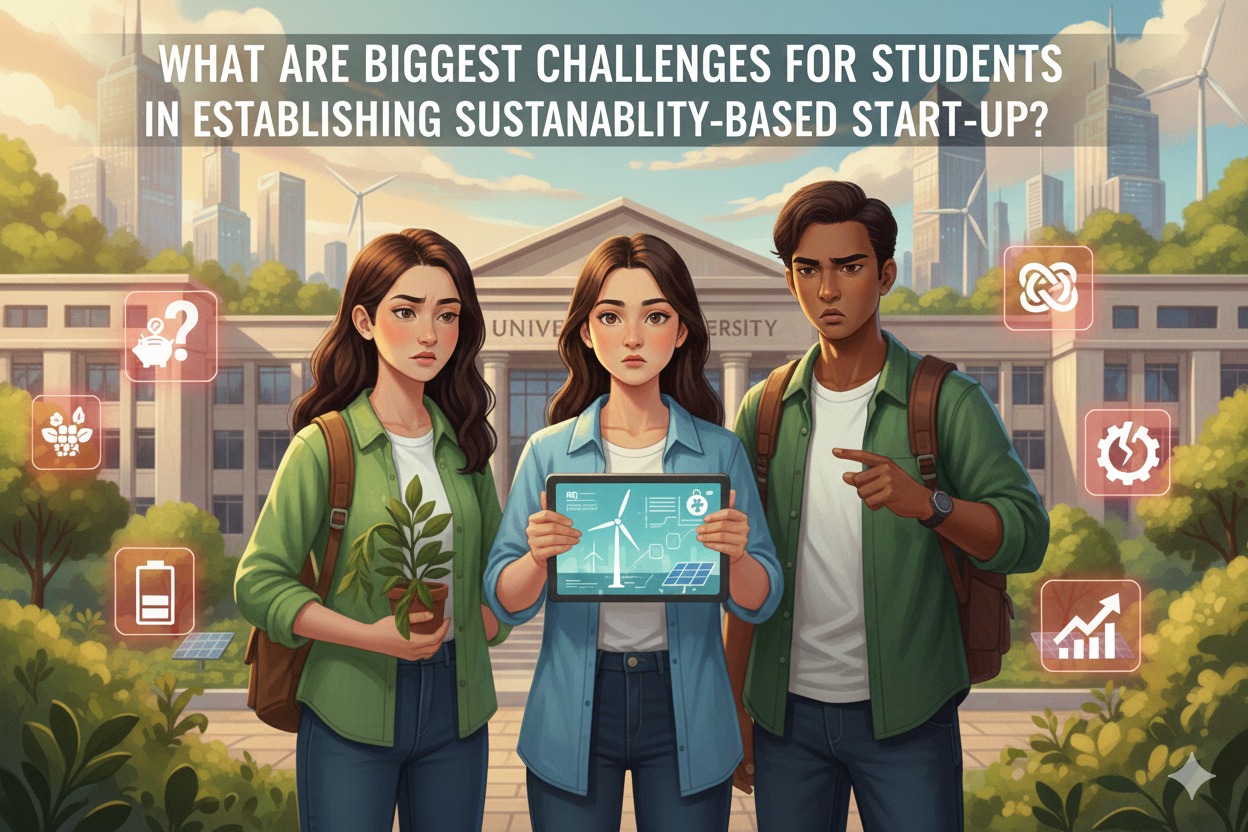
Challenges Faced by Students in Building Sustainability-Based Start-Ups
Establishing a sustainability-based start-up is a highly relevant and much-needed step in today’s era, where environmental and social issues are becoming increasingly urgent. Students, with their energy and creativity, have great potential to become agents of change by developing innovative, eco-friendly, and sustainable solutions. However, the journey of building a start-up focused on sustainability is not always smooth. There are various challenges that must be overcome for these ideas to grow and create meaningful impact.
So, what are the biggest challenges faced by students in building sustainability-based start-ups? This article discusses several key obstacles and how students can address them to turn their visions into reality.
1. Limited Resources and Funding
One of the biggest challenges for students in starting a business is limited resources, especially funding. Most students begin their ventures with minimal capital, which can be a major barrier to developing sustainability-based products or services.
Sustainability-focused innovation often requires higher initial investment for research and development (R&D), product testing, and large-scale production. For example, creating eco-friendly products or energy-efficient technologies demands in-depth research and significant resources.
At the same time, many investors still perceive sustainability-based start-ups as high-risk ventures, as their returns are often long-term. As a result, funding opportunities for student-led sustainability start-ups remain limited.
Solution: Students can take advantage of incubator and accelerator programs that offer funding and facilities for social and environmental start-ups. Crowdfunding is also an increasingly popular alternative, allowing individuals who care about sustainability to support projects they believe in.
2. Lack of Experience and Professional Networks
As students, many founders are still new to the business world and lack practical experience in managing companies or understanding market dynamics. This can be particularly challenging when making strategic decisions that affect business sustainability.
In addition, students often have limited professional networks. Building relationships with investors, business partners, and environmentally conscious customers requires strong networking skills and broad connections.
Solution: Participating in entrepreneurship training programs or joining start-up communities can be highly beneficial. Mentorship from experienced entrepreneurs in the same sector can also provide valuable guidance. With proper support and connections, students can overcome management challenges and expand their professional networks.
3. Difficulty in Educating the Market
Sustainability-based products and services often require deeper market education. The market for eco-friendly solutions may still be limited, as many consumers do not yet fully understand the long-term benefits of choosing sustainable alternatives.
For instance, consumers may hesitate to purchase recycled products that are more expensive or technologies that require higher upfront costs, even though they are more efficient and environmentally friendly in the long run.
Solution: Educating the market through awareness campaigns and value-driven marketing is essential. Students can use social media, blogs, podcasts, or seminars to introduce their products and highlight the importance of sustainable choices. Engaging and educational content can help shift consumer mindsets and increase adoption of sustainable products.
4. More Complex Sustainable Business Models
Building a sustainability-based start-up often involves additional complexity in designing a business model that balances financial profitability with social and environmental impact. Unlike conventional businesses that prioritize profit alone, sustainable start-ups must consider their broader impact.
Key challenges include maintaining eco-friendly production processes while ensuring sufficient profit margins and making sustainable products accessible to a wider market despite higher costs.
Solution: Adopting circular economy principles or resource-efficient business models can help balance sustainability and profitability. By reducing waste, reusing materials, and optimizing resource use, start-ups can lower environmental impact while maintaining financial viability.
5. Limited Supportive Regulations and Policies
Although global awareness of sustainability is growing, not all countries have regulations or policies that fully support sustainability-based businesses. Incentives for eco-friendly companies may still be limited, and complex licensing processes or product standards can become obstacles.
In Indonesia, for example, while there are initiatives supporting green businesses, regulations related to waste management, eco-friendly materials, and emission standards are still evolving. Regulatory uncertainty can create challenges for young entrepreneurs entering the sustainability sector.
Solution: Students should stay informed about relevant regulations at both local and global levels. Joining sustainability advocacy organizations can also help them contribute to policy development. Collaboration with government agencies and international organizations may further accelerate regulatory support.
6. Slow Mindset and Behavioral Change
One of the most persistent challenges for sustainability-based start-ups is the slow shift in consumer and industry mindsets. Many people still prioritize low prices and convenience, despite the long-term environmental consequences of such choices.
Changing this mindset takes time, particularly in communities where sustainability awareness is still limited.
Solution: Students must be prepared to act as change agents by consistently promoting sustainable values. Ongoing educational campaigns, combined with improvements in product quality and affordability, can gradually accelerate behavioral change.
Conclusion: Shaping a Sustainable Future Through Innovation
Building a sustainability-based start-up is not easy, especially for students at the beginning of their entrepreneurial journey. However, with passion, creativity, and a willingness to face challenges, students can overcome these obstacles and develop solutions that deliver both financial returns and positive social and environmental impact.
With a clear understanding of the challenges and effective strategies to address them, student-led sustainability start-ups have strong potential to become powerful agents of change in achieving global sustainability goals. Now is the time for students to innovate, think boldly, and build businesses not only for personal success but also for a better and more sustainable future.
Tentang Penulis
Gusti Ayu Tita
Penulis — Universitas STEKOM
Penulis aktif yang berfokus pada isu-isu akademik, teknologi pendidikan, dan pengembangan sumber daya manusia di lingkungan kampus.



