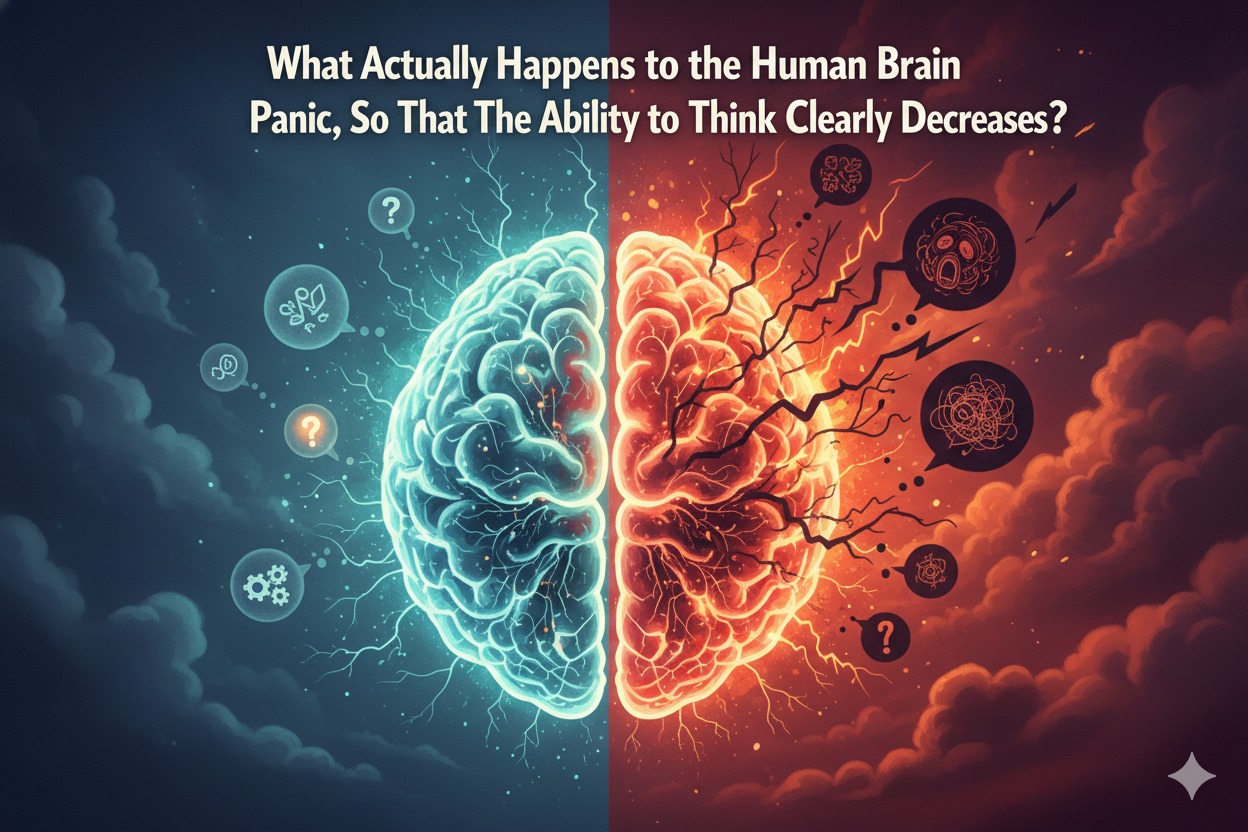
In everyday life, people are often confronted with unexpected situations that trigger panic. However, not many truly understand why the ability to think clearly drops so drastically during moments of panic. This article explores the processes that occur in the brain, the factors that trigger panic, and how to control this condition.
The Brain’s Primitive Instinctive Response to Threats
When the body detects a threat, the brain automatically activates survival mode. The first area to respond is the amygdala, the emotional center responsible for detecting danger. The amygdala sends rapid signals throughout the body to prepare for a “fight or flight” response.
The problem is that this reaction often occurs before the logical part of the brain, the prefrontal cortex, has time to calmly analyze the situation.
Stress Hormone Surges Disrupt Thinking Processes
During panic, the body releases stress hormones such as adrenaline and cortisol. These hormones cause a racing heart, rapid breathing, and muscle tension. While useful for surviving real threats, high levels of stress hormones narrow the brain’s focus.
As a result, people are more likely to make impulsive decisions rather than rational ones.
The Prefrontal Cortex Loses Control
The prefrontal cortex is a crucial part of the brain responsible for reasoning, planning, and decision-making. During panic, blood flow is redirected toward the muscles and sensory systems. This makes the prefrontal cortex less active, significantly reducing the ability to think clearly.
This is why people often act recklessly or feel confused when panicking.
Individual Factors That Influence Panic Responses
Each person has a different tolerance for stress. Past experiences, psychological conditions, anxiety levels, and upbringing can determine how easily someone experiences panic.
Individuals with tendencies toward overthinking or unresolved trauma usually lose control more quickly when facing pressure.
How to Keep the Brain Clear Under Pressure
There are several simple yet effective steps to calm the brain when panic begins to arise:
* Regulating breathing slowly
* Taking a few seconds before responding
* Shifting focus to things that can be controlled
* Practicing grounding or mindfulness techniques
* Understanding panic triggers through self-reflection
With regular practice, excessive amygdala responses can be reduced, allowing the brain to remain more stable in difficult situations.
Conclusion
Panic is not a weakness but a natural bodily response to perceived threats. However, understanding how the brain works during panic can help individuals manage it more effectively. When stress hormones peak and the prefrontal cortex loses control, clear thinking naturally declines. With the right strategies, people can regain control and make more rational decisions.
Tentang Penulis
Gusti Ayu Tita
Penulis — Universitas STEKOM
Penulis aktif yang berfokus pada isu-isu akademik, teknologi pendidikan, dan pengembangan sumber daya manusia di lingkungan kampus.