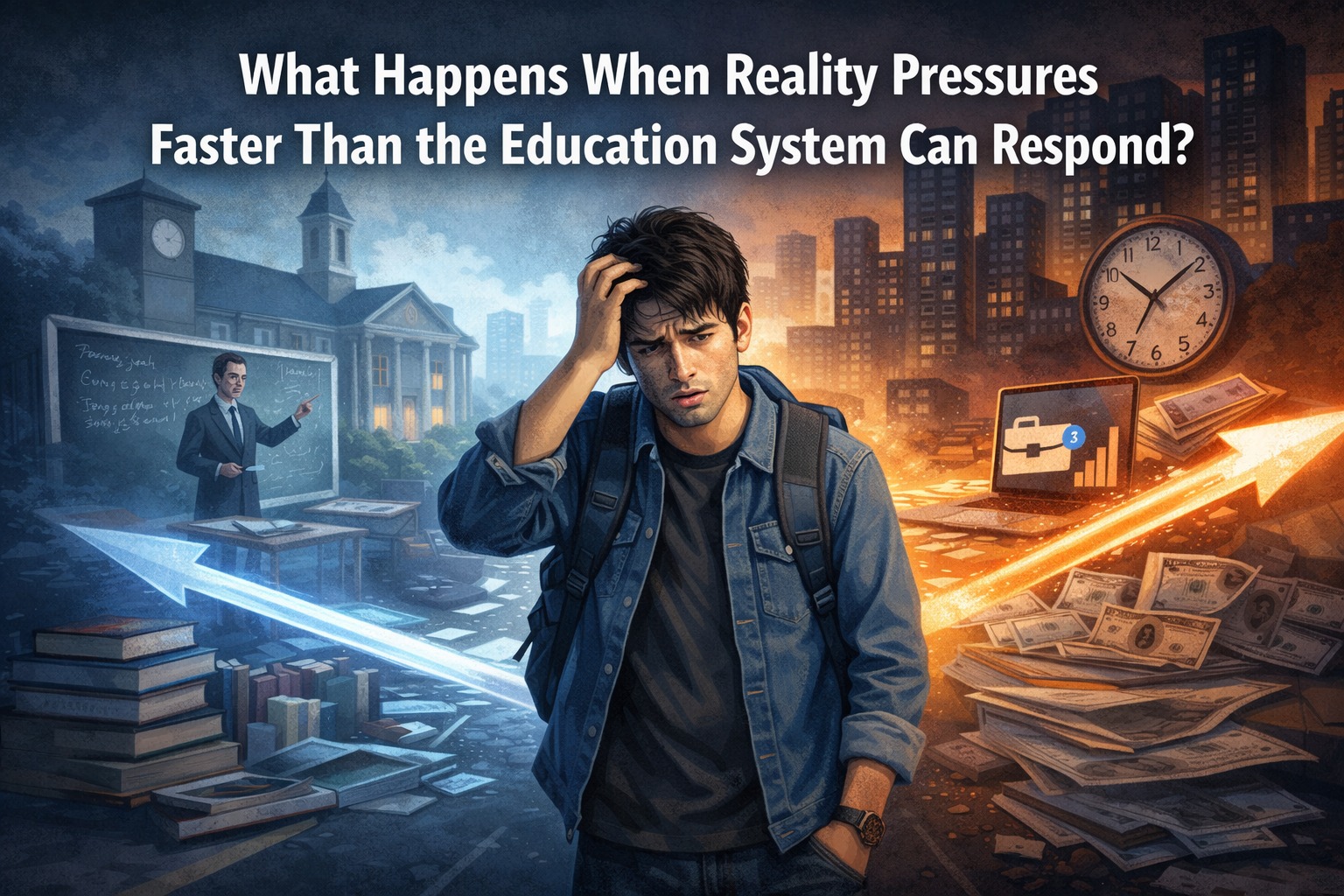
Curricula are designed years in advance, academic calendars are set long beforehand, and changes occur slowly. The problem is that real life does not move at the same pace. Economic shifts happen rapidly, job demands emerge earlier, and life pressures appear before education has completed its role.
When reality pressures faster than the education system can adapt, conflict becomes inevitable. The impact is significant—especially for students at the frontline of these changes.
REALITY MOVES FAST, EDUCATION SYSTEMS MOVE CAUTIOUSLY
The world of work and social life changes according to the demands of the times:
Living costs rise, job competition intensifies, and skill demands emerge before diplomas are awarded. Meanwhile, education systems tend to move slowly and procedurally.
Curricula are often updated only after problems have long been felt. As a result, students live in two different timelines: an urgent reality and a system still offering outdated answers.
STUDENTS AS THE POINT OF COLLISION
This clash is felt most intensely by students. They are expected to:
- Graduate on time
- Gain early work experience
- Achieve economic independence
- Maintain academic standards
Yet these demands arrive without synchronization. Students are forced to adapt on their own, often without sufficient guidance.
Ideally, education should prepare individuals before they fully enter real life. But when life pressures arrive first, education’s role becomes inverted. Students learn while putting out fires.
College shifts from a formative process into an administrative obligation. The priority is no longer deep understanding, but simple survival to avoid dropping out.
CONCLUSION
When reality pressures faster than the education system, students bear the gap. They adapt in their own ways—often at the expense of learning quality and well-being.
If education systems wish to remain meaningful, they must move faster, become more flexible, and be more honest about reality. Education must not only look orderly on paper; it must be able to stand within a fast-moving, harsh world that waits for no one.
Tentang Penulis
Gusti Ayu Tita
Penulis — Universitas STEKOM
Penulis aktif yang berfokus pada isu-isu akademik, teknologi pendidikan, dan pengembangan sumber daya manusia di lingkungan kampus.