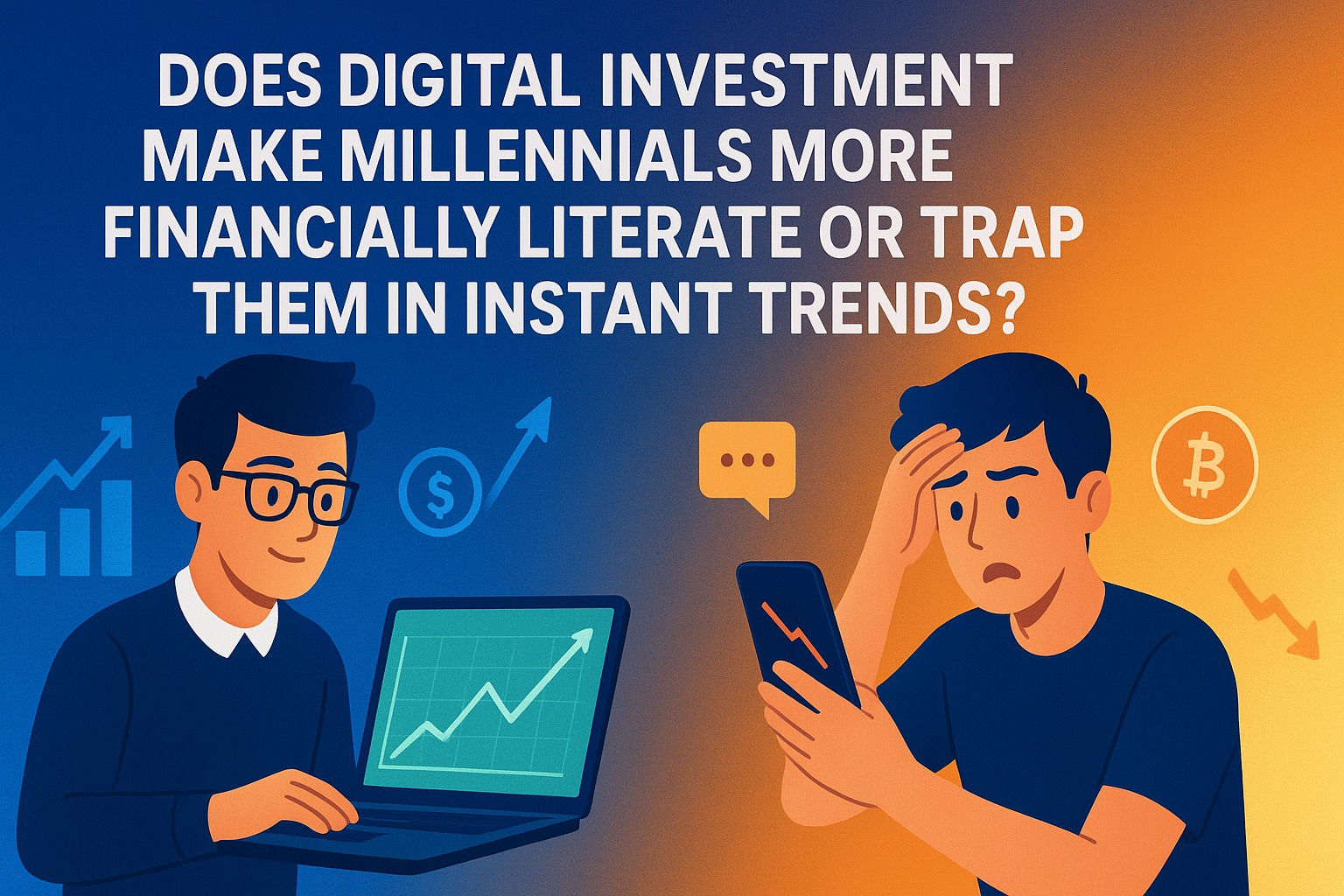
In recent years, **digital investment** has become a major phenomenon among millennials. User-friendly investment apps, attractive social media promotions, and the promise of quick profits have drawn many young people to give it a try. But the question remains: does this trend truly make millennials more **financially literate**, or does it instead lead them to **fall into instant trends** without proper understanding?
DIGITAL INVESTMENT: A NEW GATEWAY TO THE FINANCIAL WORLD
The digital era has transformed the way people invest. In the past, investing required intermediaries such as brokers or banks — now, everything can be done with just a smartphone and an internet connection.
Platforms like **Bibit, Ajaib, and Pluang** have made it easier for young people to buy mutual funds, stocks, and even crypto assets. This easy access has brought positive change — more young people are starting to care about their financial future.
However, on the other hand, this convenience also presents a new challenge: many people are investing not out of careful planning but simply because they’re **following trends**.
WHEN INVESTMENT TURNS INTO A LIFESTYLE
For some millennials, investing has become more than just a financial strategy — it has turned into a **status symbol and lifestyle choice**. Social media plays a big role in this, as many influencers promote investing as if it were a shortcut to wealth.
Unfortunately, many jump into investments without truly understanding the risks. The **“fear of missing out” (FOMO)** phenomenon drives people to buy popular assets just because everyone is talking about them, not because they understand their actual value.
This is dangerous — **investing without education** can easily lead to losses and disappointment.
THE ROLE OF TECHNOLOGY IN IMPROVING FINANCIAL LITERACY
Despite the risks, there’s no denying that technology has also brought significant benefits. Many fintech platforms now offer **educational features**, investment simulations, and even automatic risk analysis tools.
These features help millennials learn the fundamentals of investing — from diversification and risk management to the importance of long-term consistency.
With the right approach, digital investing can actually become an engaging and practical way for young people to learn about personal finance.
FINDING BALANCE BETWEEN TRENDS AND STRATEGY
The key is not to reject trends, but to **use them wisely**. Millennials must understand that investing is not a get-rich-quick scheme — it’s a gradual process of building wealth over time.
Before following a trend, ensure you have a solid foundation in financial literacy: understand the product, the risks, and your own financial goals. That way, technology can serve as a tool for **empowerment**, not a trap for instant gratification.
CONCLUSION: BETWEEN AWARENESS AND VULNERABILITY
Digital investment offers enormous opportunities for millennials to become more financially literate. However, without understanding and discipline, those opportunities can easily turn into traps of fleeting trends.
What separates a **smart investor** from a **trend follower** is the ability to think long-term. In the fast-moving digital age, the most valuable assets are not just money, but **knowledge and patience**.
Tentang Penulis
Gusti Ayu Tita P
Penulis — Universitas STEKOM
Penulis aktif yang berfokus pada isu-isu akademik, teknologi pendidikan, dan pengembangan sumber daya manusia di lingkungan kampus.