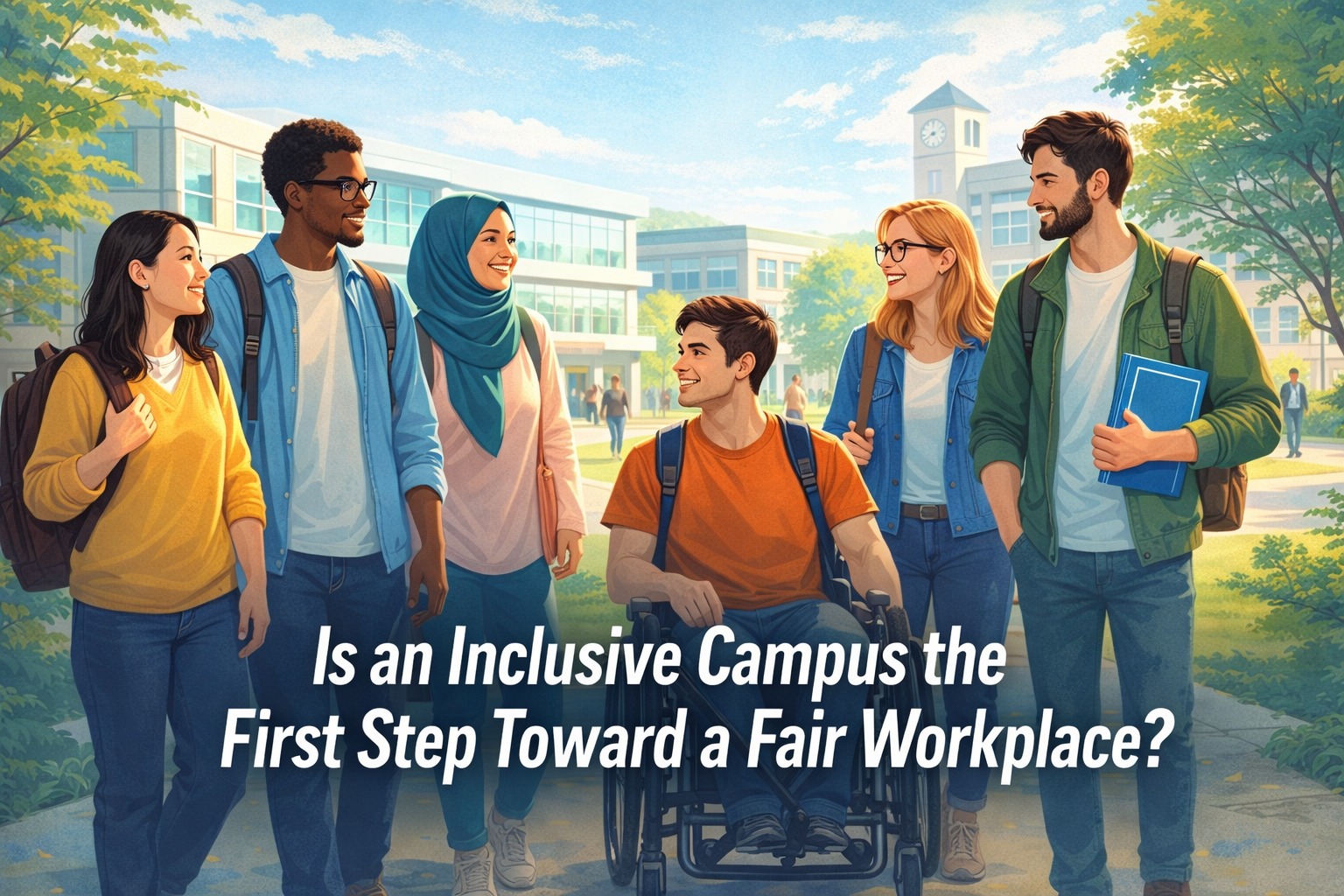
An inclusive campus is a higher education environment that provides equal opportunities for all students regardless of social background, economic status, gender, disability, or other identities. This concept not only creates a fair learning atmosphere but also prepares students to face a workforce that increasingly demands diversity and equality.
The modern workplace places growing emphasis on inclusivity and fairness. Companies seek talent capable of working in diverse environments, respecting differences, and collaborating without discrimination. Therefore, an inclusive campus serves as an essential foundation for shaping the mindset and skills students need to enter a fair and equitable workplace.
The Importance of Inclusive Campuses as a Foundation for a Fair Workplace
1. Creating Equal Learning Opportunities
Inclusive campuses ensure that all students have access to facilities, information, and education without barriers. This equality prepares them for workplaces that prioritize accessibility and non-discrimination.
2. Familiarizing Students with Diversity
Inclusive campus environments expose students to people from diverse backgrounds, fostering teamwork skills that are highly valued in modern workplaces.
3. Developing Empathy and Tolerance
An inclusive academic environment nurtures empathy, tolerance, and the ability to understand different perspectives. Companies increasingly prioritize candidates with strong emotional intelligence.
4. Reducing Discrimination in Education and Careers
Inclusive campuses provide space for marginalized groups to grow without structural barriers, shaping professionals who value equality and reject workplace discrimination.
5. Encouraging Pro-Justice Policies and Initiatives
Inclusive campuses often implement supportive policies such as disability-accessible facilities, scholarships, counseling centers, and anti-discrimination training. These experiences shape students into professionals who understand the importance of fair workplace policies.
6. Equipping Students with Social Equality Skills
Students educated in inclusive environments develop critical thinking, open communication skills, and respect for differences—valuable assets in diversity-driven organizations.
Strategies to Promote Inclusive Campuses as Preparation for the Workforce
- Implement disability-friendly facilities across campus.
- Provide training on diversity, inclusivity, and anti-discrimination.
- Establish inclusive student organizations open to all backgrounds.
- Encourage cross-cultural collaboration and student exchange programs.
- Ensure campus policies support social justice and non-discrimination.
- Create safe discussion spaces for equality and diversity issues.
Conclusion
An inclusive campus is a fundamental foundation for creating a fair and equitable workforce. By fostering an educational environment that respects diversity, students can grow into competent professionals with open mindsets, ready to collaborate in diverse teams.
Through inclusive approaches in higher education, younger generations can contribute to building a more humane, just, and discrimination-free workplace in the future.
Tentang Penulis
Gusti Ayu Tita
Penulis — Universitas STEKOM
Penulis aktif yang berfokus pada isu-isu akademik, teknologi pendidikan, dan pengembangan sumber daya manusia di lingkungan kampus.