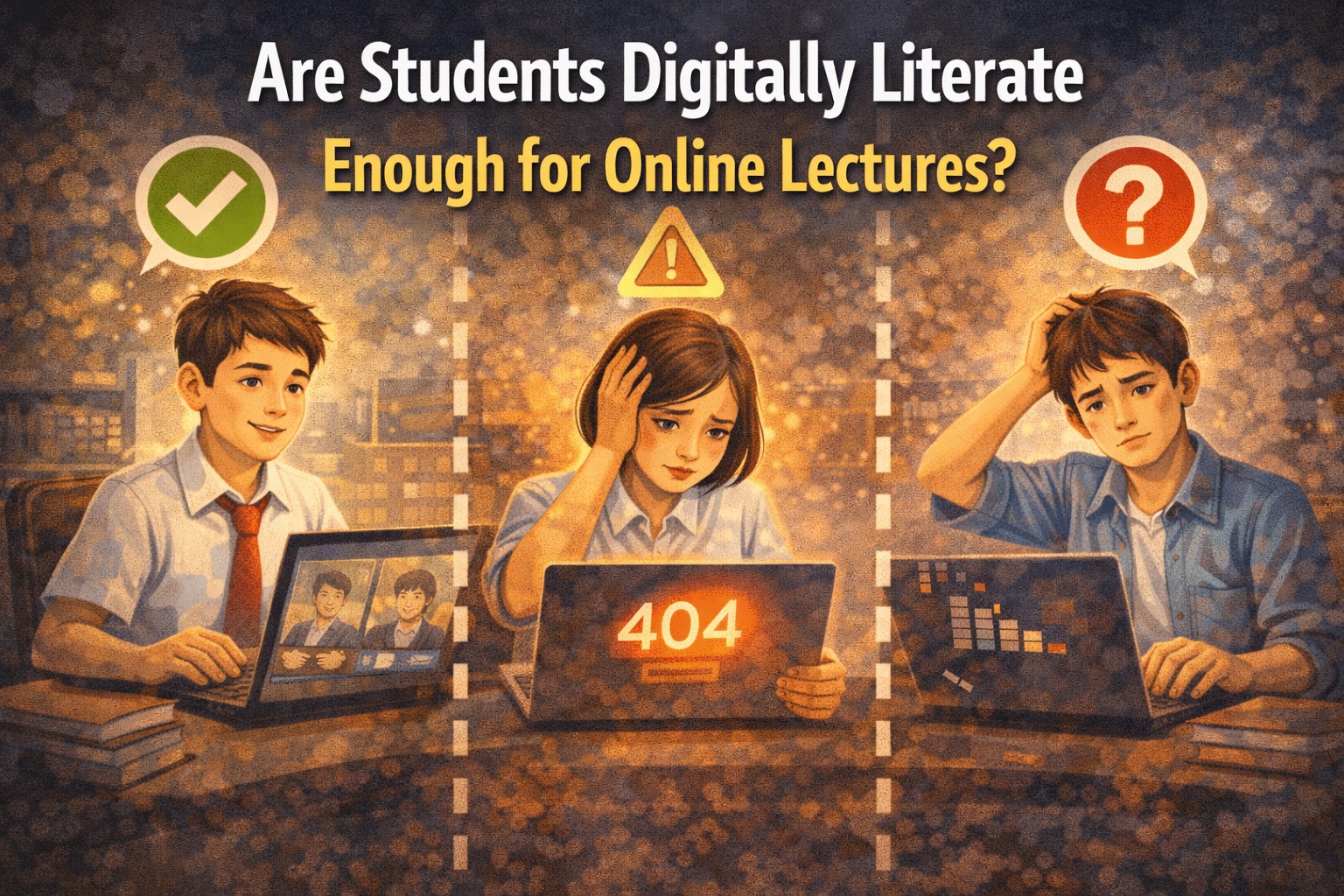
Online learning has now become the new norm for many university students in Indonesia, especially since the COVID-19 pandemic. However, an important question arises: are students sufficiently digitally literate to participate effectively in online courses? This article examines the extent of students’ digital literacy in supporting online learning, the challenges they face, and the solutions that can be implemented.
UNDERSTANDING DIGITAL LITERACY IN THE CONTEXT OF ONLINE LEARNING
Digital literacy is not only about being able to use technological devices, but also includes the ability to access, understand, and utilize digital information effectively and responsibly. In the context of online learning, digital literacy means that students are able to attend online classes, use learning applications, and maintain data security and digital ethics.
CURRENT LEVEL OF STUDENTS’ DIGITAL LITERACY
1. Basic Technological Proficiency
Most students are already familiar with devices such as laptops, smartphones, and video conferencing applications (Zoom, Google Meet). However, more advanced technological skills, such as using specialized software for research or online collaboration, still need improvement.
2. Information Management Skills
Students are generally accustomed to searching for academic materials online. Unfortunately, not all are able to critically evaluate information, making them vulnerable to unreliable or invalid sources.
3. Digital Ethics and Security Awareness
There are still cases where students do not fully understand the importance of protecting personal data and practicing ethical behavior in digital environments, such as avoiding plagiarism or the spread of misinformation.
CHALLENGES OF DIGITAL LITERACY IN ONLINE LEARNING
Limited Access to Technology
Not all students have stable internet access or adequate devices, which makes online learning difficult.
Lack of Digital Literacy Training
Many students have not received formal training in digital literacy, including cybersecurity and digital ethics.
Discipline and Motivation Issues
Online learning requires high levels of self-discipline and time management, which remain challenges for some students.
SOLUTIONS TO IMPROVE STUDENTS’ DIGITAL LITERACY
Improving Infrastructure and Internet Access
Governments and educational institutions need to enhance technological access to ensure that all students can participate smoothly in online learning.
Regular Digital Literacy Training
Universities should provide workshops or seminars on digital literacy, learning applications, and digital ethics and security.
Developing Interactive Learning Content
Engaging and interactive content can help students better understand materials and increase learning motivation.
Academic and Psychological Support
Assisting students in managing stress and improving learning discipline during online courses is also essential.
CONCLUSION
Although many students have mastered basic technological skills for online learning, several aspects of digital literacy still need to be strengthened. Comprehensive digital literacy includes technical, critical, and ethical competencies that students must possess to succeed in the digital learning era. Therefore, collaborative efforts from students, universities, and governments are essential to ensure that online learning processes run effectively and optimally.
Tentang Penulis
Gusti Ayu Tita
Penulis — Universitas STEKOM
Penulis aktif yang berfokus pada isu-isu akademik, teknologi pendidikan, dan pengembangan sumber daya manusia di lingkungan kampus.