
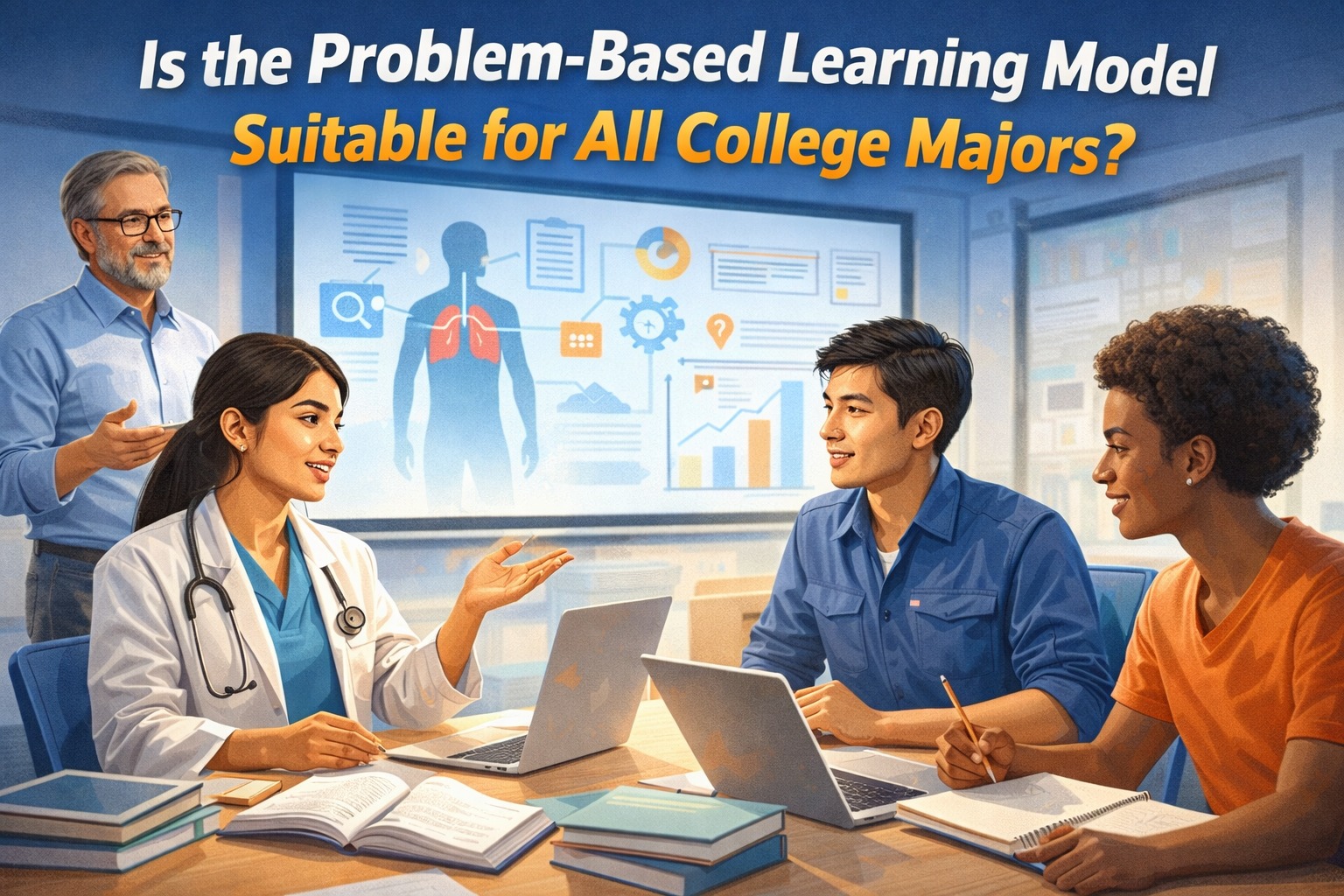
Learning models in higher education continue to evolve in response to workplace demands and changing learning styles among younger generations. One approach that is increasingly being implemented is Problem-Based Learning (PBL). This method places students at the center of the learning process by emphasizing real-world problem solving. However, an important question arises: Is the Problem-Based Learning model suitable for all college majors?
WHAT IS THE PROBLEM-BASED LEARNING MODEL?
Problem-Based Learning is a learning model that uses real-life problems as the starting point of the learning process. Students are required to think critically, collaborate in teams, and seek solutions independently or collectively.
In PBL, lecturers act as facilitators rather than the primary source of information. Students actively explore knowledge, analyze problems, and present solutions based on both theory and practice.
ADVANTAGES OF PROBLEM-BASED LEARNING IN COLLEGE
The implementation of Problem-Based Learning offers several benefits, including:
- Improving critical and analytical thinking skills
- Enhancing teamwork and communication abilities
- Encouraging independent learning
- Preparing students to face real-world challenges
- Connecting theory with practical application
These strengths make PBL highly relevant to the professional world, which demands innovative and adaptive solutions.
IS PROBLEM-BASED LEARNING SUITABLE FOR ALL MAJORS?
The answer varies depending on the field of study. The suitability of PBL depends on disciplinary characteristics, learning objectives, and resource readiness.
1. Science, Engineering, and Health Majors
Programs such as medicine, nursing, engineering, and applied sciences are highly compatible with PBL. Students are accustomed to dealing with case studies and practical problems that require in-depth analysis and data-driven solutions.
2. Social Sciences and Humanities
PBL can also be applied in social sciences, education, and humanities. The problems explored often relate to social phenomena, public policy, or cultural issues. However, adjustments are needed to ensure discussions remain focused and aligned with learning outcomes.
3. Highly Theoretical and Conceptual Majors
For disciplines that are heavily theoretical, such as pure mathematics or philosophy, PBL should be combined with other methods. Strong foundational understanding is necessary before students can effectively tackle complex problems.
CHALLENGES IN IMPLEMENTING PROBLEM-BASED LEARNING
Despite its advantages, PBL faces several challenges:
- Students may not be accustomed to independent learning
- Lecturers need readiness to act as facilitators
- The method often requires more time
- Learning assessment becomes more complex
Without proper planning, PBL may confuse students and hinder the achievement of learning objectives.
STRATEGIES FOR EFFECTIVE PROBLEM-BASED LEARNING
To ensure successful implementation across various majors, the following strategies can be applied:
- Combine PBL with other teaching methods
- Provide clear guidance at the beginning of the learning process
- Adjust problem difficulty to the students’ academic level
- Strengthen the lecturer’s role as an active facilitator
- Conduct continuous evaluation of both the learning process and outcomes
A flexible approach makes PBL more inclusive and effective.
CONCLUSION
Problem-Based Learning is a relevant model for modern higher education. However, it is not always fully suitable for every college major. Its effectiveness depends on the nature of the discipline, learning goals, and the readiness of both lecturers and students.
With proper adjustments and strategies, PBL can become a powerful method for improving learning quality and preparing students for the professional world.
Tentang Penulis
Gusti Ayu Tita
Penulis — Universitas STEKOM
Penulis aktif yang berfokus pada isu-isu akademik, teknologi pendidikan, dan pengembangan sumber daya manusia di lingkungan kampus.



