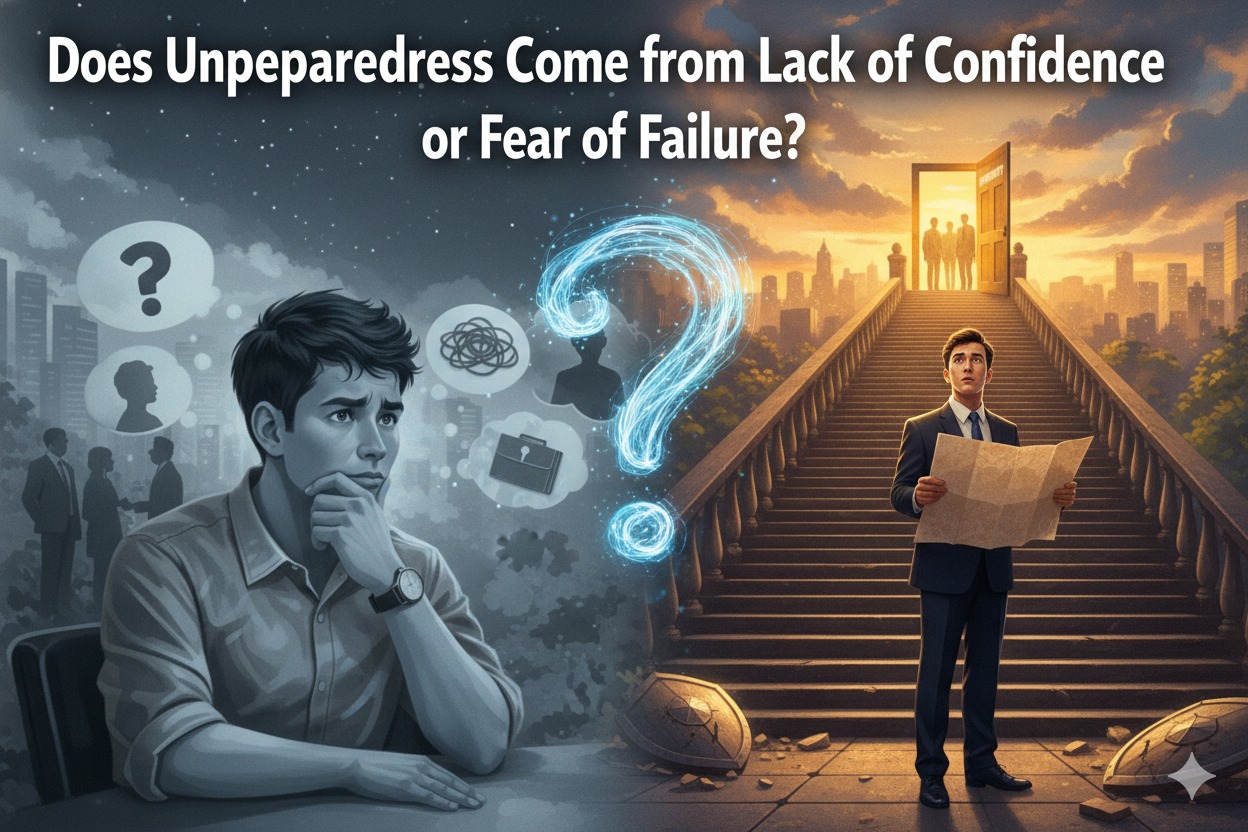
Feeling unprepared often appears at critical moments, such as before exams, presentations, or making major life decisions. This happens even when serious preparation has already been done. It raises a fundamental question: does feeling unprepared come from a lack of self-confidence, or is it actually rooted in fear of failure?
To answer this, we need to understand how the mind and emotions work when facing pressure and expectations.
UNDERSTANDING THE MEANING OF FEELING UNPREPARED
Feeling unprepared is not always a sign of inadequate ability. In many cases, this feeling is more related to mental and emotional states than to technical readiness. A person may possess sufficient knowledge and skills, yet still feel hesitant when it is time to take action.
This feeling usually arises from an inner conflict between the desire to succeed and the fear of outcomes that may not meet expectations.
LACK OF SELF-CONFIDENCE AS A MAIN TRIGGER
Low self-confidence causes individuals to doubt their own abilities. Small mistakes from the past are often remembered and used as justification for feeling unworthy of trying again.
Some signs that feeling unprepared stems from low self-confidence include:
* Frequently comparing oneself to others
* Believing personal abilities are always insufficient
* Difficulty acknowledging personal strengths
When self-confidence is low, no amount of effort ever feels enough because the mind remains focused on shortcomings.
FEAR OF FAILURE THAT SHADOWS EVERY STEP
Unlike low self-confidence, feeling unprepared due to fear of failure is more related to potential consequences. A person may actually believe in their abilities but fear facing results that do not align with expectations.
Fear of failure often emerges because of:
* Fear of negative judgment from others
* Fear of disappointing family or social circles
* Fear of losing future opportunities
This fear leads to hesitation and postponement, even when preparation is already solid.
THE CONNECTION BETWEEN SELF-CONFIDENCE AND FEAR OF FAILURE
Low self-confidence and fear of failure are often interconnected. When self-confidence decreases, fear of failure becomes stronger. Conversely, failure experiences that are not processed properly can further weaken self-confidence.
This cycle causes the feeling of being unprepared to repeat itself and become difficult to overcome, trapping individuals in ongoing self-doubt.
BUILDING READINESS FROM WITHIN
Overcoming the feeling of being unprepared requires more than technical preparation; it demands mental readiness. Some steps that can help include:
* Acknowledging the effort that has already been made
* Reframing failure as part of the learning process
* Focusing on personal growth rather than comparison
With stronger mental readiness, the feeling of being unprepared gradually diminishes, even when challenges remain.
CONCLUSION
Feeling unprepared can stem from low self-confidence, fear of failure, or a combination of both. These feelings are deeply rooted in how we evaluate ourselves and respond to risk.
Understanding the source of feeling unprepared is the first step toward managing it in a healthier way. When we make peace with the possibility of failure and appreciate our own abilities, readiness no longer feels like a burden but becomes a natural part of personal growth.
Tentang Penulis
Gusti Ayu Tita
Penulis — Universitas STEKOM
Penulis aktif yang berfokus pada isu-isu akademik, teknologi pendidikan, dan pengembangan sumber daya manusia di lingkungan kampus.