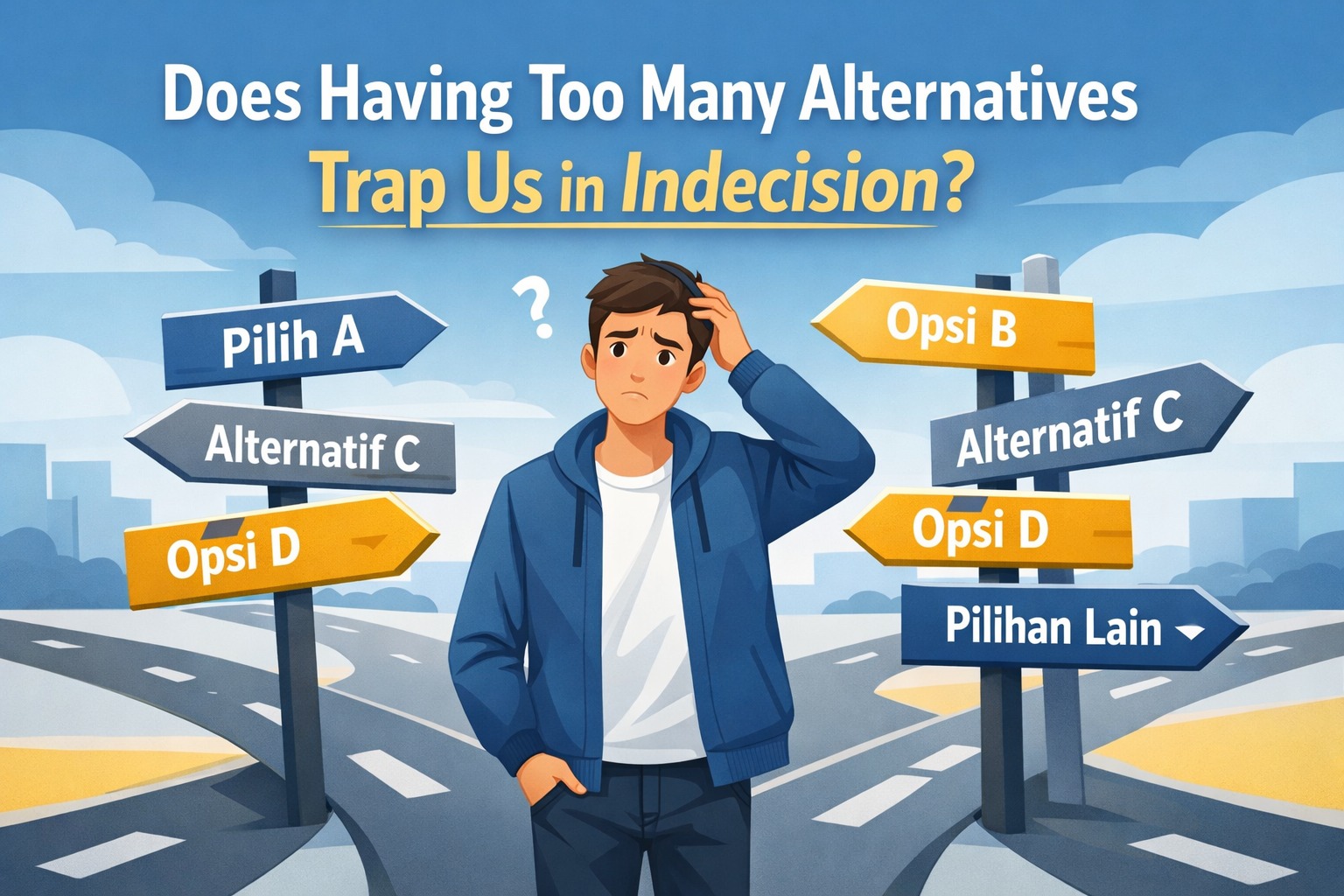
In modern life, choices appear in unprecedented numbers. Every day, we are faced with various alternatives—ranging from major decisions such as career and education to simple matters like choosing products or content. On one hand, the abundance of alternatives gives the impression of freedom. On the other hand, it often makes us hesitant and unable to move forward. This raises an important question: does having too many alternatives truly trap us in indecision?
This article explores the main causes of indecision resulting from an abundance of alternatives, its impact on daily life, and ways to break free from prolonged doubt.
When Alternatives Feel Endless
The abundance of alternatives makes the decision-making process increasingly complex. Each option demands attention, comparison, and careful consideration. Without clear boundaries, the mind becomes filled with competing possibilities.
This condition makes it difficult for the brain to set priorities. Rather than clarifying direction, an excess of alternatives blurs goals and causes us to lose focus on what is actually needed.
Indecision as a Result of Mental Burden
Indecision often arises when mental load exceeds our capacity to process information. Too many alternatives create pressure to choose correctly, as if every decision carries major and irreversible consequences.
This pressure triggers anxiety and fear of making the wrong choice. As a result, individuals tend to postpone decisions or continuously weigh options without ever feeling truly certain. Indecision then becomes a persistent condition.
The Role of Fear of Mistakes and Regret
The more alternatives there are, the greater the potential for regret. The mind becomes filled with questions about the possibilities that were not chosen. Fear of future regret discourages us from making decisions in the present.
In such situations, not choosing is often seen as the safest option. However, this attitude only prolongs indecision and delays progress that could otherwise be achieved.
The Impact of Indecision on Daily Life
Prolonged indecision can have wide-ranging effects. Productivity declines because mental energy is spent on thinking rather than acting. Self-confidence also weakens as individuals continue to doubt their ability to make decisions.
In the long term, this condition can hinder both personal and professional development. Opportunities to learn and grow are often missed simply because too much time is spent in the consideration phase.
Simplifying Choices to Move Forward
One of the most effective ways to escape indecision is by simplifying choices. Setting clear criteria from the outset helps filter out irrelevant alternatives, making the decision-making process more focused.
It is also important to accept that no decision is completely risk-free. Focus on the most reasonable step at the present moment, rather than all possible outcomes that may never occur. Decisions can be evaluated and adjusted over time.
Building the Courage to Choose
Courage in decision-making does not come from certainty, but from a willingness to face uncertainty. Practicing small decisions consistently can help build self-confidence.
By getting used to taking action, we learn that indecision does not always need to be feared. Many answers emerge after a decision is made, not before it is chosen.
Closing
Having too many alternatives can indeed trap us in indecision if not managed properly. Doubt, fear of making mistakes, and mental burden become major obstacles in decision-making.
However, by simplifying choices, understanding priorities, and daring to move forward without waiting for perfect certainty, we can break free from indecision and move ahead with greater confidence.
Keywords:
Tentang Penulis
Gusti Ayu Tita
Penulis — Universitas STEKOM
Penulis aktif yang berfokus pada isu-isu akademik, teknologi pendidikan, dan pengembangan sumber daya manusia di lingkungan kampus.