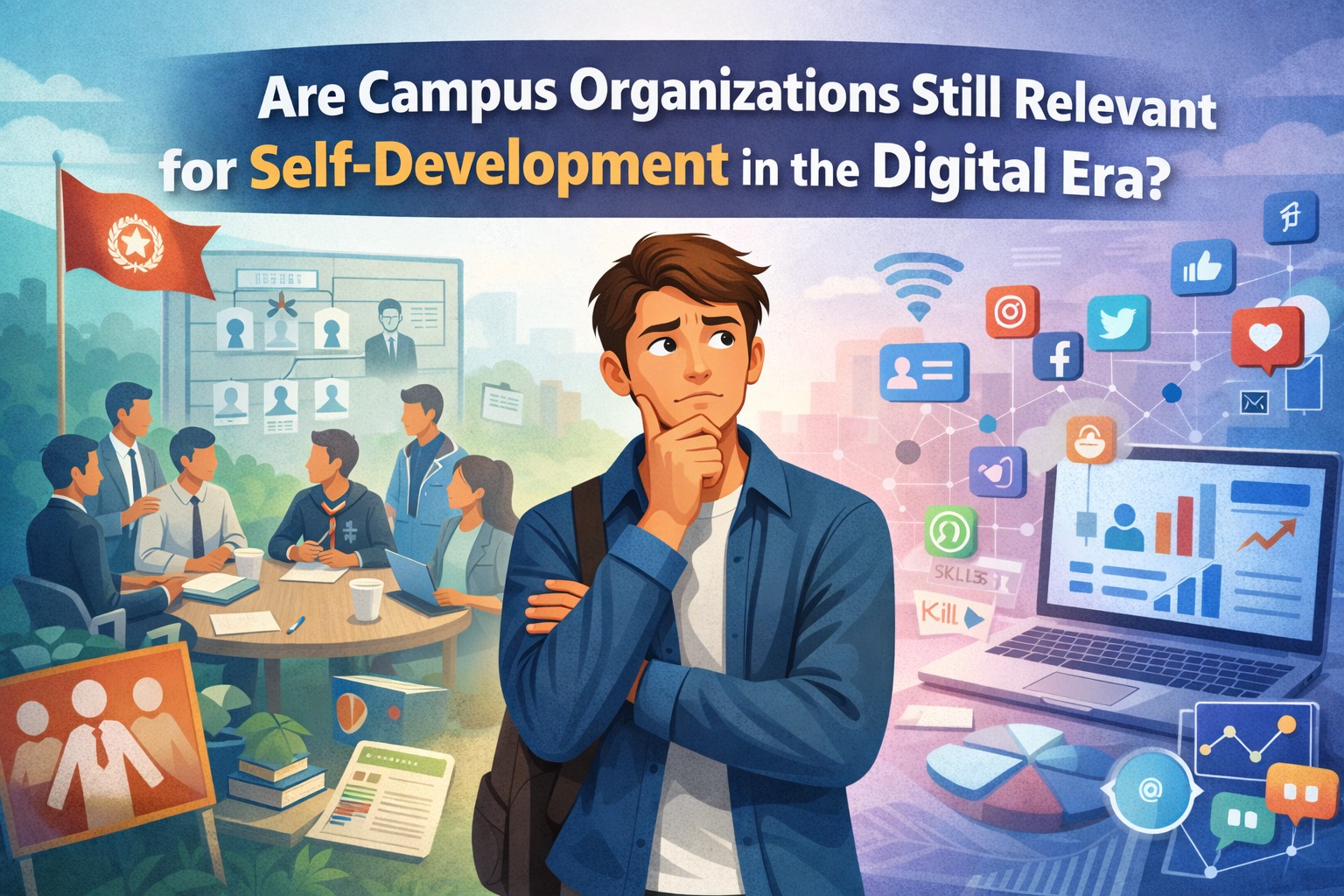
THE ROLE OF CAMPUS ORGANIZATIONS IN PERSONAL DEVELOPMENT
In the rapidly advancing digital era, many aspects of student life have changed significantly. One question often raised is whether campus organizations remain relevant in supporting student self-development. Traditionally, campus organizations were seen as platforms for leadership training, social interaction, and networking. However, with the rise of digital platforms and social media, students can now develop themselves without spatial limitations. Does this reduce the importance of campus organizations?
To answer this, we must examine what campus organizations offer today and how they continue to contribute to student development amid technological advancement.
DIGITAL ERA CHALLENGES: EASIER ACCESS, LIMITED INTERACTION
The digital era provides extraordinary convenience. Access to information is faster, and social media enables global interaction. However, despite these advantages, face-to-face interaction and real-life experiences offered by campus organizations remain irreplaceable.
Campus organizations go beyond online meetings or theoretical learning—they foster social skills, empathy, and direct communication abilities that are essential in the workplace. Such experiences are difficult to obtain solely through digital platforms.
CAMPUS ORGANIZATIONS AS A PLATFORM FOR LEADERSHIP AND TEAMWORK DEVELOPMENT
A core value of campus organizations is the opportunity to develop leadership and teamwork skills. Students learn to manage tasks, lead groups, and solve problems collaboratively—skills that require direct interaction and understanding of group dynamics.
While digital platforms facilitate online learning and virtual collaboration, they cannot fully replace hands-on experience in organizing events, managing budgets, or planning large-scale activities. These experiences are highly relevant and valued in professional settings.
BUILDING NETWORKS AND REAL-WORLD RELATIONSHIPS
Campus organizations also provide opportunities for meaningful networking. Although platforms like LinkedIn enable digital connections, building relationships through real-world interaction offers deeper value.
Through organizations, students can interact directly with seniors, alumni, and industry partners, opening doors to professional insights, mentorship, internships, or job opportunities. Networks formed through shared experiences tend to be stronger and more enduring.
DEVELOPING SOFT SKILLS THROUGH CAMPUS ACTIVITIES
While technical skills can be learned through courses and online platforms, soft skills—such as communication, time management, creativity, and problem-solving—develop more effectively through direct experience. Campus organizations require students to adapt, resolve conflicts, and speak publicly.
Activities like organizing events, participating in forums, or tackling team challenges help sharpen these essential soft skills, which are highly valued by employers and often differentiate candidates beyond academic achievements.
A MODERN PERSPECTIVE: SYNERGY BETWEEN CAMPUS ORGANIZATIONS AND DIGITAL TOOLS
In the digital era, campus organizations do not need to reject technology. Instead, both can complement each other. Many organizations now use digital tools for meetings, communication, and virtual events, allowing broader reach and flexibility.
However, they must preserve personal and interactive aspects such as mentoring, teamwork, and hands-on experiences that cannot be replaced by online platforms. By blending digital tools with real-world engagement, campus organizations remain relevant and impactful.
CONCLUSION: CAMPUS ORGANIZATIONS REMAIN RELEVANT FOR STUDENT DEVELOPMENT
Despite the convenience and opportunities provided by digital technology, campus organizations continue to play a vital role in student development. Through real-life experiences, social interaction, and soft skill development, students gain value beyond what the digital world alone can offer. Therefore, even in an increasingly digital era, campus organizations remain a relevant and essential platform for shaping character, skills, and professional networks.
Tentang Penulis
Gusti Ayu Tita
Penulis — Universitas STEKOM
Penulis aktif yang berfokus pada isu-isu akademik, teknologi pendidikan, dan pengembangan sumber daya manusia di lingkungan kampus.