
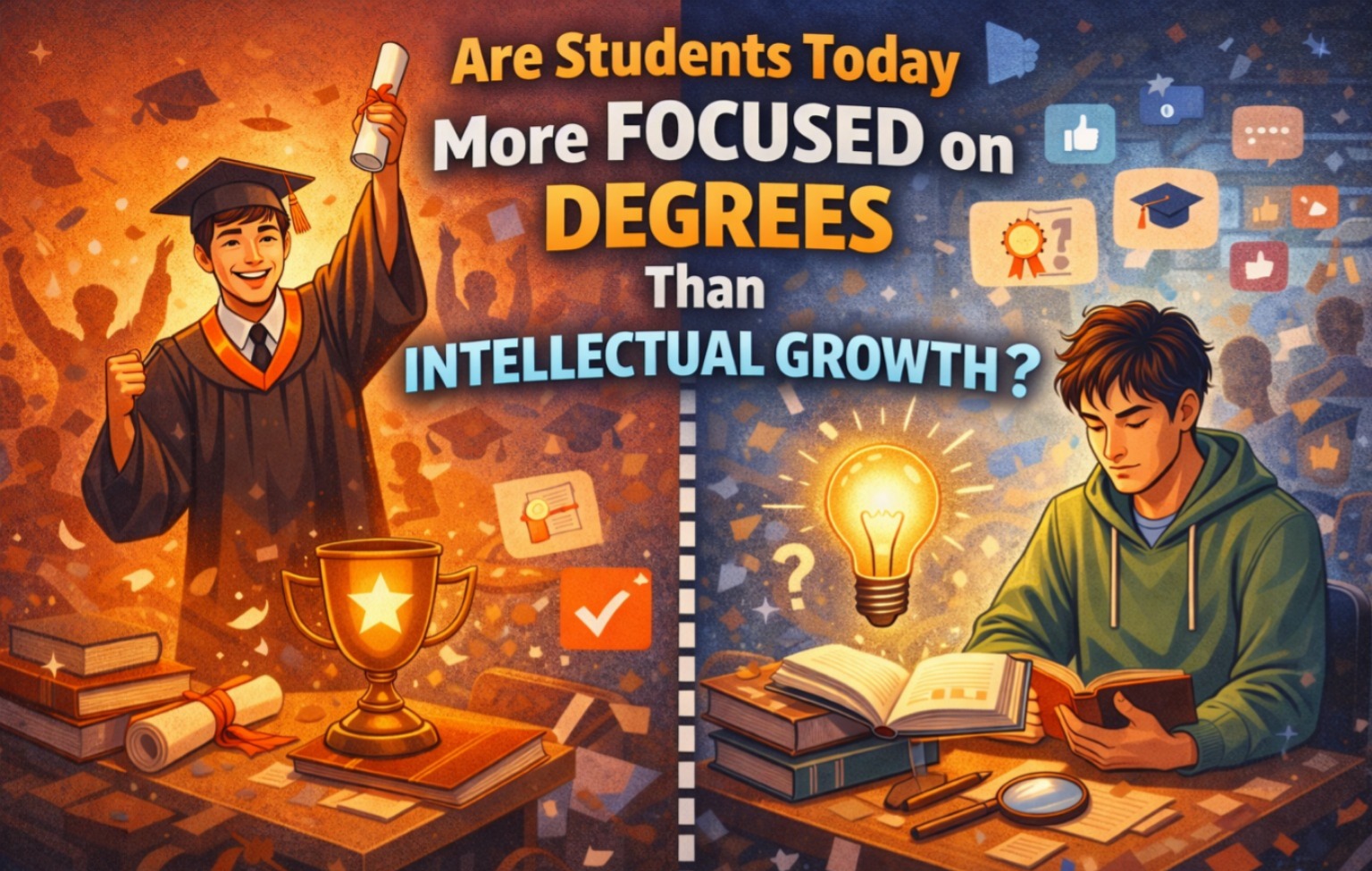
In higher education, grades and GPA (Grade Point Average) are often seen as primary indicators of student success. Many students compete to achieve high GPAs in order to appear outstanding in the eyes of lecturers and potential employers. This raises an important question: are students today more focused on earning degrees than on pursuing genuine intellectual growth?
This issue has become increasingly relevant in a competitive job market that demands practical skills, experience, and strong adaptability.
THE ROLE OF GPA IN ACADEMIC LIFE
Grades and GPA play a significant role in the academic system. A GPA reflects a student’s academic performance throughout college. Many scholarships, exchange programs, and graduation requirements use GPA as a selection standard.
In addition, some companies still consider GPA as an administrative requirement during recruitment. For fresh graduates, a high GPA can be an advantage, as it demonstrates consistency, discipline, and responsibility in completing academic tasks.
However, GPA primarily measures academic evaluation outcomes — not the entirety of a student’s abilities or intellectual depth.
INTELLECTUAL GROWTH AND REAL COMPETENCE
In today’s professional world, employers look beyond numbers on transcripts. They seek candidates with real competencies such as communication skills, teamwork, problem-solving ability, and relevant technical expertise.
There are graduates with high GPAs who struggle to adapt to the workplace due to limited practical experience. Conversely, some students with average GPAs excel because of strong project experience, internships, or organizational involvement.
This reality suggests that intellectual growth and practical competence often determine long-term success more than academic scores alone.
FINDING A BALANCE BETWEEN ACHIEVEMENT AND GROWTH
Rather than choosing between GPA and intellectual development, students should aim to balance both. Good academic performance remains important as evidence of dedication to learning, but it should be accompanied by meaningful skill development.
Participating in internships, training programs, seminars, and collaborative projects helps students connect theory with real-world application. Through such experiences, knowledge evolves into practical competence.
STRATEGIES FOR ENCOURAGING INTELLECTUAL GROWTH
Students can manage their time effectively to maintain academic performance while actively developing themselves. Focusing on understanding concepts rather than memorizing material for exams supports both better grades and deeper intellectual development.
Building a portfolio during college is also a strategic step. A portfolio provides concrete evidence of skills and experience — something recruiters often value more than GPA alone.
CONCLUSION
Are students today more focused on degrees than intellectual growth? In many cases, academic credentials receive greater attention because they are visible and measurable. However, intellectual growth and real competence remain essential for long-term success.
Instead of prioritizing one over the other, students should strive for balance. Academic achievement provides a strong foundation, while intellectual growth ensures readiness to face professional and life challenges. Together, they create graduates who are not only qualified on paper but also capable in practice.
Tentang Penulis
Gusti Ayu Tita
Penulis — Universitas STEKOM
Penulis aktif yang berfokus pada isu-isu akademik, teknologi pendidikan, dan pengembangan sumber daya manusia di lingkungan kampus.



