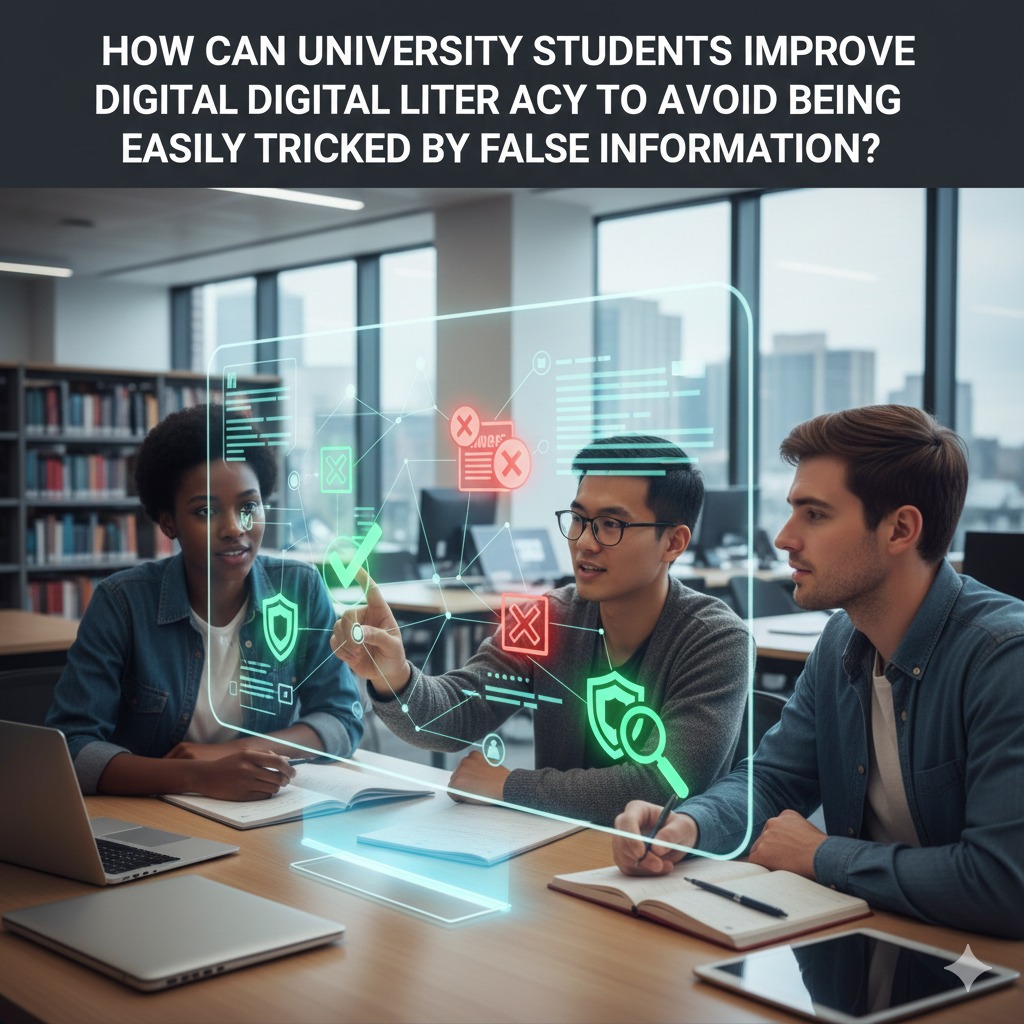
In today’s digital era, students cannot be separated from the internet. Almost all campus activities—from searching for references, discussing, to completing assignments—are done online. Behind this convenience, however, lies a major threat: fake information or hoaxes.
Without good digital literacy skills, students can easily fall into misleading information. That’s why it's important for every student to sharpen their digital literacy to think critically and use technology wisely.
WHAT IS DIGITAL LITERACY AND WHY IS IT IMPORTANT FOR STUDENTS?
Digital literacy is the ability to understand, evaluate, and use information from various digital sources correctly.
Students with strong digital literacy skills can:
- Distinguish between factual news and opinion
- Choose credible information sources
- Avoid plagiarism
- Communicate ethically in the digital space
Digital literacy is not just about technical ability but also critical thinking and social responsibility online.
EFFECTIVE WAYS FOR STUDENTS TO IMPROVE DIGITAL LITERACY
a. Always Verify Information Sources
Check who wrote the content, where it comes from, and whether the source is trustworthy.
b. Learn Basic Fact-Checking Skills
Verify dates, cross-check multiple sources, and ensure there is no element of provocation. Websites like TurnBackHoax.id or CekFakta.com can help.
c. Use Academic and Educational Platforms
Platforms such as Google Scholar, Sinta, or ResearchGate provide reliable and scientific references.
d. Join Digital Literacy Training Programs
Many universities and government institutions offer free digital literacy training.
e. Build a Habit of Critical Thinking
Before sharing information, ask yourself: *Does this make sense? Is there evidence?*
POSITIVE IMPACTS OF DIGITALLY LITERATE STUDENTS
Students with strong digital literacy will be:
- More productive in learning
- Protected from hoaxes and capable of spreading positive information
- Able to maintain a good digital reputation
- Ethical and respectful in digital communication
CONCLUSION
Sharpening digital literacy is about building awareness, ethics, and responsibility in the digital world. With strong digital literacy, students can be smart and ethical internet users ready to face today’s information challenges.
Tentang Penulis
Gusti Ayu Tita
Penulis — Universitas STEKOM
Penulis aktif yang berfokus pada isu-isu akademik, teknologi pendidikan, dan pengembangan sumber daya manusia di lingkungan kampus.