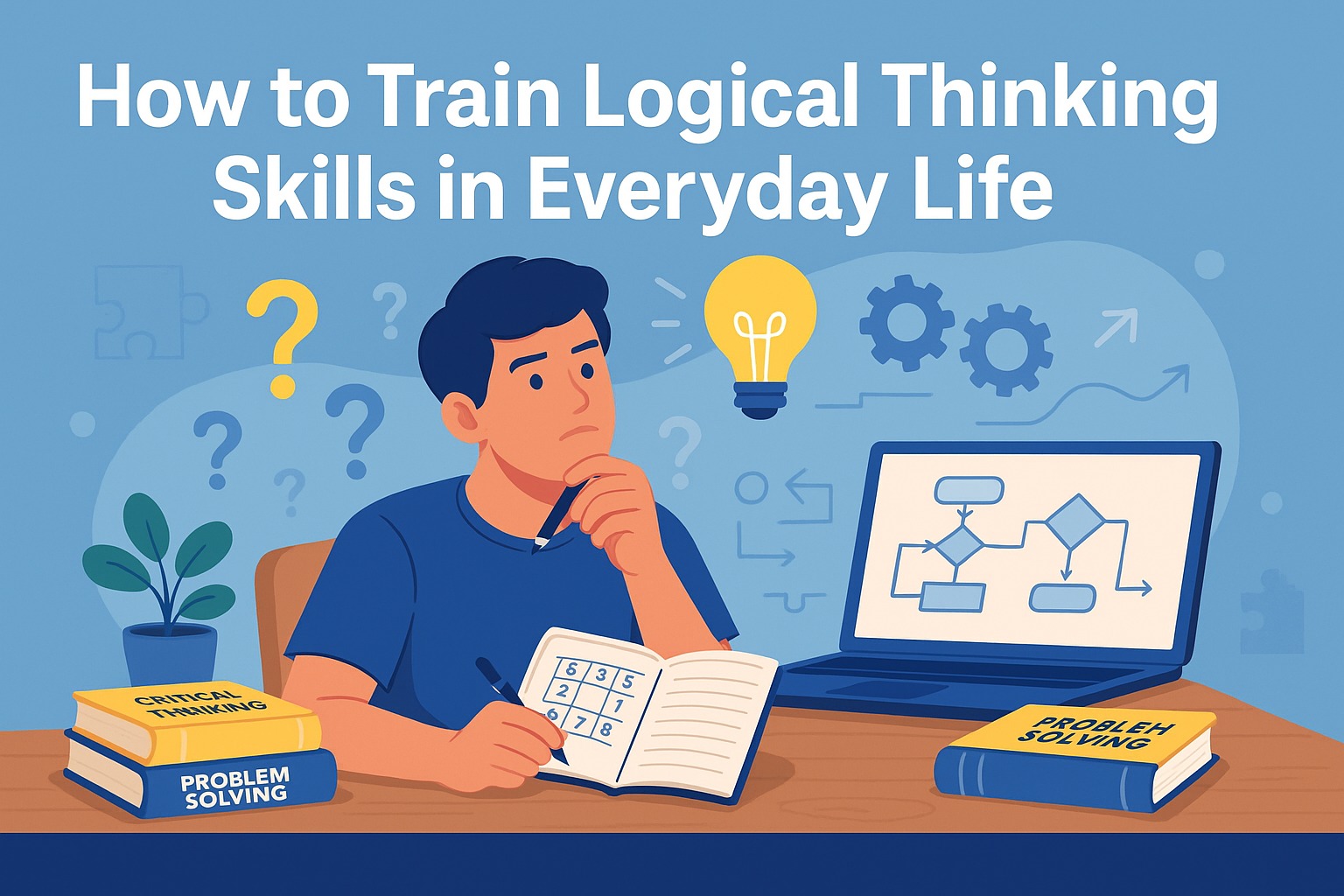
How to Train Logical Thinking Skills in Everyday Life
Logical thinking is an essential skill that supports decision-making, problem-solving, and effective communication. Unfortunately, not everyone is used to applying logic in daily life. In reality, this skill can be trained and developed through consistent and simple habits. So, how do you train logical thinking skills in everyday life?
What Is Logical Thinking?
Logical thinking is a systematic and rational thought process based on facts, data, and cause-effect relationships. A person with strong logical thinking skills can analyze situations, make rational decisions, and solve problems objectively.
Why Is Logical Thinking Important?
Logical thinking is useful not only in academic or professional settings but also in everyday life. Some key benefits of logical thinking include:
- Helping you make better and more accurate decisions
- Improving your problem-solving skills
- Reducing mistakes driven by emotion
- Strengthening your ability to analyze and evaluate information
How to Train Logical Thinking in Daily Life
Here are some simple yet effective ways to develop logical thinking habits:
1. Get Used to Asking “Why?” and “How?”
Don't accept information blindly. Ask yourself: Why did this happen? How does it work? These questions activate your brain to think critically and logically.
2. Make a Pros and Cons List
When faced with decisions, list the advantages and disadvantages of each option. This helps you evaluate your choices more rationally and make the best decision.
3. Practice with Logic Puzzles and Brain Games
Spend time solving logic puzzles, crosswords, or strategic games like chess and sudoku. These activities help train your brain to think in a structured and logical way.
4. Read Scientific or Analytical Articles
Reading content based on data and structured arguments helps your brain absorb information logically. Try reading essays, journals, or analytical articles on topics you enjoy.
5. Engage in Constructive Discussions
Meaningful discussions help you consider different perspectives and practice building reasonable arguments. Focus on logic and evidence—not assumptions or emotions.
6. Daily Reflection
Take a few minutes each day to reflect: What decisions did you make today? Were they logical? What could be improved? This habit boosts awareness and helps sharpen your logical mindset.
Common Mistakes That Hinder Logical Thinking
Avoid these habits that often block logical reasoning:
- Relying solely on emotions without facts
- Generalizing based on one case
- Ignoring data that contradicts personal beliefs
- Refusing to accept feedback or differing viewpoints
Conclusion
Logical thinking is a valuable skill that anyone can learn and practice. By applying logical thinking consistently in everyday life, you'll become a wiser, more rational, and solution-oriented individual. Start with small steps—and feel the long-term impact on your personal and professional growth.
Tentang Penulis
Gusti Ayu Tita
Penulis — Universitas STEKOM
Penulis aktif yang berfokus pada isu-isu akademik, teknologi pendidikan, dan pengembangan sumber daya manusia di lingkungan kampus.