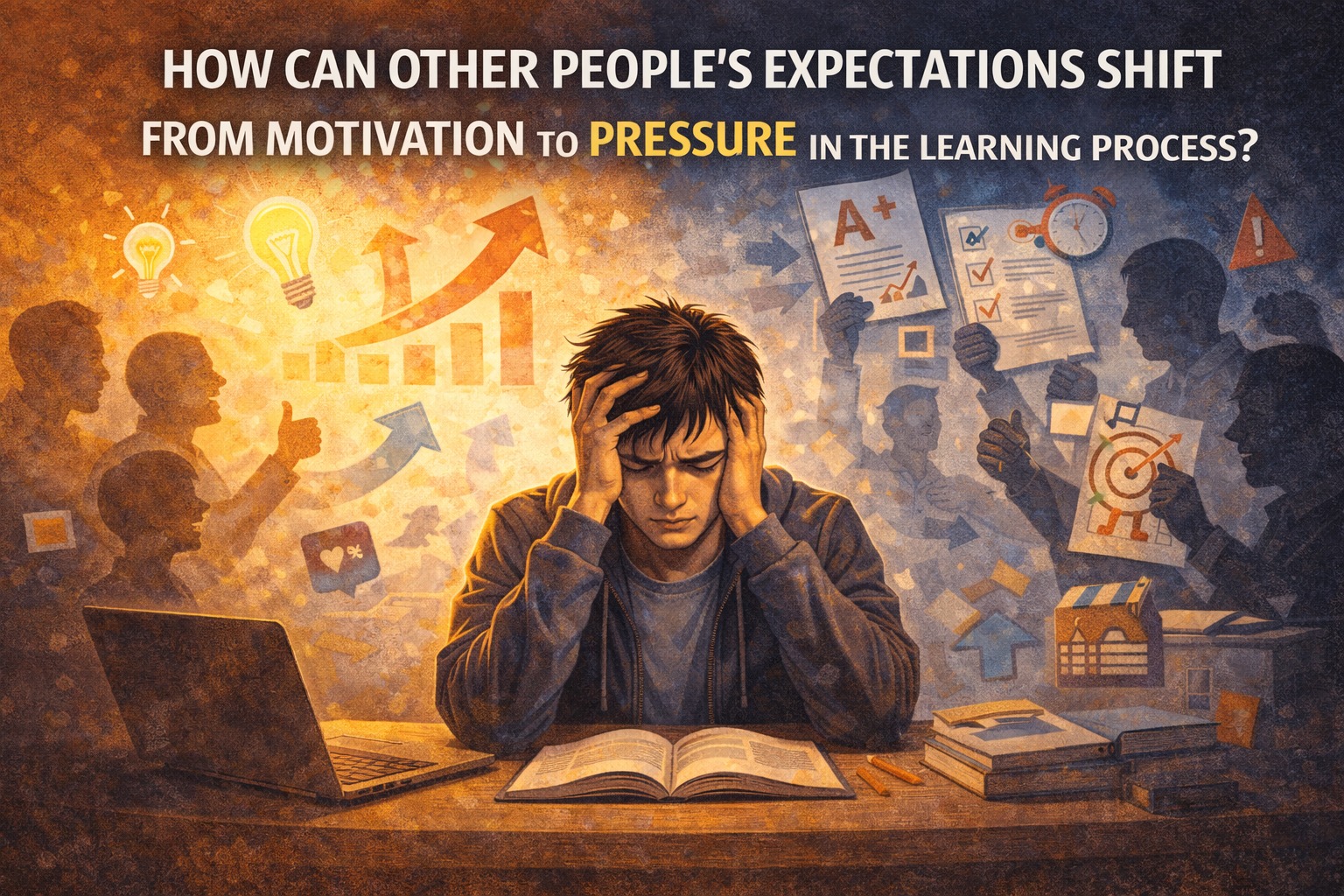
In the learning process, support from parents, teachers, and the surrounding environment often becomes a strong source of motivation. Other people’s expectations can initially encourage someone to grow, achieve, and recognize their potential. However, when these expectations are no longer aligned with an individual’s abilities and needs, motivation can slowly turn into a burdening pressure.
EXPECTATIONS AS A SOURCE OF MOTIVATION
Realistic expectations, delivered in the right way, can help someone set clear learning goals. Hopes such as wanting to see a child grow, a student excel, or a peer succeed often foster confidence and enthusiasm. At this stage, expectations function as positive encouragement, making the learning process feel meaningful and purposeful.
WHEN EXPECTATIONS TURN INTO DEMANDS
Problems begin to arise when expectations transform into rigid demands. Unrealistically high targets, constant comparisons with others, or pressure to always be perfect can make learning feel no longer personal. The learning process becomes a heavy obligation rather than a personal need or desire.
THE IMPACT OF PRESSURE ON THE LEARNING PROCESS
Pressure from other people’s expectations can trigger stress, anxiety, and mental exhaustion. Individuals may lose interest in learning, become afraid of failure, or doubt their own abilities. In the long term, this condition can hinder personal development, as the focus shifts from exploration and understanding to merely meeting external standards.
THE ROLE OF THE ENVIRONMENT IN SHAPING PRESSURE
The environment plays a major role in shaping how expectations are perceived. Dismissive comments, demands without empathy, or a lack of space to fail can intensify pressure. On the other hand, a supportive environment encourages dialogue, understands the learning process, and values effort rather than focusing solely on outcomes.
MAINTAINING A BALANCE BETWEEN MOTIVATION AND MENTAL HEALTH
To keep expectations as a source of motivation, healthy communication is essential. Recognizing personal limits, setting individual goals, and having the courage to express feelings of pressure are important first steps. The learning process should be a safe space for growth, not a burden that hinders self-development.
CONCLUSION
Other people’s expectations are unavoidable, but how they are managed determines their impact. When expectations are conveyed with empathy and flexibility, they can become a powerful source of motivation. Without balance, however, expectations risk turning into pressure that undermines the true meaning of learning.
Tentang Penulis
Gusti Ayu Tita
Penulis — Universitas STEKOM
Penulis aktif yang berfokus pada isu-isu akademik, teknologi pendidikan, dan pengembangan sumber daya manusia di lingkungan kampus.