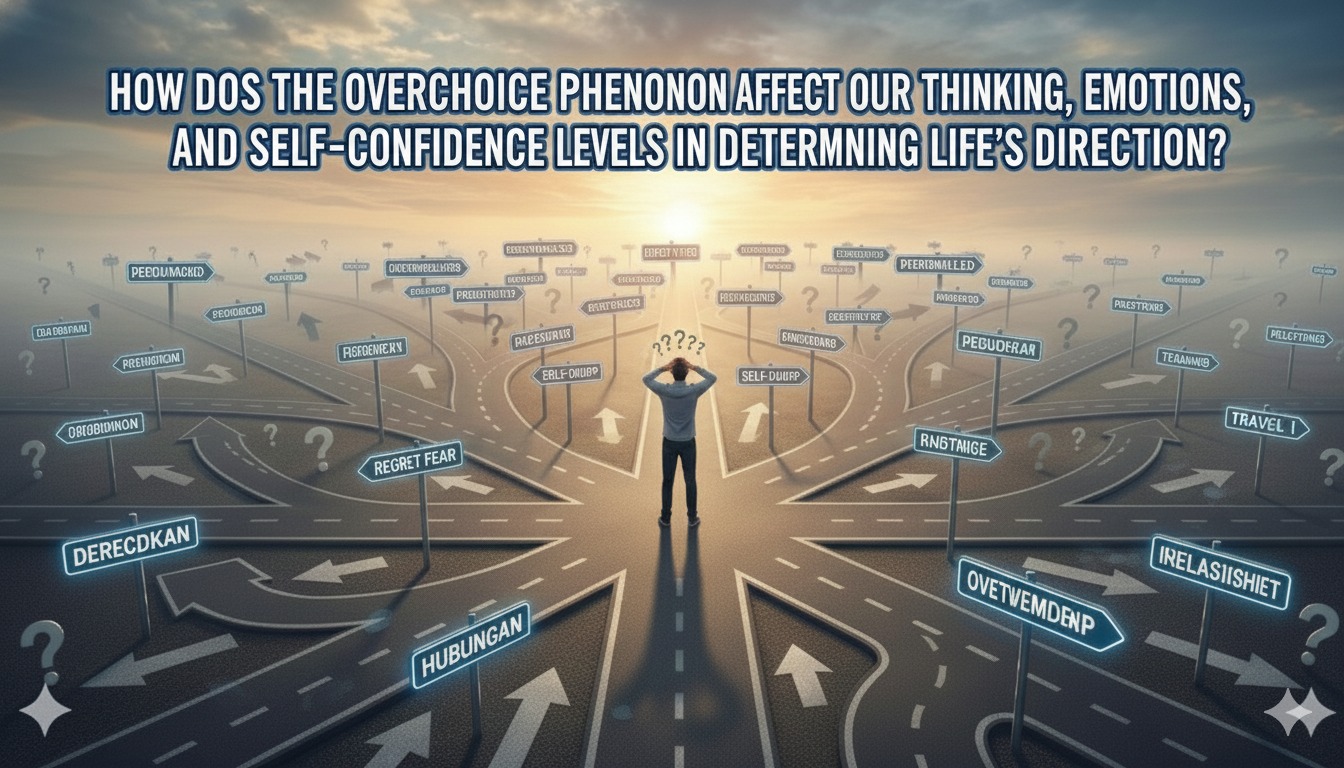
Overchoice and Its Impact on Life Decisions
Advances in technology and information have made life choices increasingly diverse. From education and career paths to lifestyle decisions, individuals are now faced with many alternatives that all appear equally promising. However, this situation does not always bring convenience. The phenomenon of *overchoice* often leaves people feeling overwhelmed and directionless when they need to determine their life path.
Overchoice and Human Thinking Patterns
Overchoice occurs when the number of available options exceeds a person’s ability to process them effectively. The brain is forced to work harder to compare options, predict risks, and imagine the outcomes of each decision. As a result, thinking becomes overly analytical and filled with doubt. People tend to get stuck in “what if” scenarios, making it difficult to commit to a decision they truly believe in.
The Emotional Impact of Overchoice
An abundance of choices frequently triggers emotional pressure. Feelings of anxiety, fear of making mistakes, and worry about regret often arise when individuals feel compelled to make important decisions. These negative emotions can accumulate and lead to mental exhaustion. Instead of feeling excited about available opportunities, people may feel burdened and choose to delay or avoid making decisions altogether.
The Effect on Self-Confidence
Overchoice also affects self-confidence. Constantly comparing options can gradually erode trust in one’s own decision-making ability. Every choice feels inadequate because there always seems to be another option that looks better. Over time, this can create a mindset of self-doubt, making individuals more easily influenced by others’ opinions and less able to trust their own intuition.
The Relationship Between Overchoice and Life Direction
When it comes to determining life direction, overchoice can become a major obstacle. Too many possibilities can blur one’s sense of purpose and make it difficult to stay focused. As a result, actions may become inconsistent—or not taken at all. Without clear direction, individuals risk feeling stagnant despite having many opportunities around them, with time and energy spent on deliberation rather than progress.
Strategies for Dealing With Overchoice
Managing overchoice begins with simplifying decisions. Clarifying core values and primary goals helps filter out options that are not truly relevant. It is also important to accept that every decision carries risk and that no choice is ever completely perfect. By focusing on the learning process rather than absolute certainty, self-confidence can grow alongside the courage to move forward.
Conclusion
The phenomenon of overchoice affects thinking patterns, emotional well-being, and self-confidence in determining life direction. Too many options can lead to doubt, anxiety, and a loss of trust in oneself. By simplifying choices and daring to make decisions, overchoice can be managed so it does not hinder personal growth.
Tentang Penulis
Gusti Ayu Tita
Penulis — Universitas STEKOM
Penulis aktif yang berfokus pada isu-isu akademik, teknologi pendidikan, dan pengembangan sumber daya manusia di lingkungan kampus.