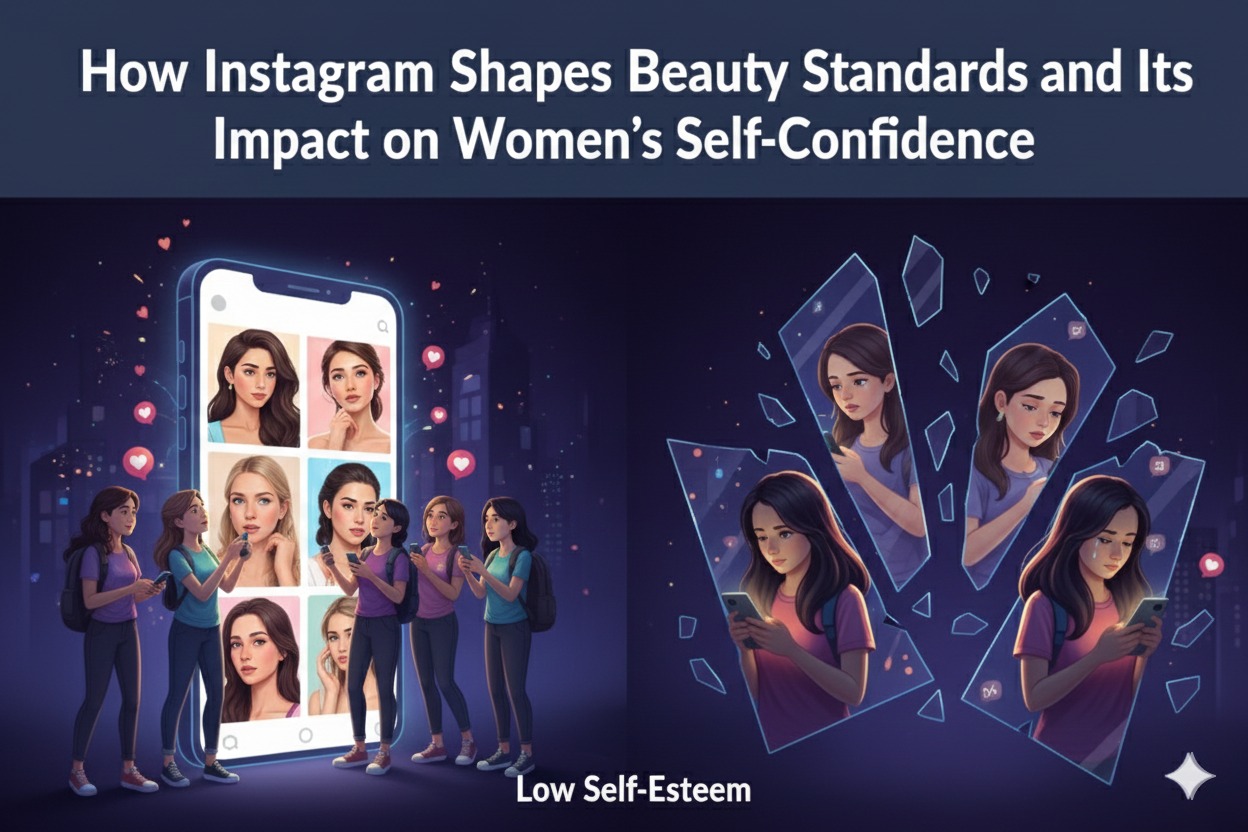
How Instagram Shapes Beauty Standards and Affects Women’s Self-Confidence
In today’s digital era, Instagram has become one of the most influential social media platforms in shaping how people view the world, including how individuals perceive their own appearance. The highly visual nature of the platform makes users particularly vulnerable to constantly evolving—and often unrealistic—beauty standards. This phenomenon has a significant impact on self-confidence, especially among women, who have long been the primary targets of the beauty industry.
1. Instagram and the Dominance of Visual Culture
Instagram focuses on photos and videos, making it a space that naturally prioritizes physical appearance. Features such as filters, quick editing tools, and third-party apps support the creation of “perfect” images. Not only celebrities, but everyday users can now present highly curated versions of themselves.
Instagram’s algorithm also plays a major role. Content considered visually appealing—typically featuring ideal body shapes, flawless skin, and symmetrical faces—tends to appear more frequently on feeds and the Explore page. As a result, users are constantly exposed to uniform and seemingly perfect beauty standards without realizing it.
2. New Beauty Standards Formed on Instagram
Instagram has introduced new beauty standards that differ from those of the past. While beauty was once defined by magazines or television, today thousands of influencers serve as key references. Common characteristics of Instagram beauty standards include:
* Flawless, blemish-free skin, often achieved through editing or filters
* Slim yet curvy body types that are difficult to achieve naturally
* “Instagrammable” facial features, such as slim noses, full lips, thick eyebrows, and sharp jawlines
* Trend-driven fashion that changes quickly and encourages consumption
These standards appear universal, even though every culture and individual has unique characteristics. Because they are repeatedly displayed, many women begin to believe that ideal beauty must follow the same template.
3. The Role of Influencers and Celebrities in Reinforcing Beauty Ideals
Influencers and celebrities have a powerful role in shaping perceptions of beauty. They often share glamorous lifestyles, expensive skincare routines, and perfectly styled photos. Such content creates the impression that ideal beauty is easily attainable, when in reality it is supported by:
* Professional editing and retouching
* Carefully planned lighting, angles, and poses
* Access to costly products, treatments, or aesthetic procedures
* Creative teams, including photographers, makeup artists, and stylists
When users are unaware of these factors, they compare themselves to images that are fundamentally unrealistic.
4. Psychological Impact on Women’s Self-Confidence
Repeated exposure to Instagram beauty standards has a significant effect on women’s mental health and self-confidence.
a. Body Dissatisfaction
Research shows that frequent exposure to idealized body images increases the likelihood of dissatisfaction with one’s own body.
b. Decreased Self-Esteem
Continuous social comparison often leads women to feel less attractive or inadequate, resulting in lower self-esteem.
c. Body Image Issues
Natural features such as stretch marks, acne, cellulite, or certain body shapes are perceived as “abnormal,” even though they are entirely natural.
d. Pressure to Always Look Perfect
Many women feel compelled to look flawless whenever they post photos, leading to anxiety, stress, and fear of judgment.
5. Editing and Filters: Beauty Is No Longer Authentic
Editing features that smooth skin, enlarge eyes, or slim facial features can make photos look vastly different from reality. This creates two major problems:
* Women begin to lose their visual identity, becoming accustomed to seeing a “best version” that is not real
* There is a growing desire for aesthetic treatments to resemble the edited version
The rise of the “Instagram face”—a standardized look shaped by filters—has made many people feel that their natural appearance is inadequate.
6. Social Impact: Consumerism and Trend Pressure
Beyond psychological effects, Instagram also encourages consumerism. Influencers frequently collaborate with beauty brands, leading users to believe they must purchase certain products to look attractive. As a result:
* Spending on skincare, makeup, and treatments increases
* Feelings of guilt arise when users cannot keep up with trends
* Women may begin to undervalue their natural beauty
7. Challenges: How Can Women Cope with Instagram Beauty Standards?
Not all impacts are negative. Positive movements such as body positivity and self-love campaigns encourage women to embrace diverse forms of beauty. However, the pressure from Instagram remains strong.
To avoid being trapped by unrealistic standards, women can:
* Reduce social comparison by remembering that Instagram images are always curated
* Follow accounts that promote body diversity and natural beauty
* Recognize that beauty is not only visual, but also rooted in character, personality, and confidence
* Limit the use of filters to foster self-acceptance
* Reduce exposure to anxiety-inducing content and replace it with educational or inspiring material
8. Instagram: Expanding Yet Narrowing the Meaning of Beauty
Instagram has reshaped beauty standards in the modern world. On one hand, it provides a platform for diverse expressions of beauty. On the other, the dominance of perfection and limitless filters creates new standards that are difficult to achieve.
The impact on women’s self-confidence should not be underestimated. Many feel they are not beautiful enough, slim enough, or “Instagrammable” enough. Therefore, it is crucial—especially for women—to consume social media content more critically and recognize that true beauty is not confined by filters, algorithms, or online standards.
Tentang Penulis
Gusti Ayu Tita
Penulis — Universitas STEKOM
Penulis aktif yang berfokus pada isu-isu akademik, teknologi pendidikan, dan pengembangan sumber daya manusia di lingkungan kampus.