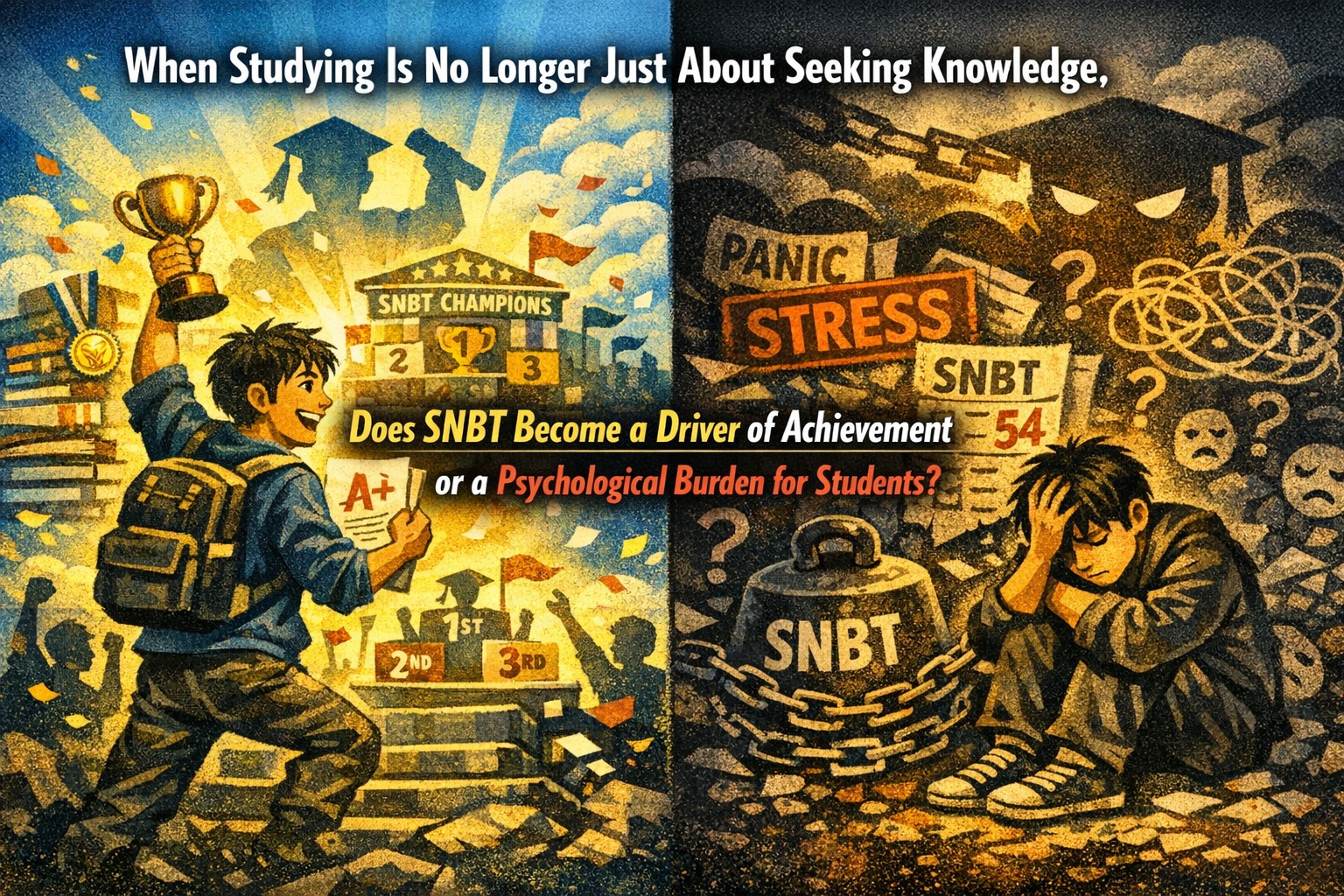
The continuously rising cost of higher education often becomes a major obstacle for many students. Not a few are forced to postpone or even abandon their plans to pursue higher education due to financial limitations. However, amid these challenges, there is a significant opportunity that can be utilized—through the student achievement pathway. This path allows students to obtain free education or full scholarships by maximizing their potential and accomplishments. Achievement pathways are not limited to those who excel from the beginning but are also open to students who are willing to strive and remain consistent.
WHAT IS MEANT BY THE STUDENT ACHIEVEMENT PATHWAY
The student achievement pathway refers to a route based on academic and non-academic achievements to obtain various forms of educational support. Academic achievements are usually reflected through a strong and stable GPA, while non-academic achievements may include competition awards, organizational involvement, social activities, and meaningful contributions to the community. Many scholarship providers evaluate students holistically, considering not only grades but also character, potential, and commitment.
HOW ACHIEVEMENTS CAN OPEN ACCESS TO FREE EDUCATION
1. Becoming a key requirement in scholarship selection
Almost all scholarship programs use achievement as a primary indicator of student eligibility.
2. Demonstrating commitment and seriousness in learning
Consistent achievements reflect discipline and responsibility toward education.
3. Reducing or eliminating education costs
Many scholarships cover tuition fees, living expenses, and additional supporting facilities.
4. Opening opportunities to study at high-quality institutions
Achievements can serve as a gateway to top universities both domestically and internationally.
5. Increasing trust from scholarship providers
High-achieving students are considered more capable of utilizing educational support effectively.
TIPS FOR BUILDING AN ACHIEVEMENT PATHWAY DURING COLLEGE
1. Maintain a consistent GPA every semester
Stable and improving grades are essential in scholarship selection.
2. Actively participate in competitions aligned with your interests
Non-academic achievements strengthen a student’s portfolio.
3. Engage in organizations and social activities
Leadership and teamwork experiences add value during evaluations.
4. Document all achievements properly
Certificates, awards, and recommendation letters are crucial for scholarship applications.
5. Develop writing and communication skills
Essays and interviews often determine the final selection outcome.
6. Actively seek scholarship information early
The earlier you prepare, the greater your chance of securing free education.
WHY THE ACHIEVEMENT PATHWAY IS IMPORTANT FOR STUDENTS’ FUTURE
The achievement pathway not only supports students during their studies but also provides long-term benefits. Students who consistently pursue excellence tend to have strong resilience, high adaptability, and competitiveness in the job market. Moreover, the networks and experiences gained through achievements are extremely valuable for career development and further education.
CONCLUSION
The student achievement pathway is a practical solution for opening access to free education and scholarships. By consistently building academic and non-academic achievements, students can reduce or even eliminate the burden of educational costs. More than that, this pathway shapes character and prepares students for the future. Free education is not merely a dream but an attainable opportunity through sustained effort and achievement.
Tentang Penulis
Gusti Ayu Tita
Penulis — Universitas STEKOM
Penulis aktif yang berfokus pada isu-isu akademik, teknologi pendidikan, dan pengembangan sumber daya manusia di lingkungan kampus.