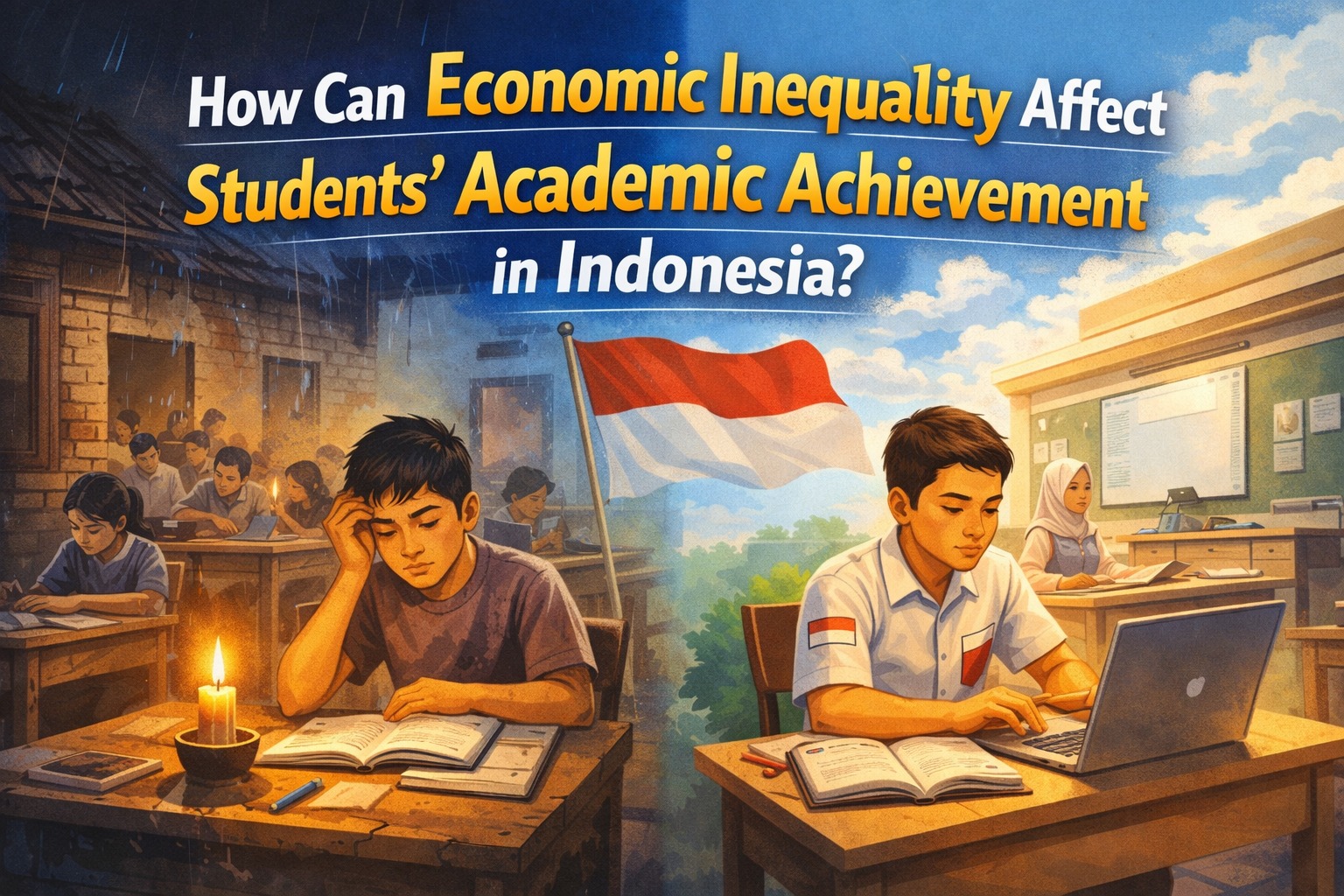
Economic Inequality and Its Impact on Students’ Academic Achievement in Indonesia
Economic inequality remains one of the major challenges in Indonesia’s education system. Family financial conditions do not only affect overall well-being, but also have a direct impact on the quality of learning and students’ academic performance. How does economic inequality work, and to what extent does it influence academic achievement? The following is a comprehensive discussion.
1. ECONOMIC INEQUALITY AND EDUCATION: WHY ARE THEY CONNECTED?
In the educational context, economic inequality creates significant differences in access, facilities, and learning opportunities. Students from high-income families have more resources—ranging from books, digital devices, and internet access to private tutoring—compared to those from low-income households.
This inequality shapes gaps in the quality of the learning process, which are eventually reflected in academic performance.
2. THE IMPACT OF ECONOMIC INEQUALITY ON ACADEMIC ACHIEVEMENT
a. Limited Access to Educational Facilities
Students from low-income families often face difficulties in obtaining basic learning facilities such as textbooks, laptops, or stable internet connections. This makes it harder for them to keep up with increasingly digital learning systems.
b. Less Conducive Learning Environments
Crowded living conditions, the absence of a dedicated study space, and ongoing economic pressure at home can reduce students’ concentration and motivation to learn.
c. Lack of Academic Support
Students whose parents work long hours or have limited educational backgrounds often receive less academic assistance at home.
d. Differences in School Quality
Schools in economically advantaged areas tend to have better facilities, more qualified teachers, and more comprehensive learning programs than schools in underdeveloped regions.
3. PSYCHOLOGICAL EFFECTS THAT INFLUENCE ACADEMIC PERFORMANCE
Economic inequality affects not only physical conditions but also students’ psychological well-being. Some of its impacts include:
* Lower self-confidence among students who feel disadvantaged from the start
* Stress caused by family financial pressure, which disrupts learning focus
* Social stigma that makes students from low-income families feel inferior and reluctant to participate in school activities
These psychological effects further worsen academic performance.
4. EFFORTS TO REDUCE THE IMPACT OF ECONOMIC INEQUALITY
To minimize the effects of economic inequality on academic achievement, several measures can be taken:
a. Optimizing Educational Assistance Programs
Programs such as KIP, BOS, and private scholarships need to be expanded and made more accessible to students from low-income families.
b. Improving School Quality in Underdeveloped Areas
Equal distribution of qualified teachers, educational facilities, and technology is essential.
c. Collaboration Between Parents, Schools, and Government
Strong partnerships can help create a more inclusive and supportive educational ecosystem.
d. Free Learning Support Programs
Free tutoring, community-based learning assistance, and peer tutoring programs can help reduce academic gaps.
CONCLUSION
Economic inequality has a real and significant impact on students’ academic achievement in Indonesia. From access to facilities and learning environments to psychological conditions, these factors are interconnected and shape the quality of education students receive. Through collaborative efforts and the equalization of educational quality, this gap can be reduced so that all students—without exception—have equal opportunities to achieve their best potential.
Tentang Penulis
Gusti Ayu Tita
Penulis — Universitas STEKOM
Penulis aktif yang berfokus pada isu-isu akademik, teknologi pendidikan, dan pengembangan sumber daya manusia di lingkungan kampus.