INTERNSHIPS: BRIDGING THEORY AND PRACTICAL EXPERIENCE
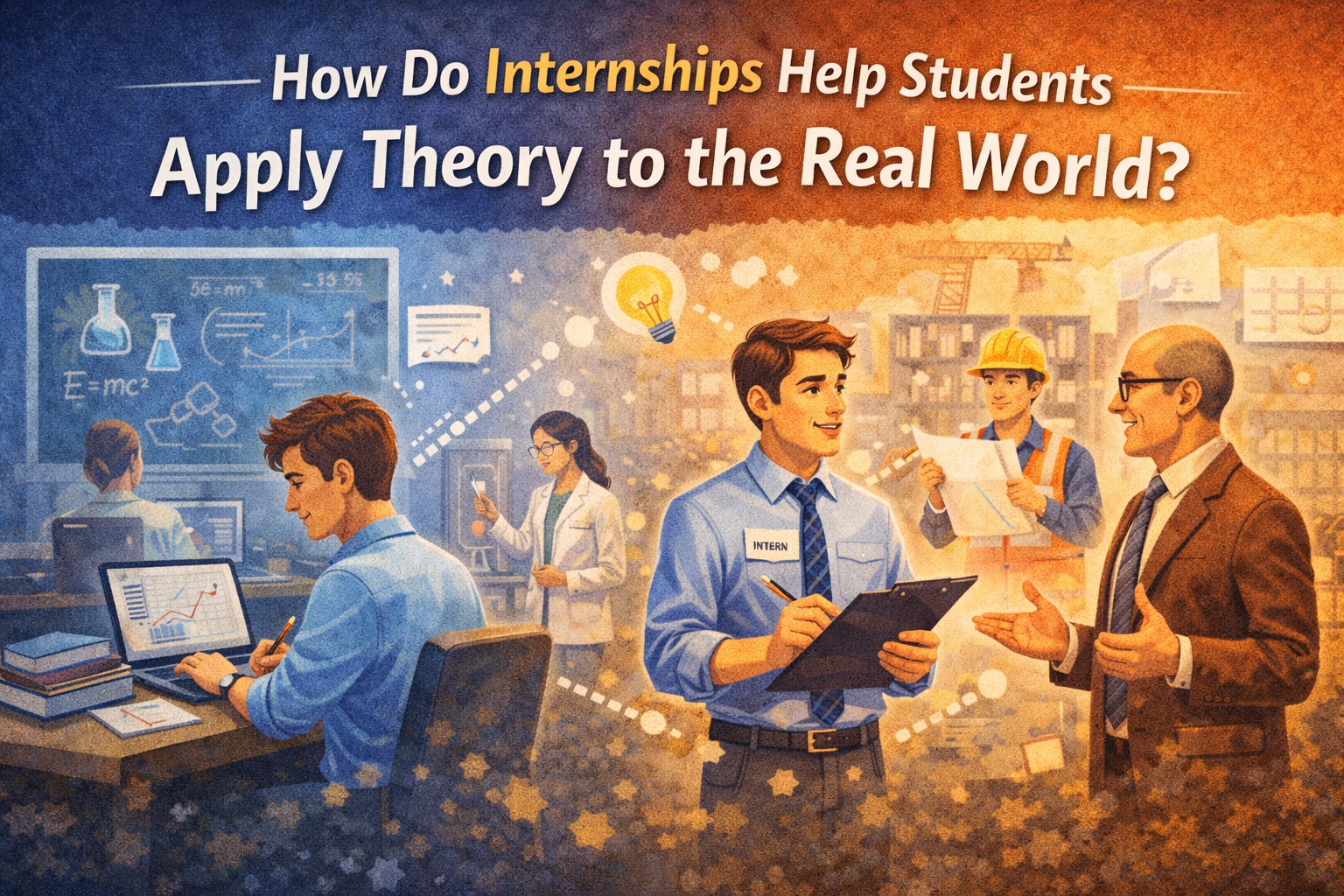
Internships are an essential stage in higher education, especially for students who want to connect the knowledge they learn with real-world practice. Through internships, students gain valuable experience that helps them understand how theoretical concepts from college can be applied in practice. This article explores how internships play a crucial role in helping students apply theory to the real world.
THE IMPORTANCE OF INTERNSHIPS IN HIGHER EDUCATION
In formal learning, students often encounter theoretical and abstract material. Internships provide an effective solution to bridge the gap between theory and practice by offering real work experience. Additionally, internships serve as a dynamic and challenging learning environment, where students face real situations and problems requiring direct application of knowledge.
HOW INTERNSHIPS HELP APPLY THEORY TO THE REAL WORLD
1. Hands-On Practice in the Work Environment
Through internships, students have the opportunity to apply the theories they learned in real work situations. For example, an engineering student might directly participate in production or machine maintenance, while a management student could be involved in project planning.
2. Facing Challenges and Developing Problem-Solving Skills
Internships expose students to challenges that may not align perfectly with classroom theory. Students learn to find practical and creative solutions, improving their problem-solving abilities.
3. Receiving Feedback and Direct Learning
During an internship, students receive guidance and feedback from experienced mentors or supervisors. This helps them understand their strengths and weaknesses in applying theory and refine their work methods.
4. Understanding Work Culture and Ethics
Besides technical skills, internships also introduce students to company culture, work ethics, and essential soft skills crucial for future career success.
BENEFITS OF INTERNSHIPS FOR STUDENTS
* Real Work Experience: Equips students with skills needed in the workforce.
* Competency Development: Enhances both technical and non-technical skills.
* Professional Networking: Opens opportunities to build connections that can aid career growth.
* Improved Job Prospects: Prepares students to be more attractive and ready for employment after graduation.
TIPS TO MAXIMIZE YOUR INTERNSHIP EXPERIENCE
* Be Proactive: Take initiative and don’t hesitate to ask questions.
* Document Learning: Record experiences and newly acquired knowledge.
* Build Good Relationships: Maintain strong communication with colleagues and supervisors.
* Self-Evaluate: Use feedback for personal and professional development.
CONCLUSION
Internships play a vital role in helping students apply theory to the real world. With hands-on experience in a work environment, students not only gain a deeper understanding of concepts but also learn to tackle practical challenges they will face in the future. Therefore, internships should be maximized as part of an effective learning process and career preparation.
Tentang Penulis
Gusti Ayu Tita
Penulis — Universitas STEKOM
Penulis aktif yang berfokus pada isu-isu akademik, teknologi pendidikan, dan pengembangan sumber daya manusia di lingkungan kampus.