
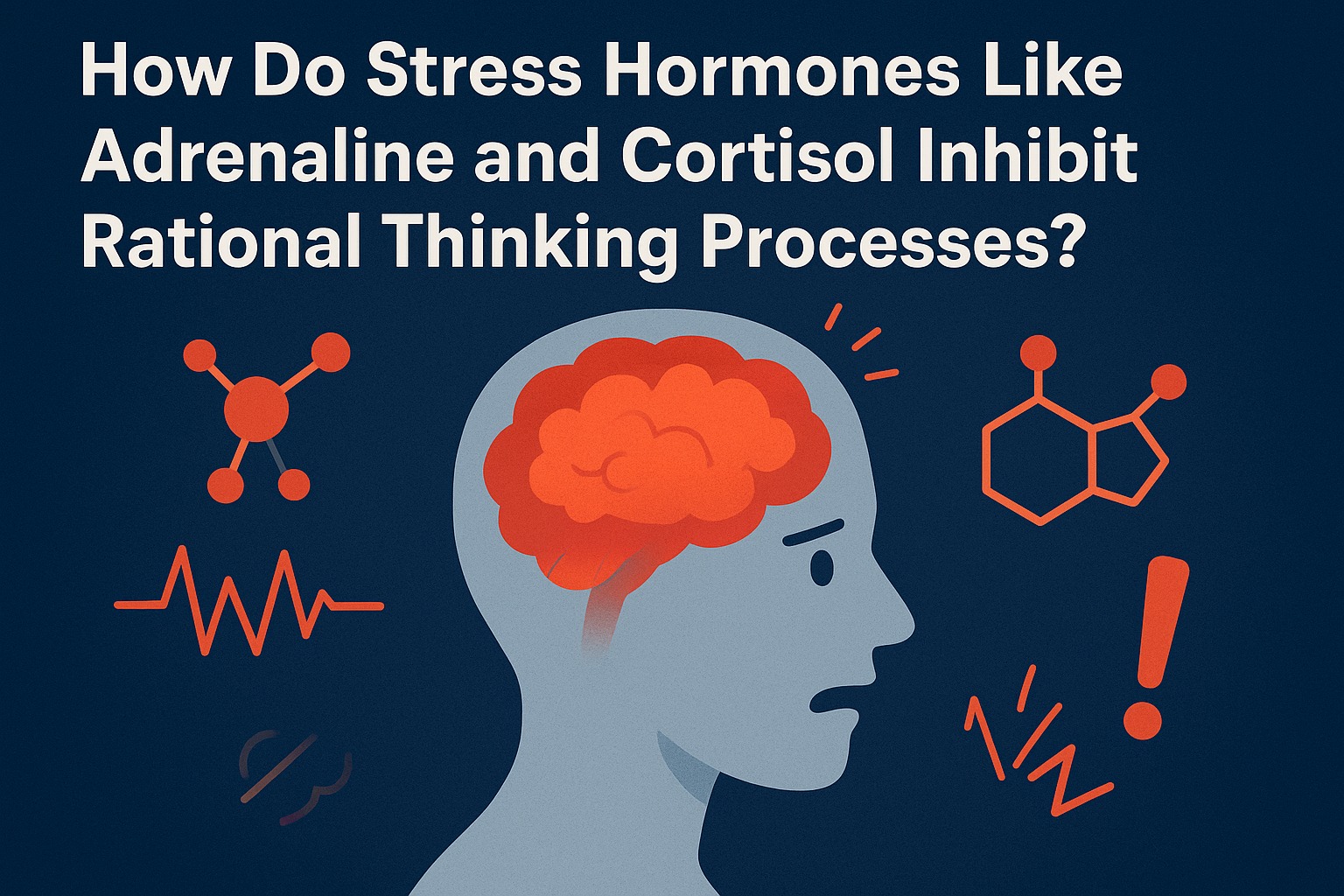
Stress hormones are an essential part of the body’s defense mechanism. However, when their levels rise drastically—especially during panic or high-pressure situations—hormones such as adrenaline and cortisol can actually interfere with the ability to think clearly. This article explains how these two hormones work and why they can hinder rational thinking.
-FIGHT-OR-FLIGHT RESPONSE TRIGGERED BY HORMONE SURGE
When the body senses danger, the sympathetic nervous system immediately activates the fight-or-flight response. Adrenaline is released to increase heart rate, blood flow, and alertness.
Although this response is beneficial in dangerous situations, an excessive surge of adrenaline can narrow focus. The brain concentrates only on the threat rather than the solution, which reduces rational thinking ability.
CORTISOL AND ITS EFFECTS ON COGNITIVE FUNCTION
Unlike adrenaline, which works quickly, cortisol helps maintain the body’s alertness for a longer period. However, excessive levels of cortisol can disrupt working memory, concentration, and analytical abilities.
Cortisol makes the brain more sensitive to stress, causing the decision-making process to become unstable and more emotionally driven.
DISRUPTION IN THE PREFRONTAL CORTEX AS THE LOGIC CENTER
The prefrontal cortex is the part of the brain responsible for reasoning, planning, and self-control. When stress hormones rise, blood flow is diverted to the parts of the body needed for survival.
As a result, activity in the prefrontal cortex decreases, making a person more prone to impulsive decisions rather than logical thinking.
AMYGDALA DOMINANCE DURING HIGH-STRESS SITUATIONS
The amygdala functions as the brain’s threat-detection center. When adrenaline and cortisol levels rise, the amygdala becomes more active than usual.
This condition makes a person more reactive, easily panicked, and less able to assess situations objectively. In other words, the amygdala takes over control from the rational thinking system.
LONG-TERM IMPACTS OF EXCESSIVE STRESS
When stress hormones remain high for long periods, the effects extend beyond thinking ability and into mental health. Issues such as anxiety, mental fatigue, and reduced focus can arise.
Chronic stress exposure also lowers the brain’s effectiveness in handling problems, further weakening rational thinking skills.
CONCLUSION
Adrenaline and cortisol play important roles in keeping the body alert. However, when these stress hormones rise excessively, they hinder rational thinking. Reduced prefrontal cortex function, amygdala dominance, and disrupted cognitive processes become the main factors that make it difficult for someone to think clearly under pressure.
Tentang Penulis
Gusti Ayu Tita
Penulis — Universitas STEKOM
Penulis aktif yang berfokus pada isu-isu akademik, teknologi pendidikan, dan pengembangan sumber daya manusia di lingkungan kampus.



