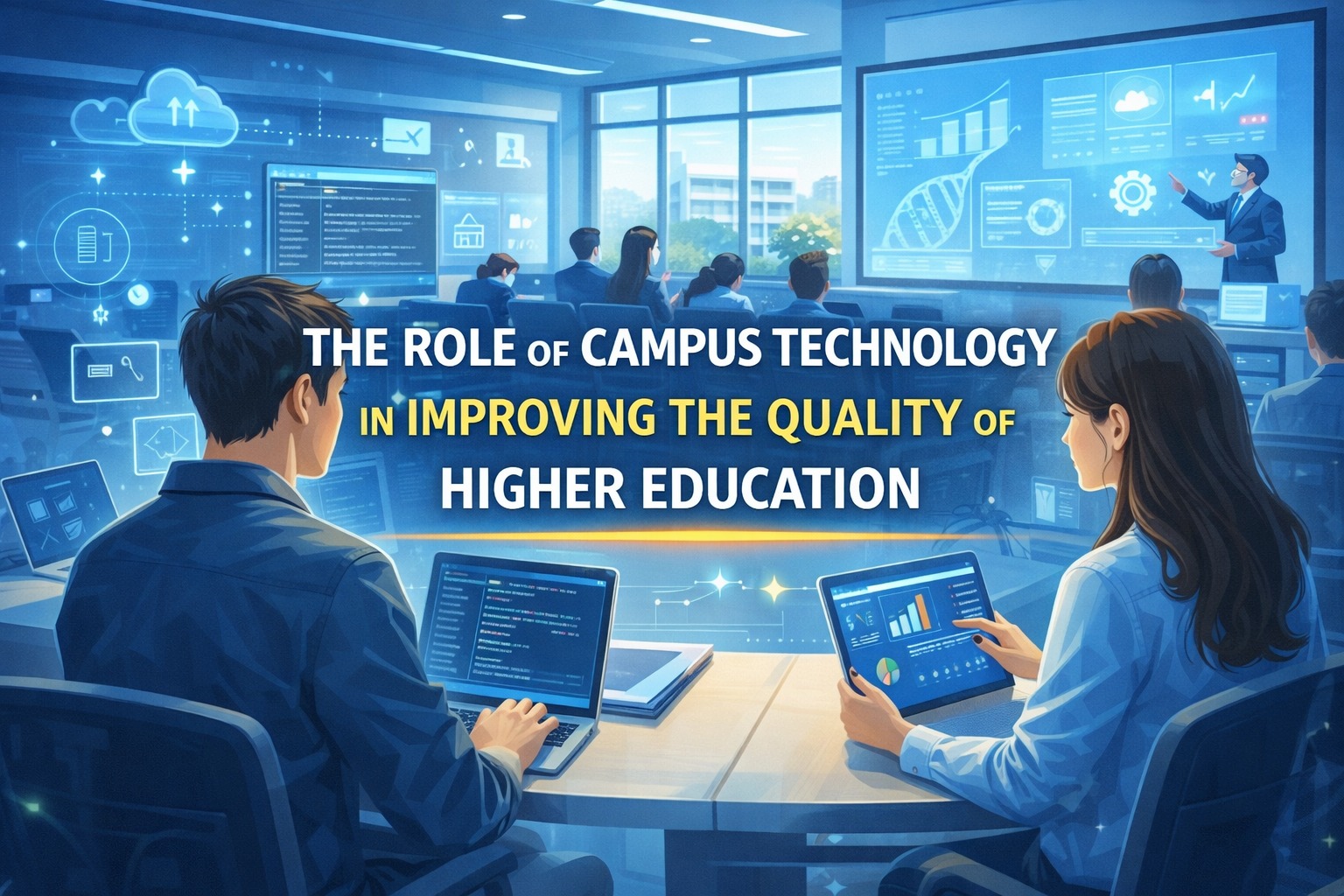
The rapid development of digital technology has brought significant changes to higher education. Universities no longer rely solely on conventional teaching methods, but increasingly integrate technology to improve the quality of learning. This raises an important question: how does campus technology contribute to improving the quality of higher education?
This article comprehensively discusses how technology plays a role in creating learning experiences that are more effective, interactive, and relevant to the needs of students in the modern era.
THE ROLE OF TECHNOLOGY IN TRANSFORMING HIGHER EDUCATION
Campus technology serves as a bridge connecting lecturers, students, and learning resources. Through the use of technology, the learning process becomes more flexible, structured, and accessible.
This transformation includes the digitalization of learning materials, online learning systems, and the use of collaborative platforms that support real-time academic interaction.
IMPROVING ACCESS AND FLEXIBILITY IN LEARNING
One of the main roles of campus technology is to expand access to education. Students are no longer limited by time and place.
Key benefits include:
- Access to course materials anytime through Learning Management Systems (LMS)
- Flexible online and hybrid learning formats
- Recorded lectures for independent learning
This flexibility allows students to adjust their learning patterns according to their individual needs and pace.
SUPPORTING MORE INTERACTIVE LEARNING METHODS
Technology enables learning activities to become more engaging and participatory. Lecturers can utilize various digital media to enhance student understanding.
Examples of implementation include:
- Interactive learning videos
- Online quizzes and live polling
- Discussion forums based on LMS platforms
Increased interaction encourages students to be more active and involved in the learning process.
IMPROVING THE EFFICIENCY OF ACADEMIC ADMINISTRATION
Beyond learning activities, campus technology also plays a vital role in academic administration. Academic information systems help universities manage administrative processes more efficiently and transparently.
Key benefits include:
- Digital management of course registration and grades
- Faster access to academic information
- Reduced errors associated with manual administration
This efficiency directly contributes to student comfort and satisfaction.
SUPPORTING THE DEVELOPMENT OF STUDENTS’ DIGITAL COMPETENCIES
The integration of technology in higher education indirectly trains students to develop strong digital literacy skills, which are essential for entering the workforce.
Students become accustomed to:
- Using professional digital platforms
- Collaborating online
- Managing information and data effectively
As a result, campus technology contributes to preparing students to become competent and adaptable graduates.
CHALLENGES IN UTILIZING CAMPUS TECHNOLOGY
Despite its many benefits, the implementation of campus technology also faces several challenges, such as:
- Inequality in access to technology
- Limited digital literacy among some users
- Overdependence on online systems
Therefore, ongoing support, training, and institutional policies are needed to ensure balanced and sustainable use of technology.
CONCLUSION
The role of campus technology in improving the quality of higher education is highly significant. Technology not only enhances access to learning but also increases interaction, efficiency, and the overall quality of the academic experience.
With proper implementation, universities can create a more modern, inclusive, and relevant learning environment. Collaboration among lecturers, students, and institutions is key to ensuring that technology delivers a truly positive impact on higher education.
Tentang Penulis
Gusti Ayu Tita
Penulis — Universitas STEKOM
Penulis aktif yang berfokus pada isu-isu akademik, teknologi pendidikan, dan pengembangan sumber daya manusia di lingkungan kampus.