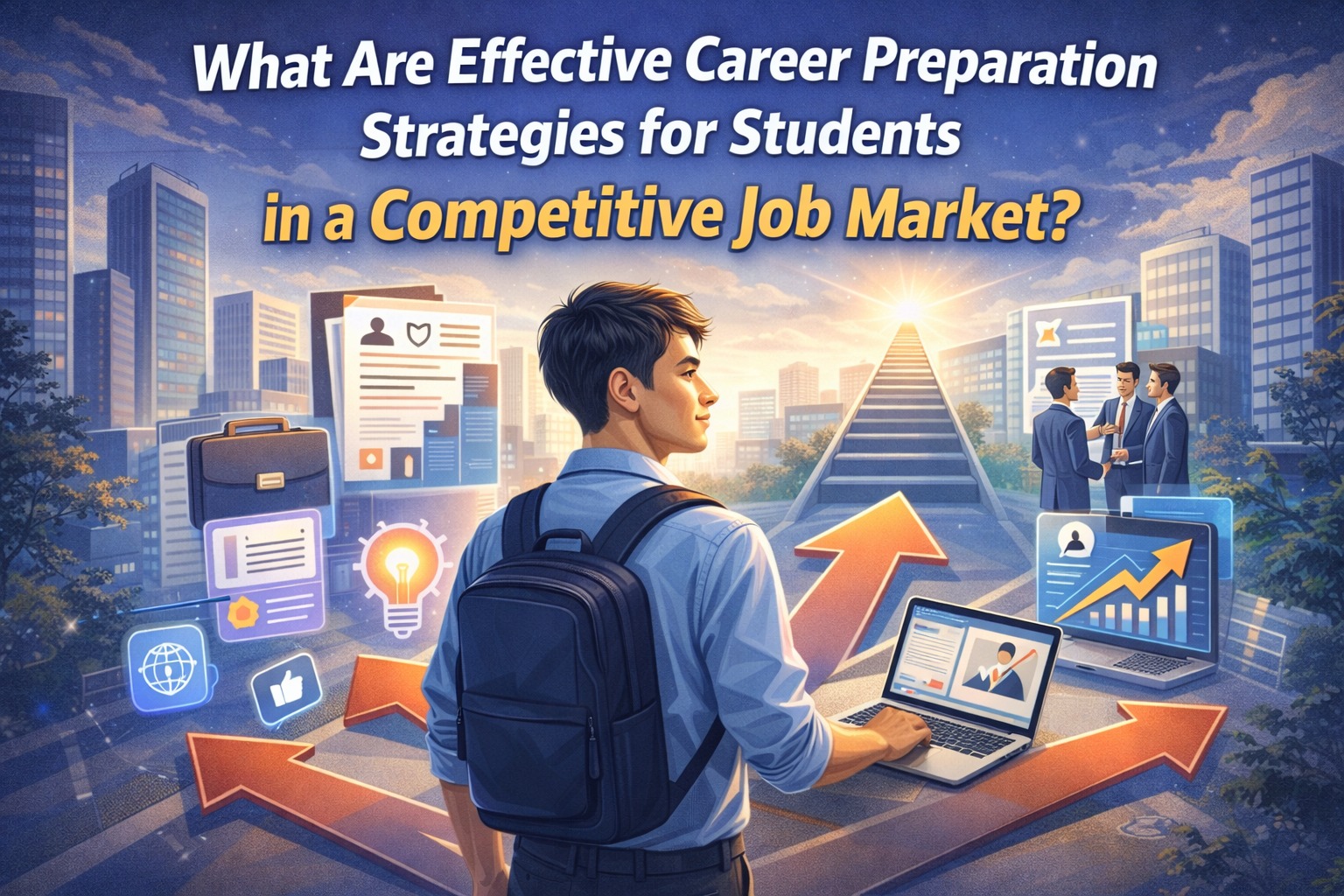
Today’s job market is increasingly competitive, especially for students and fresh graduates. Technological advancements, changing industry needs, and the growing number of university graduates have made companies more selective in recruitment. Academic grades alone are no longer enough. Students need well-planned career preparation strategies from an early stage to stay competitive and increase their value to employers. Therefore, understanding effective career preparation steps is key to facing a competitive job market.
UNDERSTANDING YOUR POTENTIAL AND CAREER GOALS
The first step in career preparation is self-awareness. Many students feel confused after graduation because they lack a clear career vision.
1. Identify your interests and talents
Students need to understand the fields they genuinely enjoy and excel in to avoid choosing the wrong career path.
2. Evaluate your strengths and weaknesses
Knowing both abilities and areas for improvement helps students create a more focused self-development plan.
3. Set short-term and long-term career goals
Clear goals help students stay focused on taking relevant steps during college.
DEVELOPING INDUSTRY-RELEVANT SKILLS
Today’s workplace demands a combination of hard skills and soft skills, both equally important.
1. Sharpen hard skills related to your major
Students should master technical skills relevant to their field, such as data analysis, design, programming, or professional writing.
2. Improve soft skills
Communication, teamwork, leadership, and time management are highly valued by employers.
3. Join training and certification programs
Supporting certificates can increase credibility and strengthen a student’s CV.
GAINING NON-ACADEMIC EXPERIENCE
Experiences outside the classroom are highly valued by recruiters.
1. Join organizations or communities
Organizations help develop responsibility, leadership, and teamwork skills.
2. Take internships during college
Internships allow students to understand the professional world and build professional connections.
3. Participate in projects or volunteer activities
These activities demonstrate initiative, social awareness, and adaptability.
BUILDING PERSONAL BRANDING EARLY
Personal branding helps students be recognized as individuals with specific skills and characteristics.
1. Create a professional digital profile
Platforms like LinkedIn can showcase experiences, skills, and academic or non-academic achievements.
2. Showcase your expertise through work
Portfolios, articles, or published projects increase employer trust.
3. Maintain professional attitude and ethics
Communication style and behavior, both offline and online, reflect a student’s personal image.
EXPANDING NETWORKS AND CAREER INFORMATION
Connections play a significant role in opening job opportunities.
1. Build relationships with lecturers and alumni
They can provide information, recommendations, and valuable career insights.
2. Attend seminars and job fairs
These events help students understand industry needs and available opportunities.
3. Utilize campus career centers
These services often provide job listings, career training, and job preparation guidance.
CONCLUSION
Effective career preparation strategies for students in a competitive job market cannot be achieved instantly. Students need to understand their potential, develop relevant skills, gain non-academic experience, build personal branding, and expand professional networks early on. With consistent and well-planned preparation, students will not only be ready to enter the workforce but also have a competitive advantage that increases their confidence and value in the eyes of employers. Starting career preparation during college is an important investment for a brighter future.
Tentang Penulis
Gusti Ayu Tita
Penulis — Universitas STEKOM
Penulis aktif yang berfokus pada isu-isu akademik, teknologi pendidikan, dan pengembangan sumber daya manusia di lingkungan kampus.