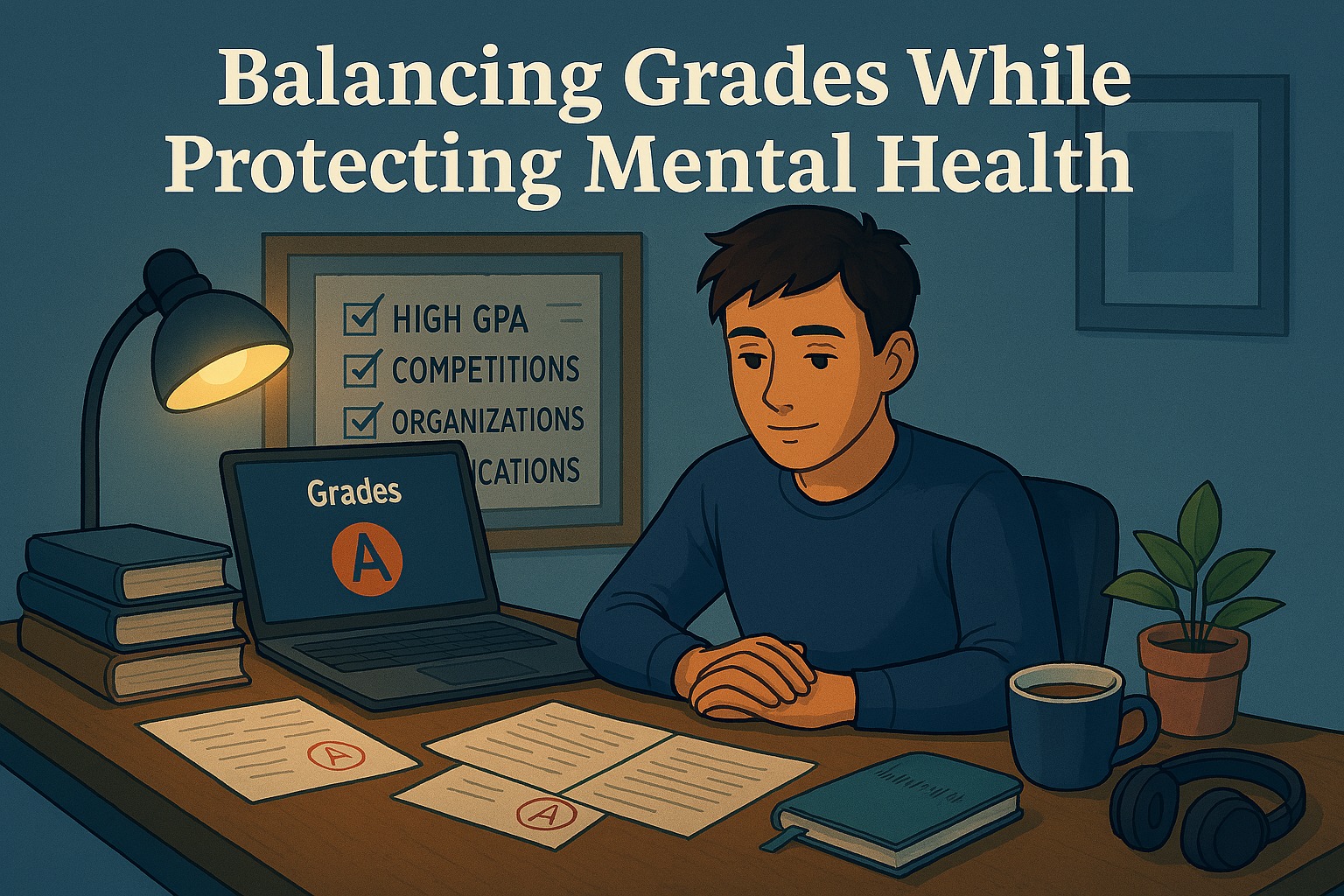
Maintaining strong academic performance is a common goal for students, but it often comes with a hidden cost: mental health. Many students feel the pressure to achieve high grades while managing stress, anxiety, and other emotional challenges. Balancing academic success with mental well-being is not only possible but essential for long-term growth and happiness.
WHY BALANCE MATTERS
Grades are important, but they are only one part of a student’s life. Focusing solely on academic performance can lead to burnout, fatigue, and decreased motivation. Mental health plays a critical role in learning, memory, and overall productivity. When students neglect self-care, even their grades may start to suffer.
Understanding the importance of balance allows students to perform better academically while maintaining emotional stability. Success is not just about grades—it’s about thriving in all areas of life.
RECOGNIZING THE SIGNS OF STRESS
Many students underestimate the toll of constant academic pressure.
Some common signs of stress include:
- Difficulty concentrating on studies
- Trouble sleeping or feeling fatigued
- Irritability or mood swings
- Anxiety about assignments or exams
Recognizing these signs early is crucial. Ignoring stress can lead to burnout, depression, or decreased academic performance. Students need to pay attention to their mental and emotional well-being as much as they monitor their grades.
STRATEGIES FOR BALANCING GRADES AND MENTAL HEALTH
Achieving a balance requires intentional planning and self-awareness.
Some effective strategies include:
1. Set realistic goals
Instead of aiming for perfection, focus on achievable targets. Small, consistent progress is better than constant pressure to be flawless.
2. Create a structured study schedule
Organize tasks by priority and deadlines. Avoid last-minute cramming, which increases stress and reduces retention.
3. Include breaks and leisure time
Regular breaks during study sessions improve focus and prevent fatigue. Hobbies, social activities, or exercise are essential for mental rejuvenation.
4. Seek support when needed
Talking to professors, peers, or counselors can help manage stress and clarify academic expectations. Mental health resources on campus are valuable tools.
5. Practice mindfulness and self-care
Meditation, journaling, or even short moments of relaxation can reduce anxiety and improve resilience.
THE LONG-TERM BENEFITS OF BALANCE
Students who balance grades with mental health tend to perform better academically over time. They retain information more effectively, approach problems with clearer thinking, and are better able to adapt to challenges. Beyond academics, these skills contribute to emotional intelligence, professional growth, and personal well-being.
REDEFINING SUCCESS
True success is not defined solely by GPA or awards. Academic achievements are important, but so is emotional resilience, well-being, and self-awareness. Students who learn to prioritize both grades and mental health are better prepared for life after school—professionally and personally.
Balancing academic performance with mental health is a continuous process. It requires reflection, adjustments, and a commitment to self-care. Students who embrace this balance can enjoy their educational journey while protecting their long-term well-being.
Tentang Penulis
Gusti Ayu Tita
Penulis — Universitas STEKOM
Penulis aktif yang berfokus pada isu-isu akademik, teknologi pendidikan, dan pengembangan sumber daya manusia di lingkungan kampus.