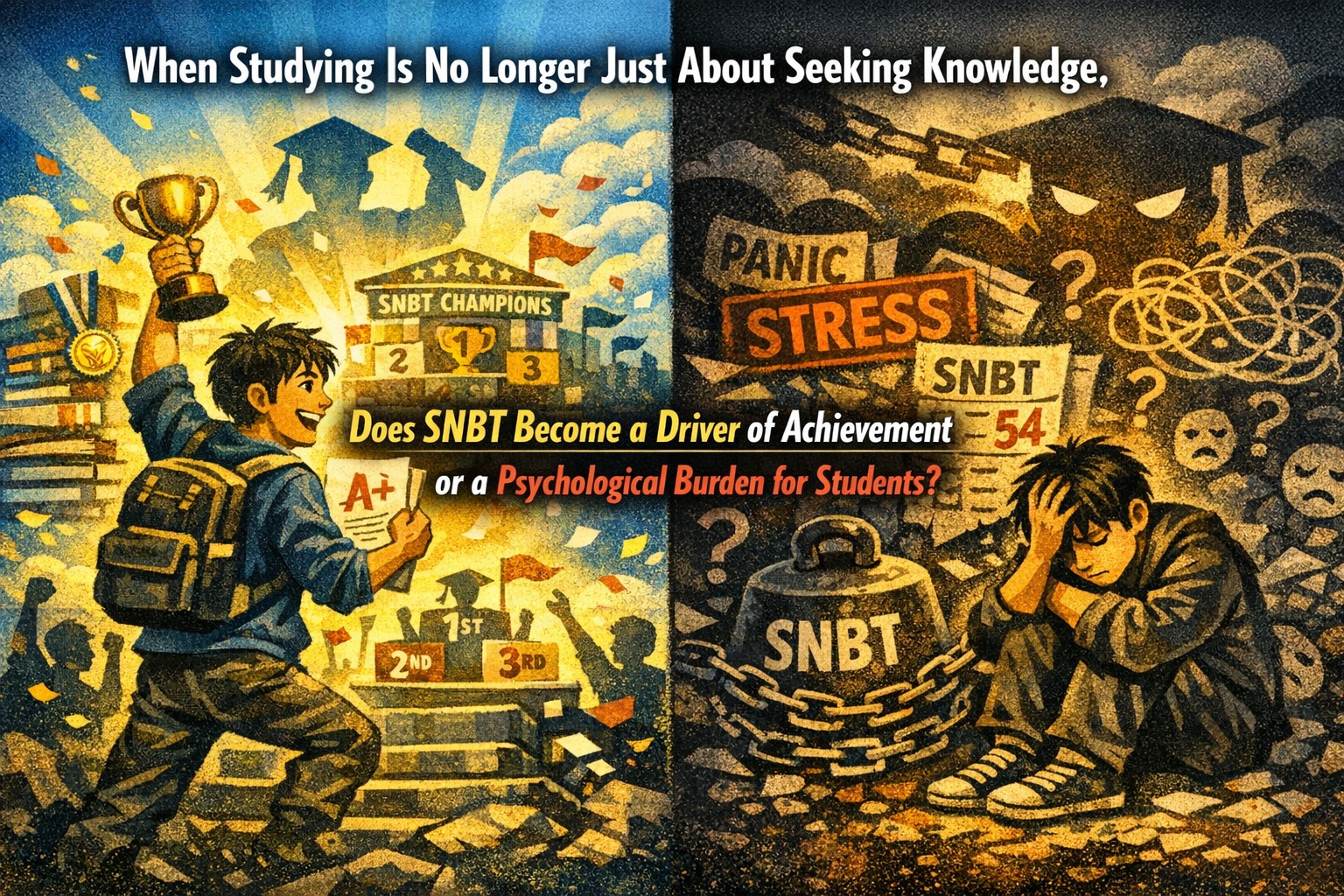
For many students in Indonesia, entering university is not simply about continuing education. It is often seen as the first major step toward building a successful future. Among the many admission pathways, SNBT (Seleksi Nasional Berdasarkan Tes) stands as one of the most competitive and emotionally demanding systems. It is designed to measure academic readiness, but in reality, it often becomes much more than a test. It becomes a symbol of hope, family expectations, personal pride, and sometimes even fear.
Every year, thousands of students prepare intensely for SNBT. They attend tutoring classes, solve endless practice questions, and spend months trying to improve their scores. The dream of entering a favorite university pushes them to work harder than ever before. However, behind the motivation and ambition, there is another reality that many people ignore: mental pressure.
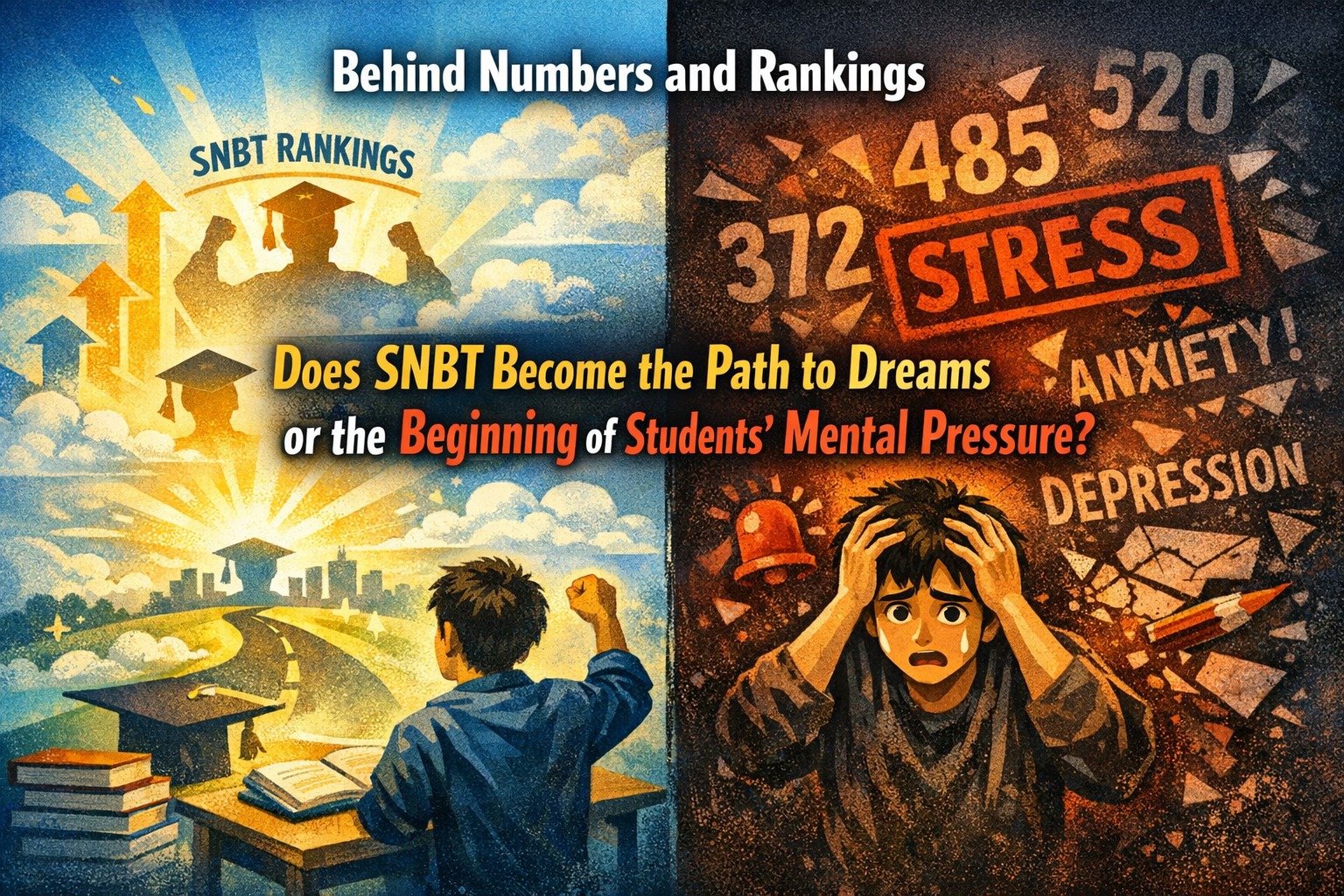
Numbers and rankings dominate the entire process. Students are often judged by tryout results, percentile positions, and university passing grades. These numbers can inspire confidence, but they can also create stress, self-doubt, and emotional exhaustion. This raises an important question: does SNBT truly become the path to achieving dreams, or does it mark the beginning of serious mental pressure for students?
The answer depends on how students experience the process. For some, SNBT becomes a powerful motivation to grow and improve. For others, it becomes a heavy burden that affects confidence, mental health, and self-worth. Understanding both sides is important to create a healthier perspective on education and success.
SNBT AS A GATEWAY TO ACADEMIC DREAMS
SNBT gives students a clear goal and direction. Many students who previously studied without a strong purpose begin to feel more focused when they decide on their target university and major. The dream of becoming a doctor, teacher, engineer, psychologist, or lawyer gives learning a deeper meaning.
This goal-oriented mindset often increases discipline. Students start managing their time more carefully, reducing distractions, and building stronger study habits. They understand that consistent effort is necessary to compete fairly with thousands of other applicants across the country.
The preparation process also teaches valuable life skills. Students learn how to handle pressure, evaluate their weaknesses, and improve through repeated practice. They become more familiar with persistence and delayed gratification, which are important qualities not only for university life but also for future careers.
In this way, SNBT can be seen as a positive academic challenge. It encourages students to take responsibility for their future and pushes them to reach a higher standard of learning. For those who approach it with a healthy mindset, the exam becomes a bridge toward personal growth and educational opportunity.
WHEN SCORES BECOME A MEASURE OF SELF-WORTH
The problem begins when exam scores stop being a tool for evaluation and start becoming the main measure of personal value. Many students unconsciously believe that high scores mean they are intelligent and worthy, while low scores mean failure and disappointment.
This mindset creates dangerous emotional dependence on numbers. A low tryout result can ruin an entire week, while a good score may temporarily restore confidence. Students become trapped in an unhealthy cycle where self-esteem rises and falls based on test performance.
Rankings also strengthen comparison culture. Instead of focusing on personal progress, students compare themselves constantly with classmates, friends, and even strangers on social media. Seeing others share high scores or university acceptance announcements can create insecurity and panic.
The pressure becomes heavier when families also focus too much on rankings. Questions like “What is your score?” or “Can you enter a top university?” may seem normal, but they often make students feel judged rather than supported. When numbers replace understanding, emotional pressure grows rapidly.
THE INVISIBLE MENTAL BURDEN OF COMPETITION
Competition is a natural part of academic life, but excessive competition can become harmful. Students preparing for SNBT often face invisible mental struggles that are not immediately visible to teachers or parents.
Anxiety is one of the most common experiences. Students worry about not being prepared enough, making mistakes during the exam, or disappointing their families. This constant fear can affect sleep, concentration, and emotional stability.
Burnout is another serious issue. Many students study for long hours every day without enough rest, believing that taking breaks means losing opportunities. Over time, this leads to physical exhaustion and emotional emptiness. Instead of feeling motivated, they begin to feel numb and hopeless.
Some students also experience social isolation. They reduce friendships, hobbies, and family time because they feel guilty whenever they are not studying. Their lives become centered entirely around the exam, making failure feel even more devastating.
Unfortunately, mental pressure is often normalized. Stress is seen as proof of seriousness, and emotional struggles are dismissed as weakness. This makes students hide their feelings instead of asking for help, which can worsen their condition over time.
THE ROLE OF PARENTS, TEACHERS, AND SOCIETY
Students do not face SNBT alone. Their emotional experience is strongly influenced by parents, teachers, and the wider social environment. Supportive guidance can build confidence, while unrealistic expectations can create long-term psychological pressure.
Parents often want the best for their children, but sometimes love is expressed through pressure rather than understanding. Demanding specific universities or comparing children with others may reduce motivation instead of increasing it. Students need encouragement, not constant fear of failure.
Teachers also hold significant influence. Educators who focus only on rankings may unintentionally make students believe that academic value is everything. In contrast, teachers who appreciate effort, progress, and resilience help students develop a healthier relationship with learning.
Society contributes through cultural expectations. Prestigious universities are often treated as the only symbol of success, while alternative educational paths are underestimated. This creates unnecessary stigma for students who choose different journeys.
A healthier academic culture requires changing this perspective. Success should be measured by growth, integrity, and long-term development, not only by one admission result.
REJECTION DOES NOT MEAN THE END OF THE DREAM
One of the biggest fears surrounding SNBT is rejection. Many students believe that failing to enter their dream university means losing their future. This belief creates extreme emotional pressure because the exam feels like a final judgment.
In reality, life offers many different paths. Students can succeed through private universities, vocational institutions, scholarship programs, entrepreneurship, or professional experience. One rejection does not erase talent, intelligence, or potential.
Sometimes, failure teaches lessons that success cannot. Students learn resilience, adaptability, and emotional strength when they face disappointment and continue moving forward. These qualities are often more valuable than academic prestige alone.
Dreams should not be tied to one campus building or one exam score. The goal is not simply entering a famous university but becoming a capable and meaningful person. When students understand this, rejection becomes a redirection rather than a disaster.
Changing this mindset is essential for protecting mental health. Students must know that they are bigger than their scores, and their future is wider than one admission process.
BUILDING A HEALTHIER MEANING OF SUCCESS
The real challenge is not removing competition, but creating balance between ambition and emotional well-being. Students should be encouraged to work hard without feeling that their entire identity depends on one result.
Healthy preparation includes proper rest, realistic expectations, and emotional support. Sleeping enough, maintaining friendships, and taking breaks are not signs of laziness. They are necessary parts of sustainable learning and better performance.
Schools should also create spaces where students can discuss fear openly. Counseling support, academic guidance, and emotional awareness programs can reduce the stigma around stress and mental health. Students need to know that asking for help is a strength, not a weakness.
Families can help by celebrating effort, not only outcomes. A student who studies consistently and honestly deserves appreciation regardless of the final score. This builds confidence and prevents learning from becoming purely fear-driven.
Ultimately, SNBT should remain a tool for opportunity, not a source of emotional damage. It should challenge students to grow, not make them believe they are only as valuable as their rankings.
Behind numbers and rankings, there are real human emotions—hope, fear, dreams, and struggles. Education should never forget this reality. A system that values mental well-being alongside academic achievement creates stronger students and healthier futures.
SNBT can indeed be a path to dreams, but only if students are allowed to walk that path without being crushed by unnecessary pressure. The goal of education should not be perfection, but meaningful growth and lifelong resilience.
Tentang Penulis
Gusti Ayu Tita
Penulis — Universitas STEKOM
Penulis aktif yang berfokus pada isu-isu akademik, teknologi pendidikan, dan pengembangan sumber daya manusia di lingkungan kampus.