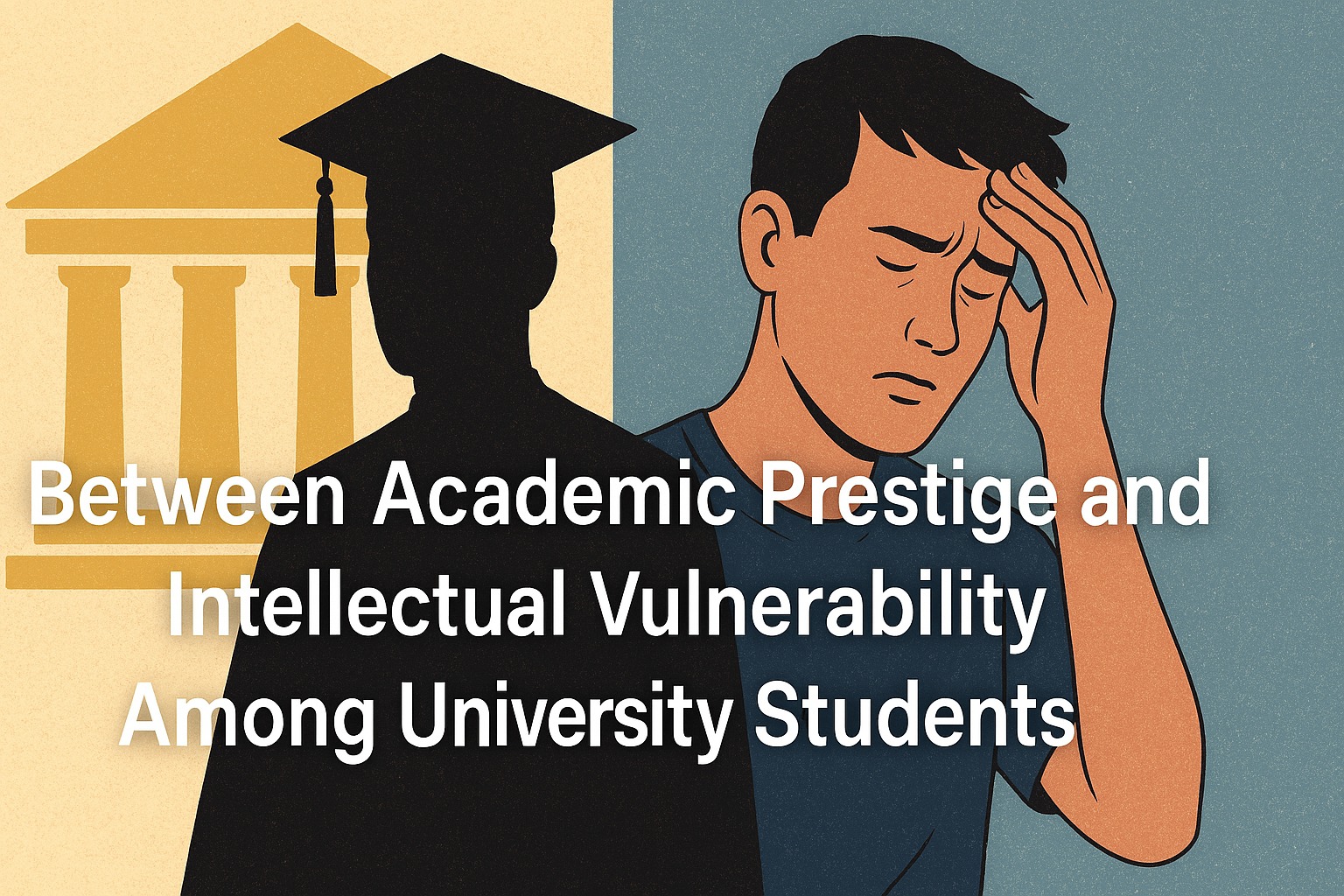
University education is often associated with prestige, achievement, and intellectual distinction. Students enter higher education with aspirations not only to gain knowledge but also to earn recognition. Academic prestige becomes a symbol of success, signaling competence and excellence.However, beneath this pursuit lies a complex tension. While prestige emphasizes strength and mastery, genuine intellectual growth requires vulnerability—the willingness to admit uncertainty, confusion, and limitations. Many university students find themselves navigating between these two opposing forces.
THE MEANING OF ACADEMIC PRESTIGE
Academic prestige is shaped by institutional reputation, academic performance, and social recognition. Students are frequently evaluated through measurable indicators such as grades, awards, research involvement, and public participation in class discussions.
These indicators create a competitive atmosphere where visibility matters. Being perceived as knowledgeable can enhance one’s academic status. As a result, students may focus on maintaining an image of competence rather than engaging in authentic intellectual exploration.
UNDERSTANDING INTELLECTUAL VULNERABILITY
Intellectual vulnerability involves acknowledging gaps in understanding and being open to correction. It requires courage to ask questions, challenge dominant ideas, and accept constructive criticism.
In theory, universities encourage inquiry and debate. In practice, however, vulnerability can feel risky. Students may fear that admitting confusion will damage their reputation or alter how peers and lecturers perceive them. This fear can discourage honest engagement.
THE TENSION BETWEEN IMAGE AND AUTHENTICITY
The tension between prestige and vulnerability creates internal conflict. On one hand, students want to appear competent and confident. On the other hand, deep learning demands openness and humility.
When prestige dominates, classroom interactions may become performative. Students might prioritize polished answers over exploratory thinking. This dynamic limits critical dialogue and discourages collaborative knowledge-building.
Conversely, when vulnerability is embraced, discussions become richer. Students feel free to experiment with ideas, revise perspectives, and grow intellectually. Authentic participation strengthens both academic competence and personal development.
REFRAMING SUCCESS IN HIGHER EDUCATION
To resolve this tension, universities must redefine academic success. True prestige should not be measured solely by performance but also by intellectual integrity and openness. Educators can model vulnerability by demonstrating that scholarship is an ongoing process of questioning and refinement.
Creating environments where mistakes are treated as learning opportunities encourages students to balance ambition with authenticity. When vulnerability is normalized, prestige aligns with genuine intellectual maturity.
CONCLUSION
University students often stand between the desire for academic prestige and the need for intellectual vulnerability. This tension shapes how they participate, communicate, and perceive themselves within academic spaces.
Sustainable academic excellence emerges not from flawless performance, but from the courage to learn openly. By valuing vulnerability alongside achievement, higher education can cultivate scholars who are both confident and intellectually honest.
Tentang Penulis
Gusti Ayu Tita
Penulis — Universitas STEKOM
Penulis aktif yang berfokus pada isu-isu akademik, teknologi pendidikan, dan pengembangan sumber daya manusia di lingkungan kampus.