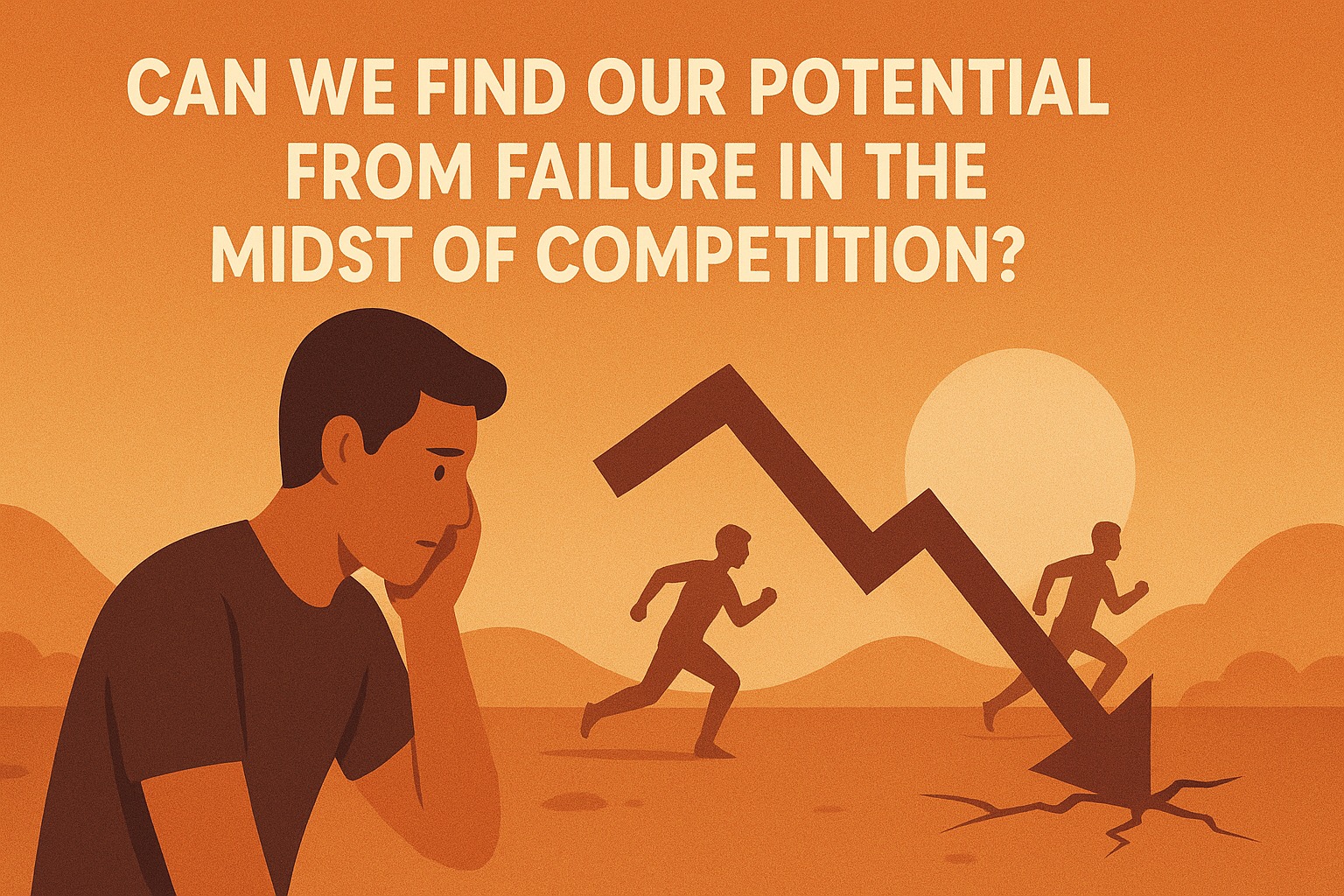
In a world full of competition, failure is often seen as the end of everything. Many people collapse when they are unable to reach their desired goals, especially when comparing themselves with others. However, from a wiser perspective, failure can actually become the doorway to discovering personal potential. The question is, how does this process happen?
FAILURE AS A MIRROR TO RECOGNIZE LIMITS AND STRENGTHS
Failure offers an opportunity to see ourselves more honestly. When goals are not reached, we are forced to face the reality of our abilities, mindset, and strategies we have been using. From here, we can start asking: which part needs improvement, and what skills do we actually have but have not fully utilized?
By understanding our limitations, we can also discover hidden strengths. Many people only realize their ability to lead, adapt, or think creatively after going through difficult situations. Pressure and competition often push us out of our comfort zone, allowing our potential to naturally emerge.
WHY COMPETITION ACCELERATES THE DISCOVERY OF POTENTIAL
Competition is not only about winning; it is a situation that forces us to grow faster. When we see others succeed, it triggers a desire for self-evaluation. This evaluation process helps us identify the most effective work patterns and recognize the fields that best match our character.
In the midst of competition, failure becomes an important moment to reorganize goals. Many people eventually find a better path after failing in the previous one. This proves that personal potential is not always discovered in the place we initially choose.
STEPS TO DISCOVER PERSONAL POTENTIAL THROUGH FAILURE
1. Reflect Without Self-Blame
Pause to analyze what happened without judging yourself. Healthy reflection helps us see facts rather than emotions.
2. Identify Repeated Mistakes
Notice what often becomes an obstacle. From recurring mistakes, we can understand which skills need strengthening.
3. Record Skills That Appear Under Pressure
In difficult situations, certain abilities often appear spontaneously—creativity, patience, precision, or leadership.
4. Compare Yourself With Others Wisely
Occasional comparison is fine, but use it as inspiration, not as a reason to belittle yourself.
5. Seek a Supportive Environment for Growth
Personal potential develops more easily in a place that provides space to grow, not one that only creates pressure.
FAILURE IS NOT THE END, BUT A MAP TO PERSONAL POTENTIAL
Discovering personal potential through failure is not an instant process. It requires time, courage, and patience to understand the meaning behind each fall. However, when we see failure as part of the journey—not an obstacle—it becomes easier to find our uniqueness that can be our greatest strength in facing competition.
In the end, the answer is clear: yes, we *can* find personal potential through failure, as long as we see it as an opportunity, not a defeat.
Tentang Penulis
Gusti Ayu Tita
Penulis — Universitas STEKOM
Penulis aktif yang berfokus pada isu-isu akademik, teknologi pendidikan, dan pengembangan sumber daya manusia di lingkungan kampus.