
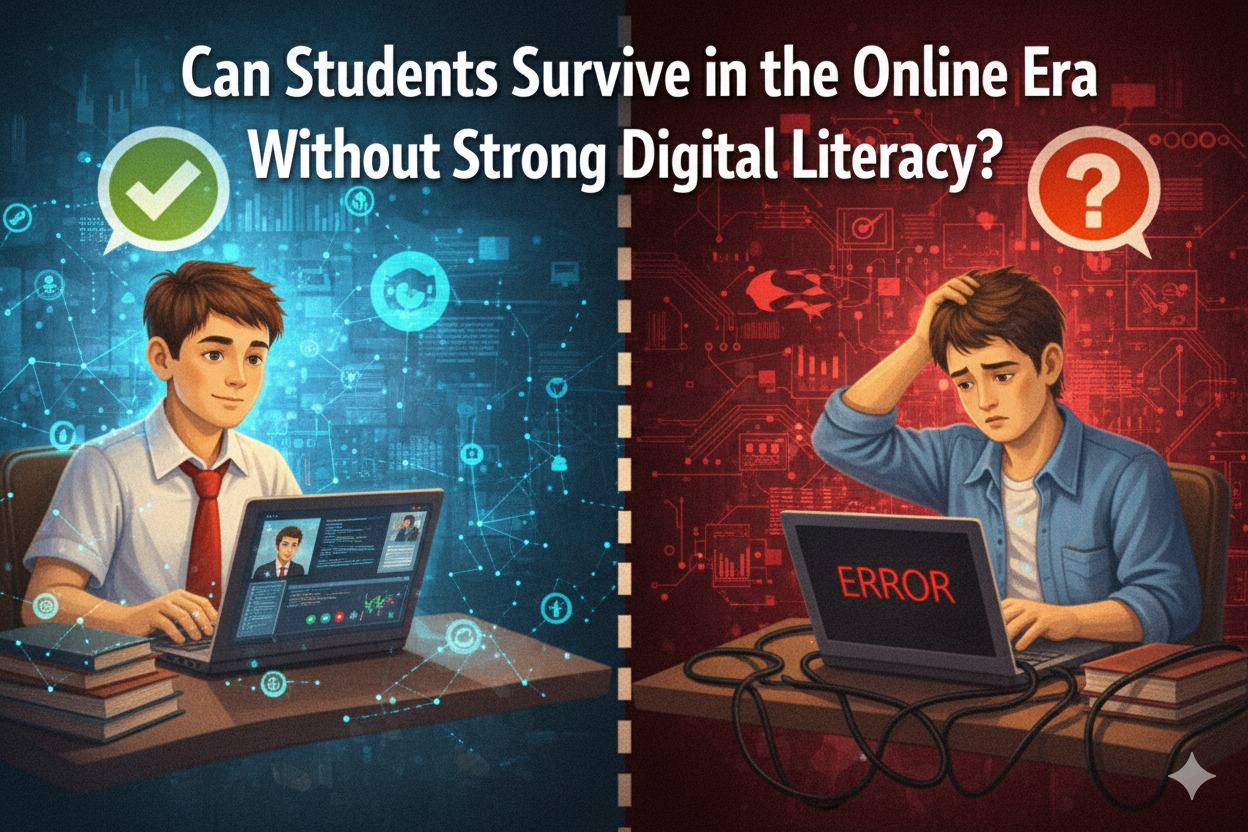
In today’s fully online digital era, digital literacy has become a determining factor in students’ academic success. However, some students still lack strong digital literacy skills. This raises an important question: can students survive and succeed without adequate digital literacy? This article discusses the importance of digital literacy and the impact of insufficient digital skills on students’ academic lives.
WHAT IS DIGITAL LITERACY AND WHY DOES IT MATTER?
Digital literacy is the ability to use digital technology to search for, understand, evaluate, and share information effectively and responsibly. In the context of online education, digital literacy includes the ability to use learning software, access online learning resources, and maintain digital ethics and security.
CHALLENGES FACED BY STUDENTS WITHOUT STRONG DIGITAL LITERACY
1. Difficulty Accessing and Managing Information
Students with low digital literacy often struggle to find course materials, academic journals, or reliable online references, which hinders the learning process.
2. Low Effectiveness in Online Learning
Without the ability to operate online learning platforms properly, students may miss important learning opportunities and fall behind in their studies.
3. Security and Privacy Risks
Students who lack digital security awareness are more vulnerable to cyberattacks, data theft, and misuse of personal information.
4. Limited Collaboration and Networking Opportunities
Digital literacy enables students to collaborate and build networks virtually. Without these skills, students may face difficulties communicating effectively with lecturers and classmates.
IMPACTS OF INSUFFICIENT DIGITAL LITERACY ON STUDENTS
* Declining Academic Performance: Ineffective learning processes can lead to lower grades and reduced academic quality.
* Limited Workplace Readiness: The modern job market relies heavily on technology. Students without strong digital literacy struggle to compete professionally.
* Social Isolation: Limited digital skills can restrict social interaction and collaboration, which are essential for personal development.
HOW CAN STUDENTS STRENGTHEN THEIR DIGITAL LITERACY?
* Participating in Digital Literacy Training and Workshops
Universities and communities often provide training to enhance technological skills and cybersecurity awareness.
* Regularly Using Digital Technologies and Platforms
Hands-on practice helps improve competence and confidence in using digital tools.
* Developing Critical and Ethical Awareness
Students must learn to evaluate information critically and maintain ethical behavior in digital interactions.
* Utilizing Online Learning Resources
Platforms such as Coursera, Udemy, and Google Scholar can help students deepen both academic knowledge and digital skills.
CONCLUSION
The answer is clear: it is difficult for students to survive and thrive in the online era without strong digital literacy. Digital literacy is not merely a technical skill, but also involves critical thinking and ethical awareness in using technology. Therefore, strengthening digital literacy is essential for students who aim to succeed in both online education and their future careers.
Tentang Penulis
Gusti Ayu Tita
Penulis — Universitas STEKOM
Penulis aktif yang berfokus pada isu-isu akademik, teknologi pendidikan, dan pengembangan sumber daya manusia di lingkungan kampus.



