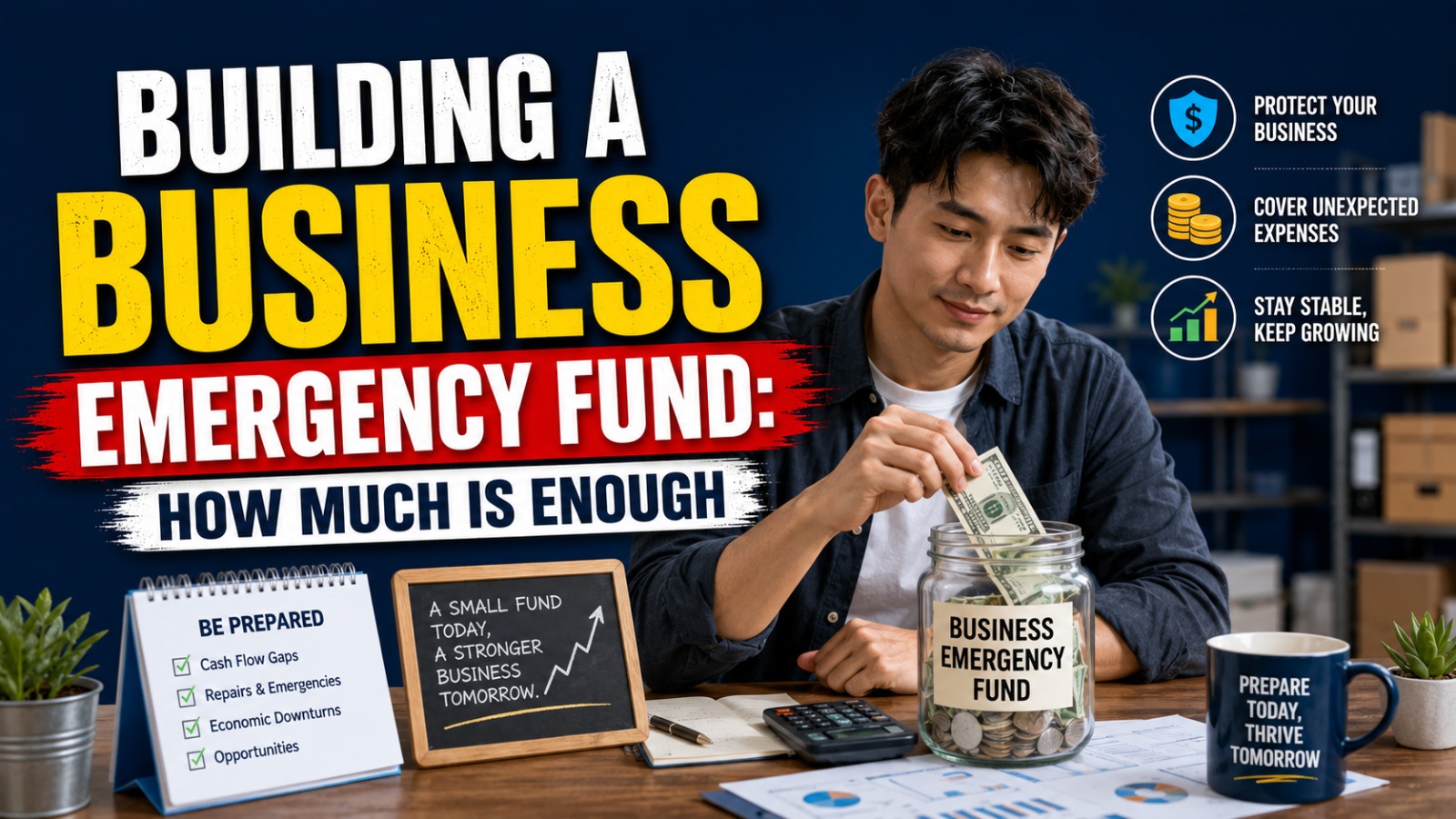
Every business faces unexpected financial challenges at some point. Economic downturns, declining sales, equipment failures, supply chain disruptions, or sudden market changes can quickly affect business operations. Without proper financial preparation, even profitable businesses may struggle to survive difficult periods.
One of the best ways to protect a company from financial uncertainty is by building a business emergency fund. This financial reserve acts as a safety net that helps businesses maintain operations when cash flow becomes unstable. Understanding how much emergency funding is enough is essential for long-term financial security and business sustainability.
WHAT IS A BUSINESS EMERGENCY FUND?
A business emergency fund is money set aside specifically to cover unexpected business expenses or temporary financial shortages. Unlike regular operating cash, this reserve should only be used during emergencies or critical situations.
A business emergency fund can help cover:
- Payroll expenses
- Rent and utility payments
- Equipment repairs
- Supplier payments
- Unexpected legal or tax costs
- Temporary drops in revenue
Having emergency savings reduces dependence on loans and allows businesses to respond more confidently during financial crises.
WHY EVERY BUSINESS NEEDS AN EMERGENCY FUND
Many small businesses operate with limited cash reserves. When unexpected expenses arise, businesses without emergency savings often rely heavily on debt or struggle to continue operating.
A business emergency fund provides several important benefits:
- Improves financial stability
- Protects business continuity
- Reduces financial stress
- Supports better cash flow management
- Minimizes the need for high-interest borrowing
Companies with strong financial reserves are usually better prepared to survive economic uncertainty and recover faster from financial setbacks.
HOW MUCH SHOULD A BUSINESS EMERGENCY FUND COVER?
The ideal size of a business emergency fund depends on several factors, including industry type, operating expenses, and revenue stability. However, many financial experts recommend saving enough to cover at least three to six months of essential operating expenses.
Businesses with highly unpredictable income or seasonal revenue may need larger emergency reserves, sometimes covering up to twelve months of expenses.
Key costs to include when calculating emergency savings include:
- Employee salaries
- Office or store rent
- Utility bills
- Loan repayments
- Insurance premiums
- Inventory costs
- Essential software subscriptions
The goal is to ensure the business can continue operating even during periods of reduced income.
FACTORS THAT AFFECT EMERGENCY FUND SIZE
Different businesses require different levels of emergency savings. Several factors influence how much money should be set aside.
BUSINESS INDUSTRY
Some industries experience greater financial risk than others. Businesses in tourism, retail, or hospitality may require larger emergency funds because their revenue can fluctuate significantly.
MONTHLY OPERATING COSTS
Companies with high operational expenses need larger financial reserves to maintain stability during emergencies.
REVENUE STABILITY
Businesses with predictable recurring income may need smaller emergency funds compared to companies with irregular cash flow.
BUSINESS AGE
New businesses often face higher financial uncertainty and may benefit from building larger emergency savings during their early years.
HOW TO START BUILDING A BUSINESS EMERGENCY FUND
Creating a business emergency fund requires consistency and financial discipline. Small businesses can begin by setting realistic savings goals and gradually increasing reserves over time.
Practical steps include:
- Allocating a percentage of monthly profits to savings
- Reducing unnecessary business expenses
- Separating emergency funds from operational accounts
- Automating transfers into savings accounts
- Reviewing financial performance regularly
Even small contributions made consistently can grow into a strong financial safety net.
WHERE TO KEEP BUSINESS EMERGENCY SAVINGS
Emergency funds should remain easily accessible while still earning some level of interest. Many businesses choose high-yield business savings accounts or money market accounts for emergency reserves.
The ideal account should offer:
- Quick access to funds
- Low financial risk
- Minimal withdrawal restrictions
- Competitive interest rates
Avoid investing emergency funds in high-risk assets that may lose value or become difficult to access during urgent situations.
COMMON MISTAKES TO AVOID
Some business owners make mistakes that weaken the effectiveness of their emergency funds.
Common errors include:
- Using emergency funds for non-essential purchases
- Saving too little for realistic emergencies
- Keeping all reserves in risky investments
- Failing to replenish funds after using them
- Ignoring inflation and rising operating costs
Businesses should treat emergency savings as a critical part of their financial strategy rather than optional reserves.
THE ROLE OF CASH FLOW MANAGEMENT
Strong cash flow management supports successful emergency fund building. Businesses that carefully monitor income and expenses are better able to allocate money toward long-term savings.
Improving cash flow may involve:
- Speeding up customer payments
- Negotiating better supplier terms
- Reducing operational waste
- Managing inventory efficiently
Healthy cash flow allows businesses to continue building reserves without disrupting daily operations.
CONCLUSION
Building a business emergency fund is one of the smartest financial decisions a company can make. Unexpected challenges are unavoidable, but businesses with strong financial reserves are better prepared to manage difficult situations without risking long-term stability.
While the ideal emergency fund size varies by industry and operating costs, saving enough to cover at least three to six months of essential expenses provides a strong financial foundation. Through disciplined saving, careful budgeting, and effective cash flow management, businesses can improve resilience and maintain stability even during uncertain economic conditions.
Tentang Penulis
Gusti Ayu Tita
Penulis — Universitas STEKOM
Penulis aktif yang berfokus pada isu-isu akademik, teknologi pendidikan, dan pengembangan sumber daya manusia di lingkungan kampus.