Campus Individualism as a Threat to Student Solidarity
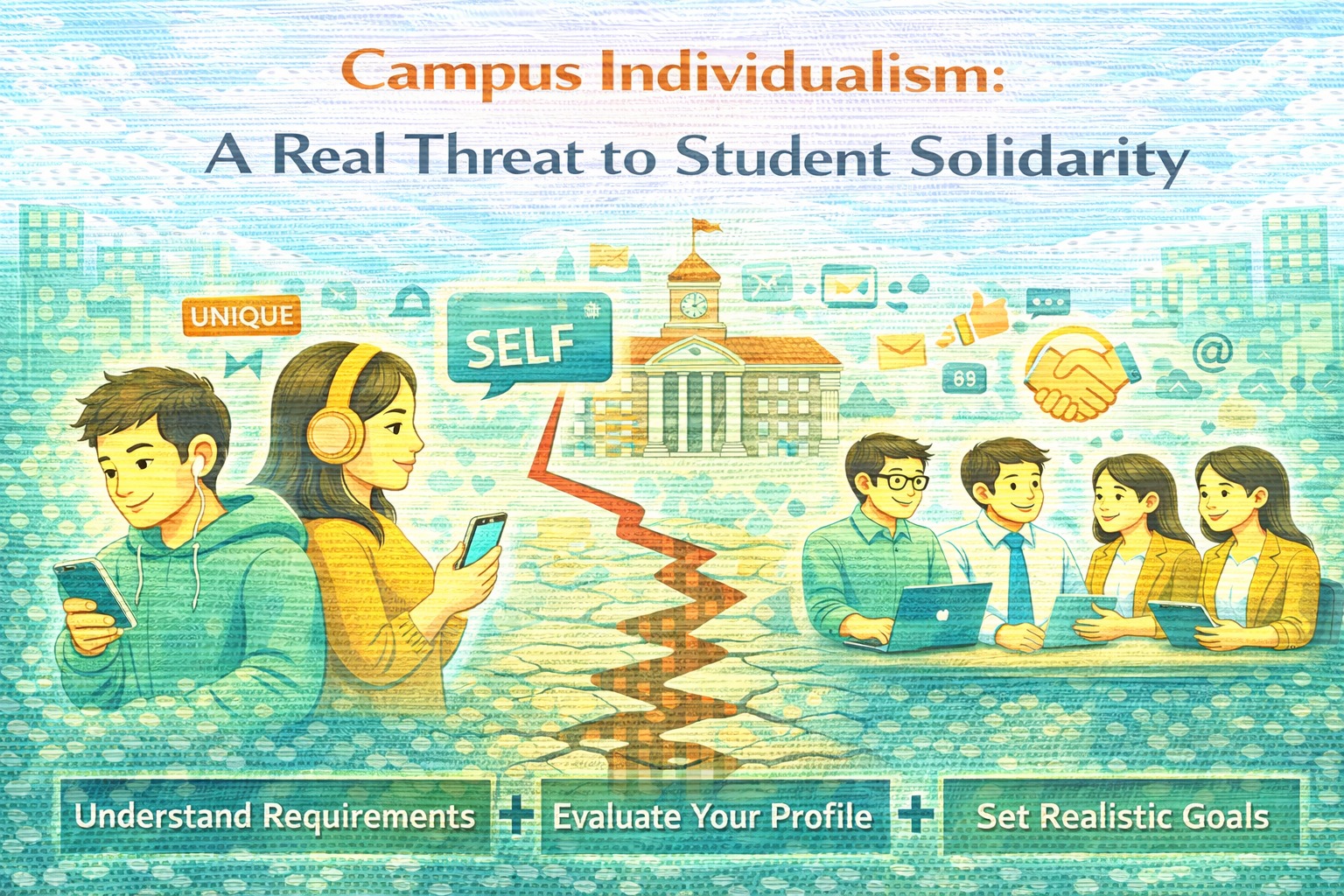
Social changes and the development of modern education systems have shaped new patterns in campus life. Today, students are increasingly expected to be independent, competitive, and oriented toward individual achievement. While this mindset is not inherently wrong, excessive individualism can gradually erode shared values and collective bonds. As a result, campus individualism is increasingly viewed as a real threat to student solidarity. Student solidarity has long been a defining characteristic of campus life. Through togetherness, students learn social awareness and collective responsibility. This article explores how individualism grows within the campus environment and examines its impact on student solidarity.
Understanding Individualism in the Campus Environment
Individualism on campus is characterized by students prioritizing personal interests over collective concerns. A strong focus on academic performance, career achievements, and self-development often reduces student involvement in collective activities.
Individual achievement increasingly takes precedence over shared responsibilities.
This phenomenon is reinforced by assessment systems that emphasize individual outcomes. Personal success becomes the primary measure of achievement, while social contributions receive comparatively less recognition.
Factors Driving the Rise of Individualism
The strengthening of individualism among students is influenced by several factors. High academic pressure, intense competition for scholarships, and demands for job readiness encourage students to focus on personal development.
Academic and career pressures push students toward self-centered priorities.
In addition, technological advancement and digital media shape more personalized interaction patterns. Fast-paced virtual communication often replaces deeper dialogue and meaningful togetherness.
The Impact of Individualism on Student Solidarity
Uncontrolled individualism can directly weaken student solidarity. Empathy and concern for others gradually decline as individuals become increasingly focused on personal goals.
Excessive individualism reduces empathy and collective engagement.
The campus environment risks becoming socially fragmented and less inclusive. When solidarity weakens, students may lose their identity as a supportive and socially conscious community.
The Role of Solidarity in Student Life
Solidarity plays a crucial role in shaping student character and social awareness. Through solidarity, students learn to collaborate, share knowledge, and address challenges collectively.
Solidarity strengthens collaboration and social responsibility.
More importantly, solidarity serves as the foundation for students’ roles as agents of social change. Without a sense of togetherness, students’ collective voice and influence on social issues diminish.
Efforts to Maintain Solidarity Amid Individualism
Preserving solidarity in the midst of growing individualism requires active involvement from multiple parties. Universities can promote collaborative learning and social activities that directly engage students.
Institutional support is essential to sustain student solidarity.
At the same time, students must develop awareness that individual success is inseparable from social support. By balancing personal ambitions with collective responsibility, solidarity can continue to grow without hindering self-development.
Conclusion
Campus individualism presents a serious challenge to student solidarity. An excessive focus on personal achievement risks eroding the sense of togetherness that has long been the foundation of student life. However, this challenge is not insurmountable.
Through collective awareness, active institutional roles, and student commitment to social responsibility, solidarity can remain relevant and sustainable. In the dynamics of modern campus life, solidarity is not merely an option, but a necessity for creating a healthy and meaningful academic environment.
Tentang Penulis
Gusti Ayu Tita
Penulis — Universitas STEKOM
Penulis aktif yang berfokus pada isu-isu akademik, teknologi pendidikan, dan pengembangan sumber daya manusia di lingkungan kampus.