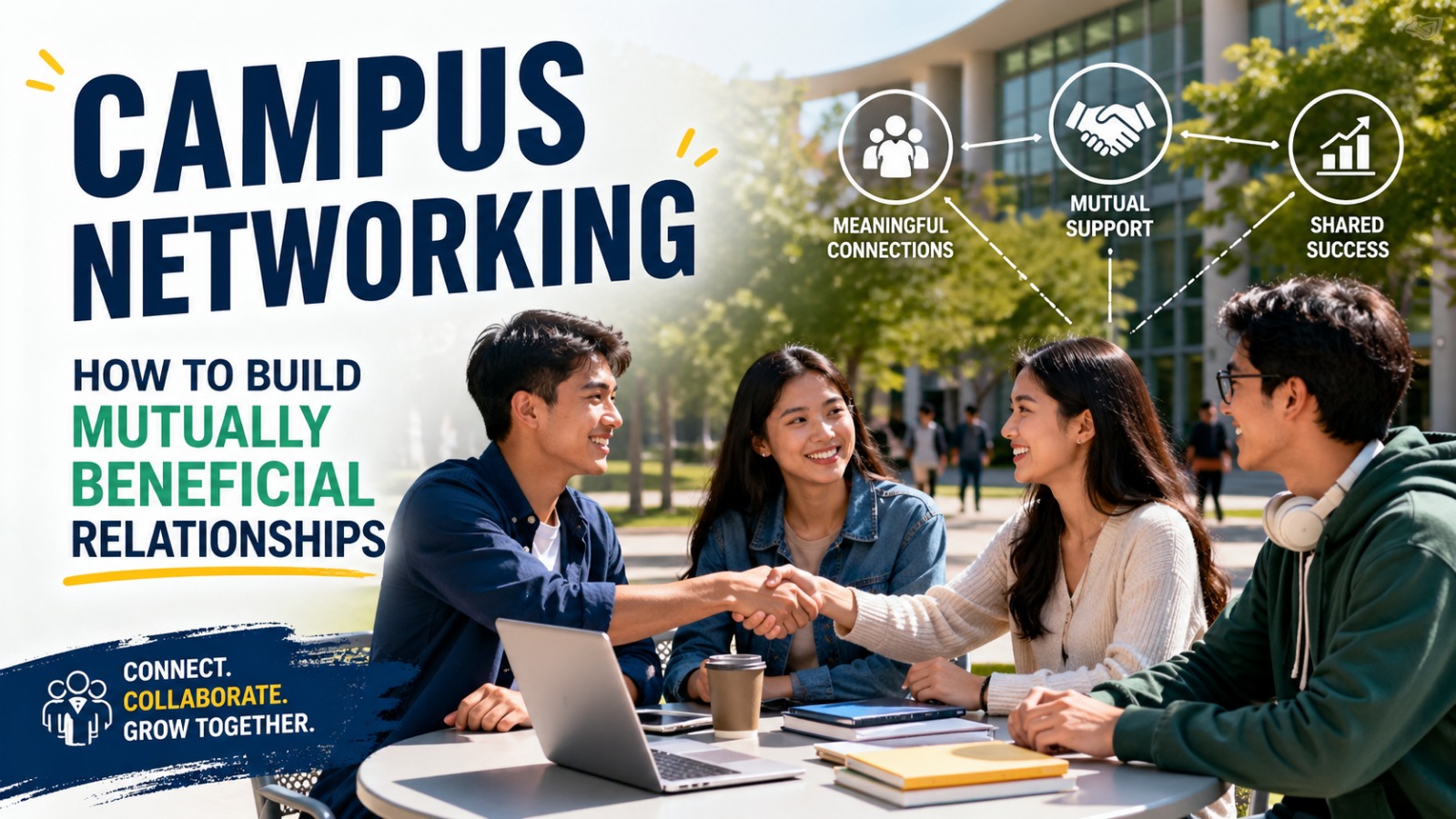
Building connections during college is more than just making friends for group assignments or social activities. It is about creating meaningful relationships that can support both personal growth and future career opportunities. Campus networking plays a crucial role in shaping how students learn, collaborate, and eventually succeed in professional environments.
Many students underestimate the value of the people they meet in college. Classmates, lecturers, and organization members can become valuable contacts who open doors to internships, collaborations, and job opportunities. When approached with the right mindset, simple interactions can evolve into long-term, mutually beneficial relationships.
WHY CAMPUS NETWORKING MATTERS
College offers a unique environment where individuals from diverse backgrounds come together. This diversity creates endless opportunities to learn from others, exchange ideas, and build strong connections. Networking helps students step خارج their comfort zones and develop communication skills that are essential in the real world.
In addition, strong relationships often lead to access to valuable information. Opportunities such as scholarships, competitions, and job openings are frequently shared through personal connections rather than public announcements. Being part of a network increases the chances of discovering these hidden opportunities.
HOW TO BUILD GENUINE CONNECTIONS
Creating meaningful relationships requires authenticity. Start with simple actions like introducing yourself, showing interest in others, and actively listening during conversations. People are more likely to connect with those who are sincere and approachable.
Joining campus organizations is another effective strategy. These groups provide a platform to meet like-minded individuals while developing teamwork and leadership skills. Participating in events, workshops, and group projects can also help expand your network naturally.
Consistency is key. Building connections is not a one-time effort but an ongoing process. Maintaining communication, even in small ways, helps strengthen relationships over time.
TURNING CONNECTIONS INTO OPPORTUNITIES
Networking becomes truly valuable when relationships evolve into opportunities. A classmate today could become a business partner tomorrow, while a senior might recommend you for a job position in the future. These outcomes are often the result of trust and mutual respect built over time.
To turn connections into opportunities, focus on giving as much as receiving. Offer help, share useful information, and support others when possible. Mutual benefit is the foundation of strong and lasting relationships.
COMMON MISTAKES TO AVOID
One common mistake in networking is approaching people only when there is a need. This can make interactions feel transactional rather than genuine. Instead, build relationships consistently without expecting immediate returns.
Another mistake is neglecting existing connections. Many students focus on meeting new people but forget to maintain relationships they already have. A strong network is built not only by expanding connections but also by nurturing them.
CONCLUSION
Campus networking is an essential skill that goes beyond social interaction. It is about building trust, sharing value, and creating opportunities for mutual growth. By being genuine, proactive, and consistent, students can develop relationships that last well beyond their college years and contribute to long-term success.
Tentang Penulis
Gusti Ayu Tita
Penulis — Universitas STEKOM
Penulis aktif yang berfokus pada isu-isu akademik, teknologi pendidikan, dan pengembangan sumber daya manusia di lingkungan kampus.