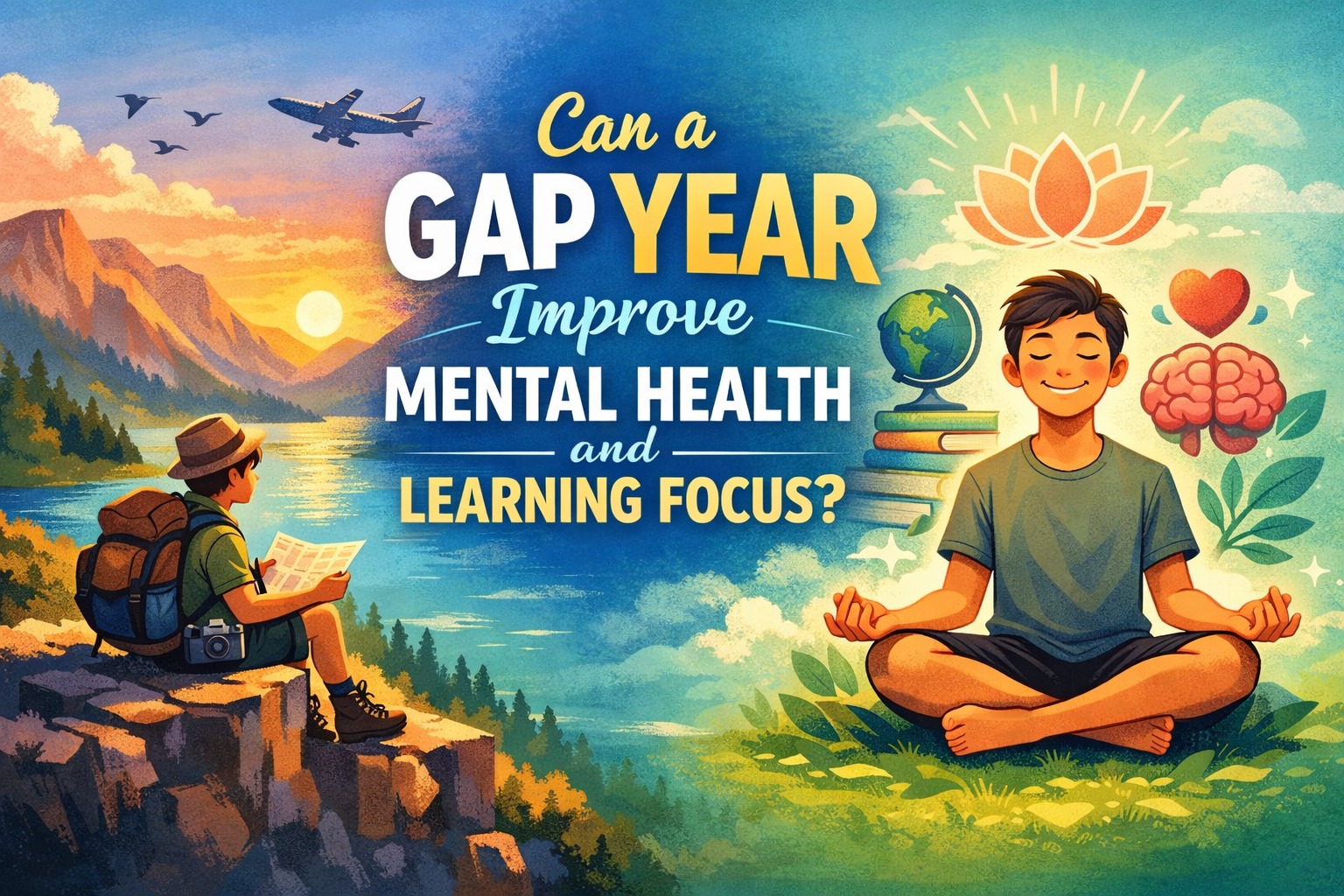
Taking a gap year is no longer seen as a delay in education or career growth. In today’s fast-paced academic environment, many students and young professionals choose to pause for a while before continuing their studies or entering the workforce. A gap year can become a valuable opportunity to recharge mentally, discover new interests, and improve personal development.
But can a gap year truly improve mental health and learning focus? The answer depends on how the time is used. When planned carefully, a gap year can provide positive benefits for emotional well-being, motivation, and academic performance.
WHAT IS A GAP YEAR?
A gap year is a period of time, usually lasting several months to one year, when someone takes a break from formal education or work. During this time, people may travel, volunteer, work part-time, learn new skills, or focus on self-improvement.
Many students take a gap year after graduating from high school before entering university. Others choose it after college to rethink career goals or reduce stress from academic pressure.
HOW A GAP YEAR CAN IMPROVE MENTAL HEALTH
Mental health problems among students continue to increase due to academic competition, social pressure, and uncertainty about the future. A gap year may help reduce these challenges in several ways.
REDUCING ACADEMIC BURNOUT
Continuous studying without proper rest can lead to burnout. Students often feel exhausted physically and emotionally because of assignments, exams, and high expectations.
A gap year gives the mind time to recover. Taking a temporary break from academic routines can reduce stress levels and restore emotional balance.
PROVIDING TIME FOR SELF-DISCOVERY
Many young people feel confused about their goals and interests. During a gap year, individuals have more time to understand themselves better.
Trying new activities, meeting different people, or exploring hobbies can help build confidence and self-awareness. This process often improves emotional stability and personal satisfaction.
IMPROVING WORK-LIFE BALANCE
A gap year allows people to slow down from busy schedules. Instead of constantly chasing grades or deadlines, they can focus on healthy habits such as exercise, meditation, reading, and spending time with family.
These positive routines can support better mental health and create a healthier lifestyle.
THE IMPACT OF A GAP YEAR ON LEARNING FOCUS
Besides mental health benefits, a gap year can also improve concentration and motivation for learning.
INCREASING LEARNING MOTIVATION
Students who immediately continue studying after years of academic pressure may lose motivation. A break can refresh the mind and renew enthusiasm for education.
After experiencing real-world situations during a gap year, many students return to school with clearer goals and stronger determination.
DEVELOPING PRACTICAL SKILLS
A gap year is an excellent time to learn practical skills that are not always taught in classrooms. People may improve communication skills, leadership abilities, financial management, or digital expertise.
These experiences often increase confidence and make future learning more meaningful and focused.
ENCOURAGING INDEPENDENT THINKING
During a gap year, individuals are responsible for managing their own time and decisions. This independence can improve problem-solving abilities and critical thinking skills.
As a result, students often become more mature and disciplined when they return to academic life.
CHALLENGES OF TAKING A GAP YEAR
Although a gap year offers many advantages, it also comes with challenges. Without proper planning, people may lose direction or become unproductive.
Some individuals may feel left behind compared to friends who continue their studies immediately. Financial issues can also become obstacles if the gap year involves travel or unpaid activities.
Therefore, setting clear goals and maintaining productive routines are important for making a gap year successful.
TIPS FOR A PRODUCTIVE GAP YEAR
To gain maximum benefits, consider these simple tips:
- Create clear personal goals
- Learn useful skills or certifications
- Maintain healthy daily habits
- Join volunteer or internship programs
- Keep reading and practicing critical thinking
- Stay connected with educational opportunities
A structured plan can help transform a gap year into a meaningful experience instead of wasted time.
CONCLUSION
A gap year can improve mental health and learning focus when used wisely. Taking time to rest, explore new experiences, and develop practical skills can reduce burnout and increase motivation for future goals.
Rather than being a setback, a well-planned gap year may become a powerful opportunity for personal growth, emotional recovery, and stronger academic readiness. In the modern era, success is not always about moving quickly, but about moving forward with clarity and balance.
Tentang Penulis
Gusti Ayu Tita
Penulis — Universitas STEKOM
Penulis aktif yang berfokus pada isu-isu akademik, teknologi pendidikan, dan pengembangan sumber daya manusia di lingkungan kampus.