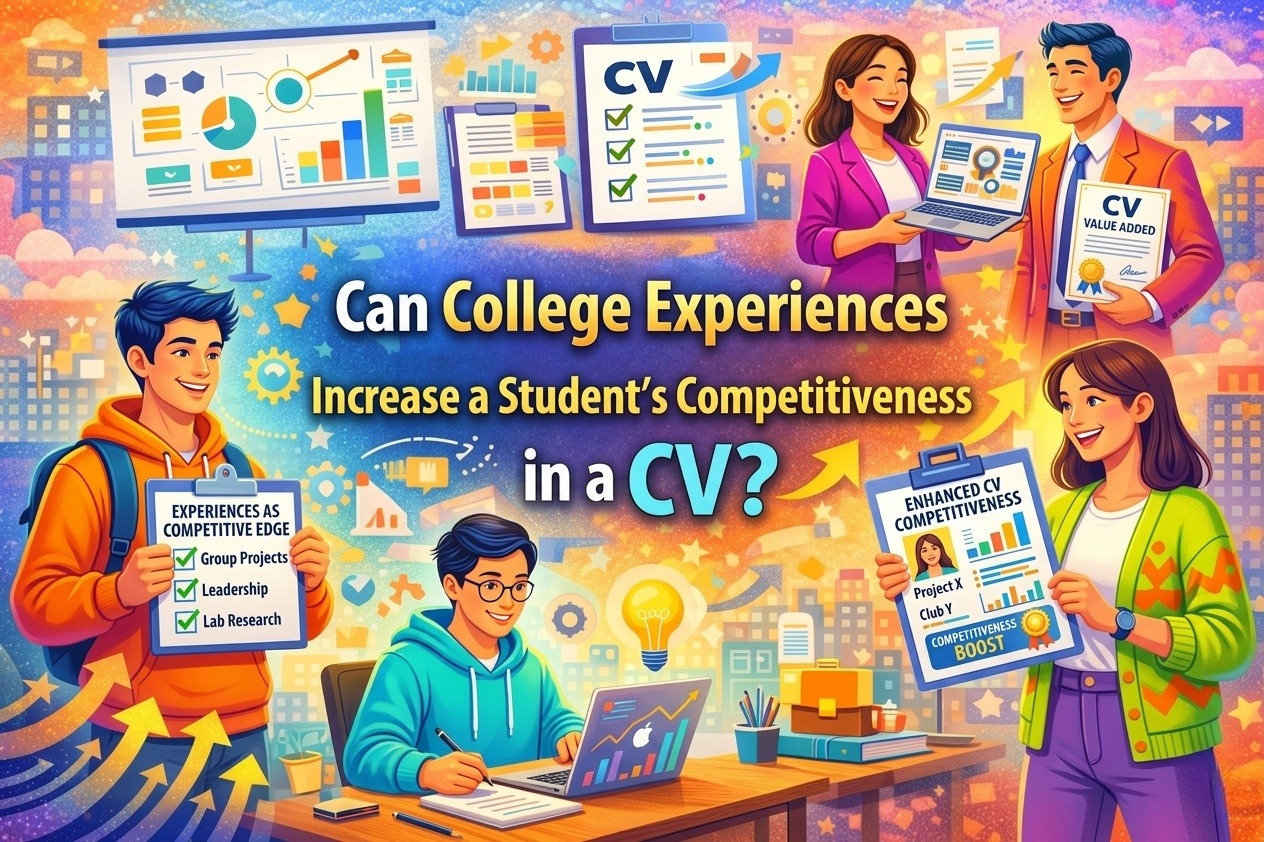
Many students believe that a strong CV depends mainly on academic grades or formal work experience. However, college experiences can also play a significant role in increasing a student’s competitiveness. Activities such as student organizations, academic projects, internships, and volunteering allow students to develop practical skills that are highly valued by employers.
When presented strategically, these experiences can help students stand out among other candidates and demonstrate their readiness for the professional world.
UNDERSTANDING THE VALUE OF COLLEGE EXPERIENCES
College life offers various opportunities that go beyond classroom learning. Students often participate in projects, leadership roles, competitions, or campus events that help them gain practical knowledge.
These experiences show initiative, adaptability, and the ability to manage responsibilities. Recruiters often view such involvement as a sign that a student is proactive and capable of handling real-world challenges.
HIGHLIGHTING ROLES AND CONTRIBUTIONS
To make college experiences meaningful in a CV, students must clearly explain their roles and contributions. Instead of simply listing activities, they should describe what they actually did.
For example, managing a student organization, coordinating a campus event, or leading a research project can demonstrate leadership and organizational abilities. Clear descriptions allow recruiters to understand the impact of these experiences.
SHOWCASING ACHIEVEMENTS AND RESULTS
Experiences become more impressive when they include measurable achievements. Students should highlight outcomes such as successfully organized events, awards received, or completed projects with significant results.
Concrete achievements demonstrate effectiveness, commitment, and the ability to produce results—qualities that recruiters appreciate.
CONNECTING EXPERIENCES TO PROFESSIONAL SKILLS
College activities often help students develop transferable skills such as communication, teamwork, leadership, and problem-solving. By connecting these experiences to professional competencies, students can show how their college involvement prepares them for workplace challenges.
This connection helps recruiters see that the student’s experiences are relevant and valuable for professional roles.
PRESENTING EXPERIENCES IN A PROFESSIONAL WAY
The way experiences are presented in a CV is just as important as the experiences themselves. Students should organize their CV clearly, use concise descriptions, and highlight key achievements with bullet points.
Including supporting materials such as portfolios, certificates, or project documentation can also strengthen credibility. A well-structured CV ensures that college experiences are recognized as valuable career assets.
CONCLUSION
College experiences can significantly increase a student’s competitiveness in a CV when presented effectively. By highlighting roles, achievements, and transferable skills, students can transform their academic and extracurricular involvement into strong professional advantages.
Tentang Penulis
Gusti Ayu Tita
Penulis — Universitas STEKOM
Penulis aktif yang berfokus pada isu-isu akademik, teknologi pendidikan, dan pengembangan sumber daya manusia di lingkungan kampus.