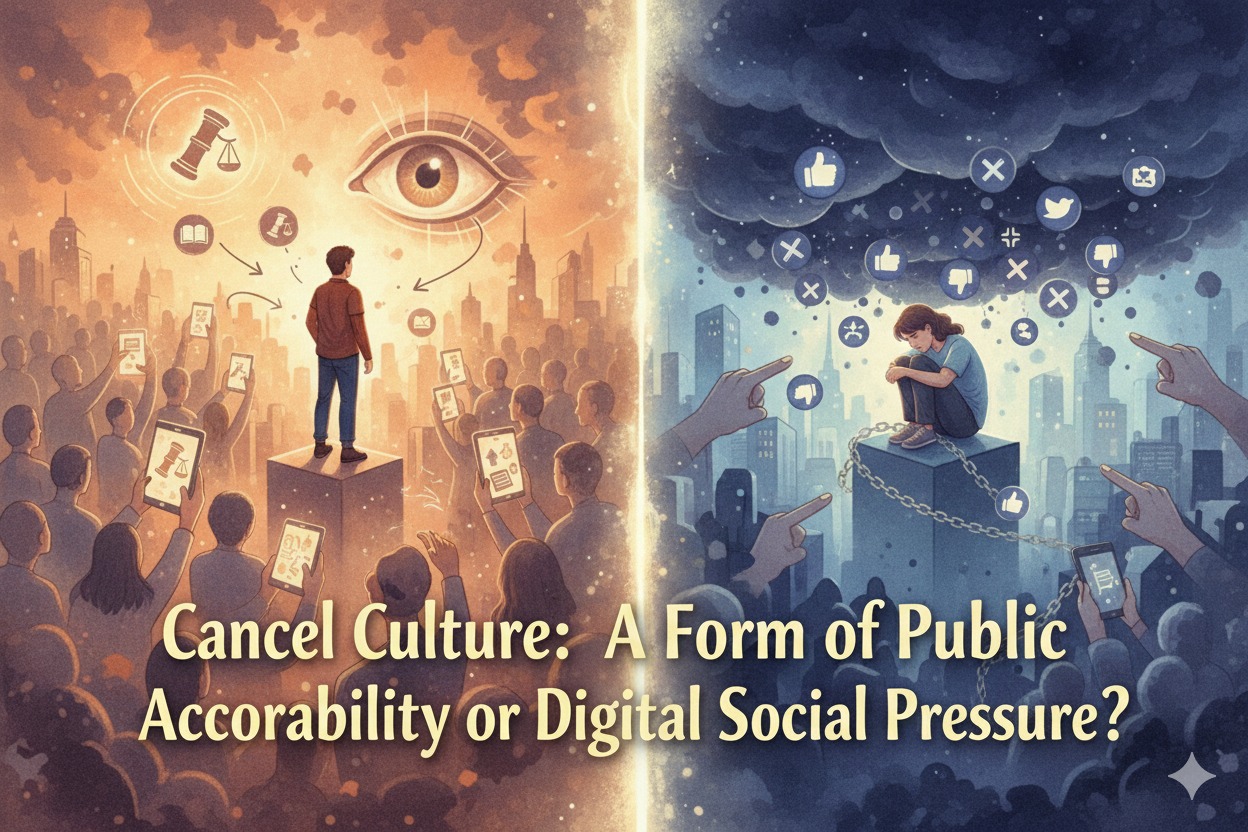
The development of social media has transformed the way the public responds to mistakes, controversies, and problematic behavior—both of public figures and ordinary individuals. One of the most prominent phenomena arising from this shift is *cancel culture*, a collective practice involving boycotts, public condemnation, or social exclusion of individuals perceived to have violated certain norms. This raises a fundamental question: is cancel culture a form of healthy public accountability, or is it an excessive form of digital social pressure?
Understanding the Concept of Cancel Culture
In simple terms, cancel culture refers to the act of “withdrawing support” from individuals or institutions due to statements or actions considered offensive, unethical, or problematic. This practice commonly takes place on platforms such as Twitter, Instagram, and TikTok, where public opinion can form and spread rapidly.
Initially, cancel culture was seen as a social tool to demand accountability, especially when legal or institutional channels were perceived as slow or biased. In practice, however, the line between constructive criticism and mass judgment often becomes blurred.
Cancel Culture as Public Accountability
Supporters of cancel culture argue that it provides a platform for marginalized voices to be heard. Social media enables the public to hold powerful figures, celebrities, and corporations accountable for their actions.
In this context, cancel culture functions as a modern mechanism of social control. It promotes transparency, raises public awareness, and pressures influential individuals to act more responsibly. In many cases, public pressure has led to apologies, policy changes, or self-reflection that might not have occurred otherwise.
Digital Social Pressure and Its Negative Impacts
On the other hand, cancel culture has also faced strong criticism. The process of “canceling” often occurs without thorough verification, opportunities for clarification, or proportional consequences. A single viral mistake can cost someone their reputation, career, or mental well-being.
This digital social pressure is intensified by social media algorithms that amplify negative emotions. Instead of dialogue, cancel culture can foster polarization, mass harassment, and a culture of fear around expressing opinions. In extreme cases, it risks becoming a form of digital persecution that resembles judgment without due process.
Between Criticism, Empathy, and Social Justice
The core issue of cancel culture is not merely the existence of wrongdoing, but how society responds to it. Genuine accountability should allow space for learning, change, and restoration—not solely punishment.
A more balanced approach requires distinguishing between criticizing harmful actions and destroying an individual’s identity. Empathy, context, and proportionality must be part of social responses so that justice does not turn into symbolic violence.
Conclusion
Cancel culture stands at the intersection of public accountability and digital social pressure. It can serve as an effective tool for social correction, yet it also carries the risk of creating new forms of injustice when practiced without critical reasoning. The challenge for today’s digital society is to cultivate a culture of firm yet fair criticism—one that prioritizes growth and improvement over mere punishment.
Tentang Penulis
Gusti Ayu Tita
Penulis — Universitas STEKOM
Penulis aktif yang berfokus pada isu-isu akademik, teknologi pendidikan, dan pengembangan sumber daya manusia di lingkungan kampus.