Conflict in Campus Organizations: How to Handle It Like a Pro
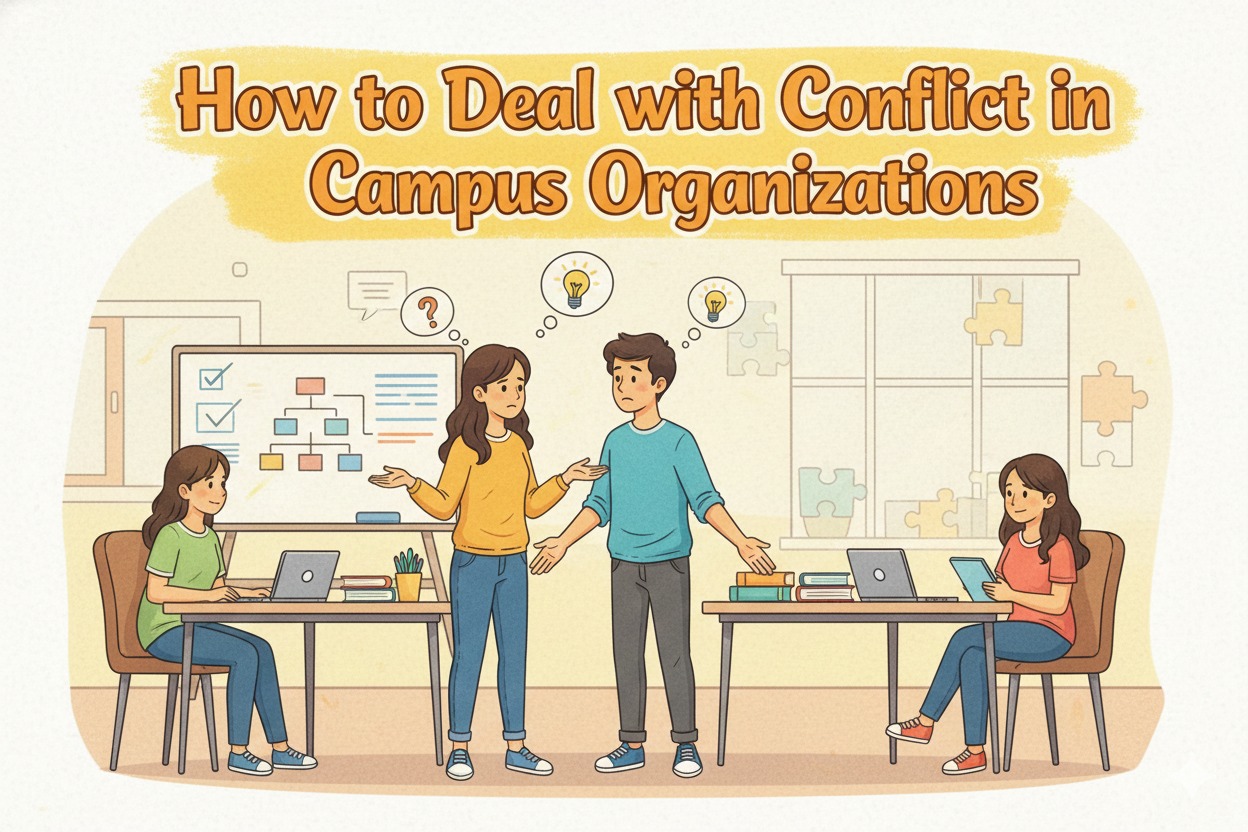
Conflict in campus organizations is something that cannot be avoided. Differences of opinion, backgrounds, and communication styles among members often trigger friction. However, conflict does not always have negative effects. If managed well, conflict can become a learning tool and strengthen teamwork. Therefore, students need to understand how to handle conflicts in a mature and professional way.
CAUSES OF CONFLICT IN CAMPUS ORGANIZATIONS
Before seeking solutions, it is important to know the causes of conflict. Some common factors that often trigger conflict in campus organizations include differences in decision-making, unfair division of tasks, miscommunication, and differences in character and ego among members. Without good communication, small issues can grow into major conflicts.
THE IMPORTANCE OF DEALING WITH CONFLICT POSITIVELY
Avoiding conflict is not the right solution. Conflict that is ignored can disrupt organizational performance and damage relationships among members. With an open and wise attitude, conflict can help members learn to respect differences, improve communication skills, and develop maturity in behavior.
HOW TO DEAL WITH CONFLICT IN CAMPUS ORGANIZATIONS
1. Control Your Emotions and Stay Calm
When conflict occurs, the first step is to control your emotions. Unstable emotions will only worsen the situation. Staying calm helps students think clearly and focus on solutions, not on who is right or wrong.
2. Listen to Everyone’s Opinion
Each member has a different perspective. Active listening without interrupting shows mutual respect. By understanding others’ viewpoints, fair and accurate solutions can be found more easily.
3. Express Opinions with Good Communication
Expressing opinions should be done politely and without attacking someone personally. Use constructive language to keep the discussion healthy and productive.
4. Focus on Solutions, Not Problems
The main goal of dealing with conflict is to find a way out. Avoid prolonging the issue by bringing up past mistakes. Direct the discussion toward solutions that can be accepted together for the sake of the organization.
5. Involve Leaders or Mediators If Needed
If the conflict does not reach a resolution, involving the organization’s leader or a neutral party can be a wise step. A mediator helps keep the discussion objective and prevents long-lasting conflict.
BENEFITS OF MANAGING CONFLICT WELL
Students who can handle conflict well will have strong interpersonal skills. This ability is valuable not only in campus environments but also in the workplace. In addition, a healthy and solid organization will find it easier to achieve shared goals.
CONCLUSION
Conflict in campus organizations is part of team dynamics. **How students respond to it will determine personal growth and organizational quality.** With good communication, an open attitude, and a focus on solutions, conflict can be transformed into an opportunity to grow and learn together.
Tentang Penulis
Gusti Ayu Tita
Penulis — Universitas STEKOM
Penulis aktif yang berfokus pada isu-isu akademik, teknologi pendidikan, dan pengembangan sumber daya manusia di lingkungan kampus.