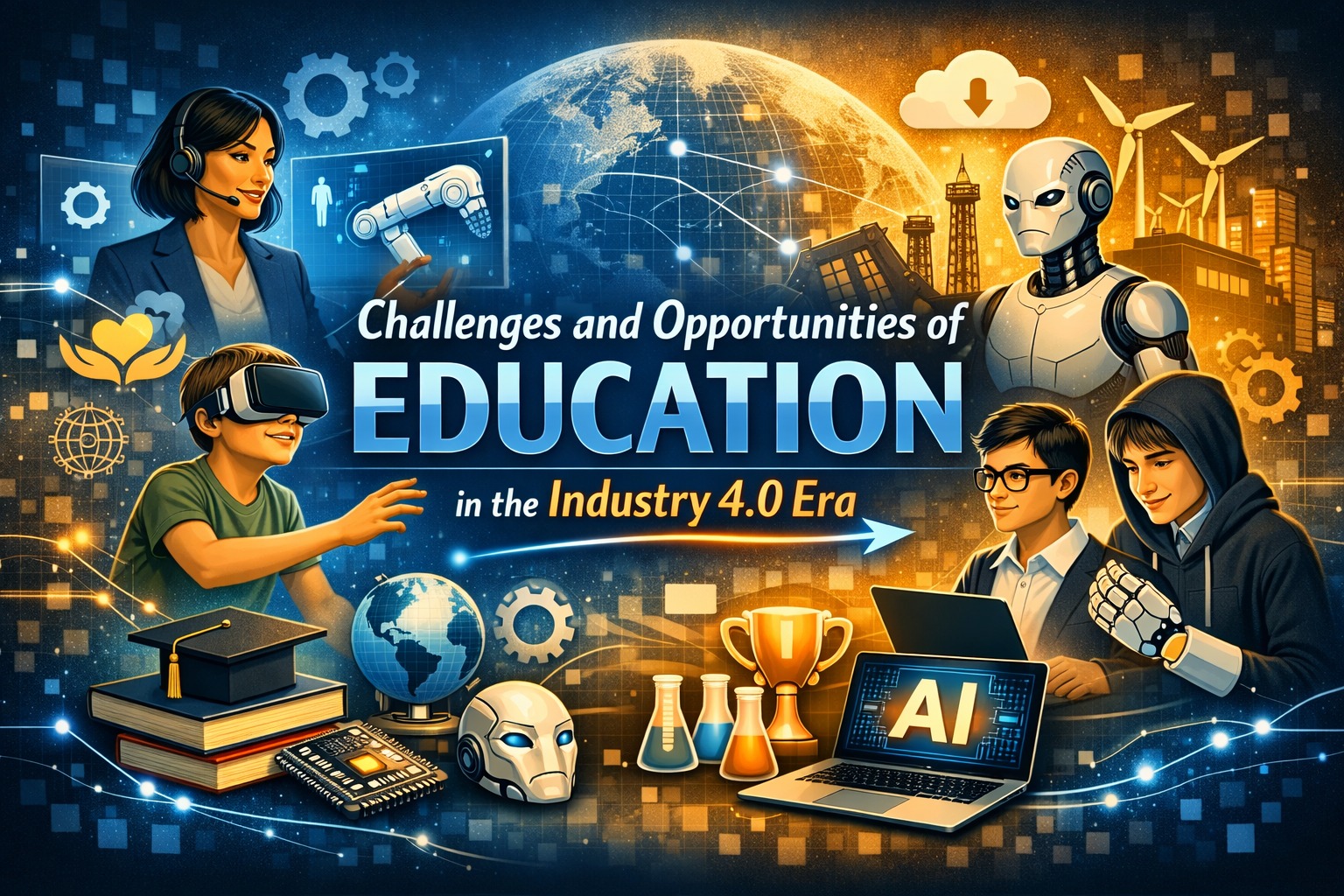
The Fourth Industrial Revolution, or Industry 4.0, has transformed the way we live, work, and learn. As automation, artificial intelligence, and digitalization reshape global industries, education systems must evolve to prepare students for this new reality. The challenge lies in adapting traditional learning models to meet the demands of a technology‑driven world while maintaining human values and creativity.
UNDERSTANDING INDUSTRY 4.0 AND ITS IMPACT ON EDUCATION
Industry 4.0 refers to the integration of advanced technologies such as robotics, IoT (Internet of Things), big data, and AI into industrial processes. These innovations require a workforce equipped with digital skills, critical thinking, and adaptability. Education must therefore shift from rote learning to experiential, technology‑based approaches that foster innovation and problem‑solving.
KEY CHALLENGES IN THE EDUCATION SECTOR
- Skill Gap: Many educational institutions struggle to align curricula with industry needs, leaving graduates unprepared for modern jobs.
- Digital Divide: Unequal access to technology creates disparities in learning opportunities, especially in developing regions.
- Teacher Readiness: Educators must continuously update their skills to integrate digital tools effectively.
- Ethical Concerns: Balancing technological advancement with ethical and social values remains a major challenge.
OPPORTUNITIES FOR TRANSFORMATION
Despite these challenges, Industry 4.0 offers vast opportunities for educational innovation.
- Personalized Learning: AI and data analytics enable customized learning experiences tailored to individual student needs.
- Global Collaboration: Digital platforms allow students and educators to connect across borders, fostering cultural exchange and teamwork.
- STEM and Creativity Integration: Combining science, technology, engineering, and mathematics with creative thinking builds well‑rounded learners.
- Lifelong Learning: Continuous education becomes essential as technology evolves, encouraging people to upskill throughout their careers.
THE ROLE OF GOVERNMENT AND INSTITUTIONS
Governments and educational institutions must collaborate to design policies that support digital transformation. Investments in infrastructure, teacher training, and curriculum modernization are crucial. Partnerships with industries can also bridge the gap between academic learning and real‑world application.
PREPARING STUDENTS FOR THE FUTURE
Education in the Industry 4.0 era should focus on developing both technical and soft skills—communication, leadership, and emotional intelligence. By nurturing creativity and adaptability, schools can prepare students not only to survive but to thrive in a rapidly changing world.
Conclusion
The Industry 4.0 era presents both challenges and opportunities for education. By embracing technology, innovation, and inclusivity, education systems can empower future generations to lead with knowledge, ethics, and vision. The key lies in creating a balance between digital advancement and human development.
Tentang Penulis
Gusti Ayu Tita
Penulis — Universitas STEKOM
Penulis aktif yang berfokus pada isu-isu akademik, teknologi pendidikan, dan pengembangan sumber daya manusia di lingkungan kampus.